Aṣṭāvakra Saṃhitā
A Dialogue on Self-realization

Chapter 18
Order Now 

Chapter 18 of Ashtavakra Gita (also known as Ashtavakra Samhita), the longest chapter consisting of 100 verses, begins with a prostration to the singular Presence. Sage Ashtavakra declares that without renouncing all, peace and bliss cannot arise. The universe is an outcome of imagination, while the Self alone is unlimited, eternal and free. When the Self is known, grief ends and nothing remains to be pursued, understood, spoken or done.
The Knower rises above all dualities. In him differentiations weaken, and he remains silent, immersed in the bliss of Consciousness, whether active or restful. There is no knowledge or ignorance, gain or loss, honour or dishonour, distraction or samadhi. Though activity continues, he knows that the Self does nothing. Free from ego and worldliness, he lives harmoniously, untouched by delight or depression, and shines as Brahman itself.
The Sage throws light on the contrast between the vision of the ignorant and the wise. The deluded, though engaged in practices and restraints, fail to know the pure Self because they remain dependent on the seen and perceptible. The wise one, by contrast, gains resoluteness in Truth, becomes peaceful, and embodies the fulfilment of all moral and spiritual values. He acts naturally, like a child, free of grief, agitation and desire.
Desire-freeness, equalness and inner freedom define the Knower. He remains even-minded in pleasure and pain, praise and blame, prosperity and hardship. Free from possessiveness, expectations and attachment to objects or relationships, he lives content in his own splendour. Seeing clod, stone and gold alike, he transcends dualities, and lives everywhere with equipoise and serenity.
Prostration to that presence whose nature is bliss, which is supremely calm and luminous, on the dawning of whose knowledge all delusion becomes like dream.

By amassing all objects, one derives plentiful enjoyments. Yet, without renouncing all, he will not inwardly become peaceful, blissful.
For one whose heart is burnt by the blazing rays of the sun of misery caused by the sense of dutifulness, how can comfort be had except by the ceaseless downpour of the nectar of quietitude?
The world is an outcome of imagination alone. Nothing is there in reality. The nature of both the existent and non-existent will not change any time.
The Self, the doubtless presence, effortless, immutable and stainless is ever attained, because it is not distant or limited in any way.
Those men, whose vision is not veiled, shine uninterruptedly, the moment their real nature is experienced, with their delusion gone and grief dispelled.
Everything is but sheer imagination. The Self is free, liberated and eternal. Knowing this, what will the wise, who is like a child, practise or pursue?
Resolving very clearly that the Self is itself Brahman, the supreme Reality, and existence and non-existence are both imaginations, what does the desire-free one understand, speak and do?
For the yogi who has resolved well that all is but the Self and is silent, thoughts like ‘I am this’ ‘I am not this’ become weak and extinct.
For the yogi who has attained quietitude and inner placidity, there is neither distraction nor concentration, neither further knowledge nor ignorance; neither happiness nor unhappiness.
Whether in his inner spiritual kingdom of the Self or living on bhiksha (alms), in gain and loss, in the midst of the vibrant society of the planes or in the solitude of woods, for the yogin floating in nirvikalpa state, there is nothing special at all.
For the yogi liberated from the dual notions of ‘this is done’ and ‘this is not done’, where is anything like dutifulness (dharma), where comes any need for prosperity (artha), where is any enjoyment (kāma)? And where is any place for discrimination (viveka) either?
For the yogi who has become a jeevanmukta, liberated while alive, there is no duty to perform, there is no lingering taste in his heart. He just lives as his life propels, for whatever reason it may be.
For the high-souled resting beyond the boundary of all thoughts and imaginations, where is delusion, where is the universe, where is abandonment, where is liberation?
Let him, by whom this world is seen, try to deny it. What does one who is desire-free do, as even while seeing the world he does not see it!
One, by whom the supreme Brahman is realized, will think he is Brahman. But what will the non-thinking person, who sees no second entity at all, think?
Whoever notices distraction in himself, he indeed strives to restrain it. The exalted one is not distracted. Noticing nothing to be attained, what does he have to do ?
Though he lives like an ordinary person, he is quite contrary to the world. He does not see anything like samadhi, distraction or affectation in himself.
For the wise one, who sits comfortably doing whatever is to be done, whenever, there is no discomfort either in active involvement or dis-involvement.
By him, who is untouched by existence and non-existence, enlightened, contented, devoid of desire, is done nothing, though from worldly viewpoint he is acting as usual.
The desire-free and dependence-free one, with innate freedom, released from all bondage, remains active but like a dry leaf tossed by the cultural wind of inheritance.
For the one risen above worldliness, there is no delight or depression anywhere. Ever graced with a cool mind, he shines as if he is disembodied!
The wise one who rejoices in the Self, whose mind is quiescent and pure, has no feeling to renounce anything anywhere, nor has he any sense of loss anywhere.
Having virtually no mind at all, yet living and moving by the impetus of Nature, like so many other beings, performing whatever activity comes on its own unasked, the enlightened one does not feel honour and dishonour like the ordinary person.
This act has been done by the body, not by me who is pure in nature. Governed by this kind of thought, even if one does many acts, he does not do anything.
One liberated while yet alive, acts but not saying that he is liberated. At the same time, he is not a fool either. Though in the midst of world, he is happy, graceful and shines undimmed.
Tired by indulging in a variety of introspections, the wise one attains poise and calm. He thinks not, knows not, hears not and sees not.
The exalted one, having no cause for distraction, is not given to the practice of samadhi. Neither is he a seeker, nor is he bound. Knowing clearly that everything is mere imagination, he, the magnanimous, lives as Brahman indeed.
In whose inside dwells ego, even if he is not doing anything, he verily does. On the other hand, the wise one, free of the hold of ego, even while acting, does not do anything at all.
The mind of the liberated one is neither tormented nor delighted. It is non-doing as it is unmoving. Being free from desire, with all doubts gone for ever, it shines with splendour!
The mind of the liberated strives not for meditation or activity. At the same time, it meditates and acts, but with no motive whatever.
After hearing the truth, the dull-witted remains foolish; while the discreet withdraws within, being shy, is silent, as though he is dumb.
Concentration and restraint of mind are constantly practised by the ignorant. The wise, seated well in their Self, like in ‘conscious slumber’, do not see anything to be done.
By inaction or action the ignorant gains no peacefulness. By gaining resoluteness about the supreme Truth alone, the Knower becomes peaceful.
Those people given to various practices do not succeed in knowing the Self, which is pure, conscious, beloved, complete, untainted and which transcends the phenomenal world.
The strongly deluded one does not, by repeatedly restraining the mind, get liberation. The fortunate one, by the mere strength of knowledge, lives liberated and changeless.
The ignorant, deluded, attains not that Brahman, for he desires to become that (Brahman). On the other hand, the wise one, who yearns not at all, becomes Brāhmic by nature.
Fools having no support or guidance, lost in the greed for sensory objects, cherish and nourish worldliness. Whereas, by the wise, this source of all discomfort and calamity is uprooted.
The fool fails to attain peace, because he aspires for mind-conrol, regarding it (mind-conrol) as the means (for liberation). Whereas the wise, by knowing the Truth, is always peaceful at heart.
Where can Self-knowledge be for him, who depends upon ‘the seen’ or the perceptibles? The wise do not see that and that, for they only see the Self, the immutable.
For the deluded one, who forcefully strives, how can there be any restraint? For the wise, who is rejoicing in his own Self, restraint becomes natural always.
Someone thinks ‘existence is’; another thinks ‘nothing exists at all’. The one not thinking of existence and non-existence is free from agitation and distraction.
People with erroneous intelligence think of the pure, non-dual Self, but are not able to know the Self in their whole lifetime. Due to delusion, they remain unhappy.
The intellect of a seeker of liberation does not get support from within. (Hence, remains deluded.) Whereas the intelligence of the liberated is always free of all dependence and desire.
Seeing the tigers of sense objects, fearful ones seeking refuge enter immediately the caves for practising sensory and mental restraints.
Having seen the lion of desirelessness the tuskers of sensory objects run away or with mouthful praises begin to serve.
One free of doubt, with his mind united with the Self, does not resort to physical restraints. Instead he lives comfortably seeing, hearing, touching, smelling and eating.
Solely by listening to the Truth, the one of serene intelligence, becomes free of all agitation. He is not swayed by proper and improper conduct, nor by indifference to these.
Whatever comes to be done, whenever, he straightaway does it, whether auspicious or inauspicious; to perform it like a child is his natural style or habit.
From freedom one attains happiness. Through freedom one gains the Supreme. By means of freedom alone one achieves redemption. Only by dint of freedom, one reaches the supreme abode.
When one considers the non-doer-ship and non-experiencer-hood of the Self, all modifications of the mind become weak and fall.
The state of the wise one, which has no motive behind it and is free from all pretence and ostentation verily shines; not indeed the artificial calmness of the ignorant with a desireful mind.
The enlightened, free of wild imaginations, not bound by anything, with their intellect unfettered, sport in great delights or enter the caves in mountains.
No desire sprouts in the heart of the wise on adoring one well-versed in Scriptures, a deity or a holy place as well as seeing a woman, king or one beloved.
The yogi does not get agitated even for a second when abused by servants, sons, wives, daughter’s sons or relatives.
He is pleased but not pleased, afflicted but grieves not. Such wonderful states of his, only those like him can discern and appreciate.
Dutifulness becomes relevant only to the world, which is illusory. The wise do not see anything like that. They are formless, immutable, taintless and voidful.
The ignorant one though not doing anything, gets everywhere stirred up violently due to severe tension. Whereas the skilful, dexterous, one, though doing all duties well, is indeed free of grief and agitation.
The enlightened one of placid intelligence, though given to activity, sits comfortably, sleeps comfortably, moves about comfortably. He speaks pleasantly and eats also pleasantly.
The Knower, though interacting, has, by dint of his realizing the Self, no torment as others generally have. With all his hardship gone, he remains unshaken like a huge lake.
For the ignorant and deluded even withdrawal from action verily becomes full action. For the wise one, even active involvement brings the fruition of withdrawal, nivṛttiḥ.
For the ignorant, displeasure is invariably seen in gifts and possessions. But for the one in whom all desires have fallen, where is any desire or dispassion?
The vision of the ignorant and deluded is involved in thought and imagination as well as their opposite, namely their own absence. For one resting in the Self, the thinkable and the thinking both become unreal.
For the ascetic saint, who is pure and moves like a child, with no desire in all his undertakings, no stain is caused even while doing various actions.
That Self-knower, who has equal disposition in all states and conditions, is indeed blessed. His mind is bereft of desire, while seeing, hearing, touching, smelling and eating.
For the wise one, who is like space and always free of all doubts, where is worldliness, where is appearance, where is the attainable, where is the means to attain it?
He indeed sparkles gloriously, who has eschewed all desires for objects, who is the embodiment of fullness and inner bliss, who is absorbed naturally in the undimmed splendour of the Self.
Of what use is too much talk? The exalted soul who has known the supreme truth, desires neither sensory enjoyment nor even liberation. He lives anywhere, always free from any lingering fondness for anything.
The sensory, phenomenal world is made up of factors commencing from Mahat, cosmic intelligence. But all this is really a superimposed display, in name alone. For one who is pure Consciousness, and has renounced everything, what is there to do as duty?
All this is a product of illusion, nothing really exists. To the pure one, who resolves thus, the Self, not perceptible to senses, mind, etc., is revealed. And he naturally becomes quiescent.
For one whose nature is pure splendour and who sees not any objectivity, where is the question of any injunction, where comes dispassion, where is the scope for renunciation and where is placidity?
For one who is sparkling with infinitude, not perceiving any manifoldness, where is bondage, where is liberation either? Where is joy and where is sorrow?
In the phenomenal creation which lasts only till Self-knowledge is gained, the inscrutable power of Māyā or Illusion alone displays transformation. Enlightened person free from possessiveness, ego and desire lives and moves brilliantly.
For the ascetic Knower who sees the imperishable Self, which is free from grief, where is knowledge, where is universe, where is body as ‘I’ or ‘mine’?
If the dull-witted one leaves activities in the nature of discipline and restraint, from that moment onwards he will begin to indulge in desires and imaginations.
Even after listening to the supreme Truth, the dull-witted person does not leave his delusion. Though with effort he looks to be controlled, internally he is indulging in sensory objects.
He whose activity has dropped, who from the worldly view is also active, he has truly no opportunity to work or even to speak anything whatever.
For the enlightened one, resting in the immutable Self, free of all torment, where is darkness, where is light, where is loss and where is anything worth naming at all?
Where is courage, where is discrimination, where is fearlessness, for the yogi devoid of any particular nature, but who has an indescribable nature?
There is no heaven, nor indeed hell. There is no jeevan-mukti, liberation while yet one is alive. What is the use of talking much? In the yogic view, nothing exists at all!
The cool mind of the wise one yearns not for any gain, grieves not over no gain, but is filled with nectar alone.
The one free from desire and greed does not praise the peaceful, nor condemn the wicked. Equal in happiness and unhappiness, and hence contented beyond measure, he finds no special duty to perform.
The enlightened one hates not the world, nor yearns to perceive the Self. Freed from delight and affliction, he is neither dead nor living.
Free from delusional fondness for son, wife, etc., desireless towards world objects, free of concern even about his own body, freed from all expectation, he lives in his own splendour.
Contentment greets the wise one everywhere, when he moves freely as he wishes, living on whatever chance brings, and resting wherever he has reached when the sun sets.
Let the body fall or rise. For this high-souled one, there is no thought of it all. For, he is resting by nature on the earth, virtually unconscious of the world and its transformations.
Not possessing anything the least, moving as he likes, transcending pairs of opposites, all doubts dispelled, with no delusional clinging to anything at all, alone, the enlightened revels and exults.
Free from mineness, the wise one shines singularly, seeing a clod, stone and gold alike. His heart’s knot is completely broken, effects of rajo-guṇa and tamo-guṇa washed off well.
No desire sprouts in the heart of one, who cares for nothing everywhere. With whom can such a liberated soul, contented in full, be compared?
Knowing well, he feels he knows not, seeing well, he feels he sees not, speaking well he feels he does not speak. Who but one freed from desires can excel like this?
He who has no desires, be he a wandering ascetic or a ruling king, whose view of auspiciousness and inauspiciousness about matters has fallen, shines exquisitely.
For the yogi who is artless and straightforward, who feels fulfilled in heart, where is any wilfulness, where is inhibition and where is ascertainment of truth?
How to relate and to whom, what one experiences inside him, when he is content with quietitude by resting on the Self, due to the absence of desire and extinction of torment?
In sleep not asleep, in dream not lying also, in wakefulness not awake, the wise one is contented in all states.
Though with thoughts, the Knower is without thinking, though with senses is without senses, though with a noble intelligence, is without intelligence, though with ego, is without ego.
The Knower is neither happy nor miserable, is not dispassionate nor attached to anything. He is neither a seeker, nor liberated. He is not this nor another.
The fortunate one is not distracted even in distraction, not meditative even in meditative absorption, even in sunken-ness not inert or insentient, not a scholar even in copious erudition.
The liberated person is always dwelling in his Self, redeemed of all notions of duties done and not done, is of equal vision everywhere due to having no desire at all, remembers not whatever is done and not done.
He is not pleased when adored, not disturbed when blamed, not frightened in death, and delights not in life.
The placid minded does not seek people’s crowd, he also yearns not the solitude of woods. Anywhere in any manner he remains even-minded.


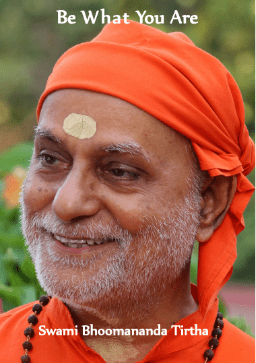
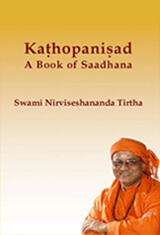
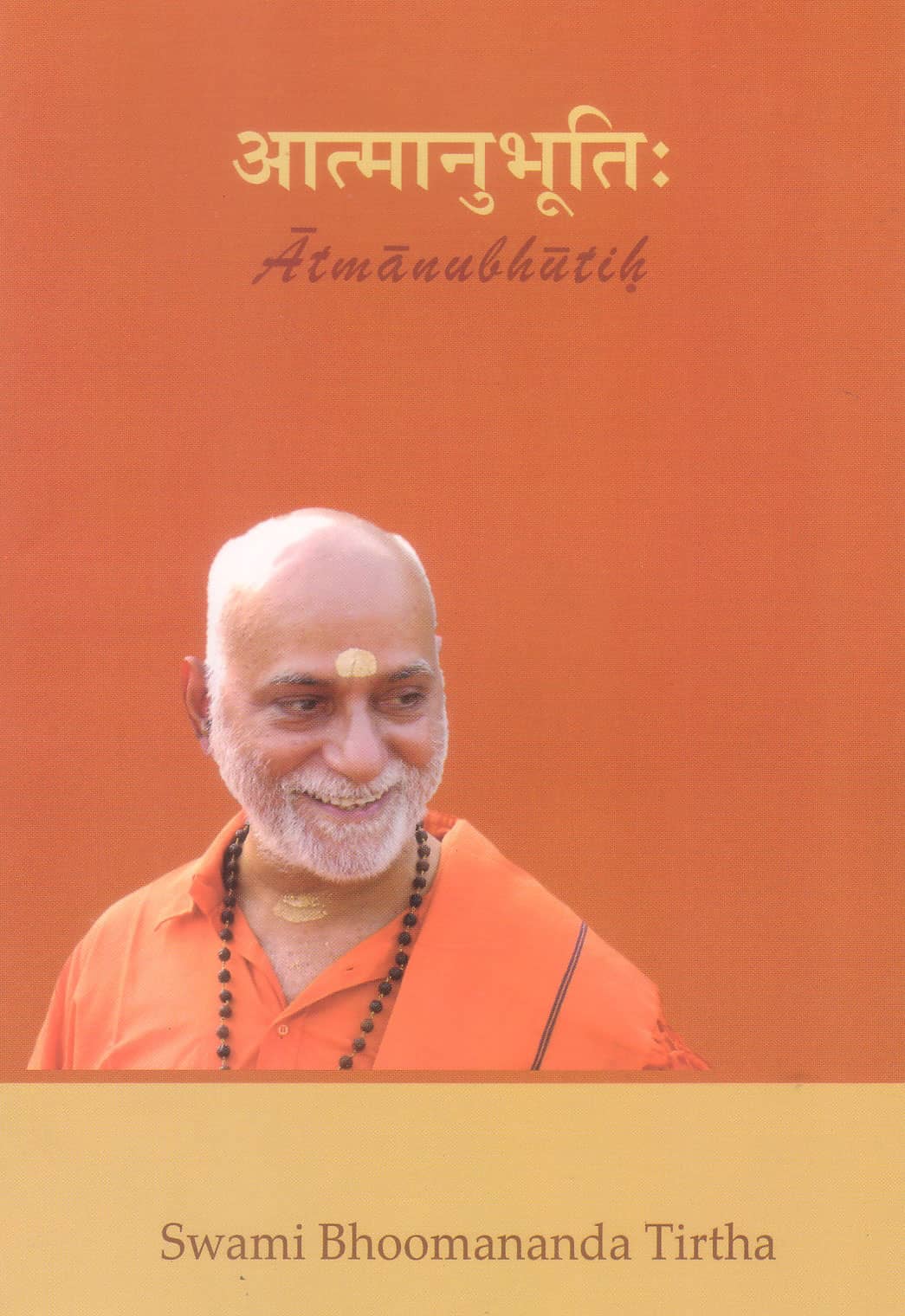


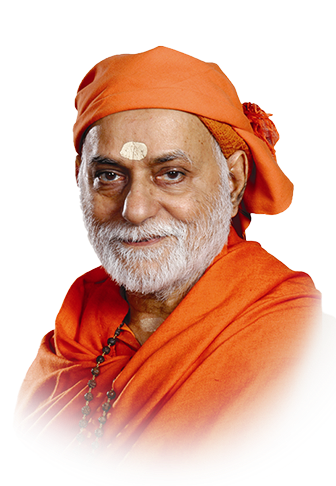

Experience a beautifully designed reading journey with authentic commentary by Poojya Swami Bhoomananda Tirtha.