Discourse & Satsangs
Gurupoornima 2026
START: JULY 29, 2026
08:15 AM IST
END: JULY 29, 2026
01:30 PM IST
VENUE:
Narayanashrama Tapovanam,
Venginissery, P.O. Paralam,
Thrissur,
Kerala-680563

Photo: Poojya Swamiji blessing Swamini Vimalā Prajnā (formerly Brahmacharini Namrata Swaroopa) after giving her Sannyāsa Dīkṣā on the holy Guru-pūrṇimā Day.
The holy Gurupoornima was observed on the 29th July 2026 in Ashram and the centers around the world.
Guru-pūrṇimā Report 2026
A Sannyāsa to Remember –
A Grace to Treasure
(June 03 – June 30)
Sneha Sashikumar
On My Way to the Abode of my Guru
My flight touched down in Kochi from Mumbai on 28th July 2026 with a gentle drizzle. As I stepped out, the fragrance of rain-soaked earth filled the air. There is something about this sacred month that always fills me with anticipation. The month of Ashadha means Guru-pūrṇimā, the time when the heart instinctively turns towards the Guru.
An Ashram-arranged taxi was waiting for me. Soon, I was passing through rain-washed Kerala towards Narayanashrama Tapovanam, the abode of my Guru.
Preparations in Full Swing
As my taxi entered the Ashram, every corner seemed to be getting decked for the sacred occasion of Guru-pūrṇimā. It reminded me of a home preparing for a wedding; everyone had something to do, every little detail mattered, and beneath all the activity was a shared sense of joy and anticipation. Familiar faces appeared one after another, and we greeted each other with a joyous ‘Jai Guru’! There is a special warmth in meeting fellow devotees again in the Guru’s abode.
All around, preparations were gathering pace. A large tent was going up, chairs were being arranged, flowers carefully cleaned and sorted, and tender coconut leaves skillfully woven into decorations. There was śraddhā in every little detail, turning even the simplest task into an offering. Intricate kolams adorned the Tulasi Mancha and Baba’s Mandapam, while coconut leaves woven into the shape of conches added a beautiful festive touch. The Ashram was being adorned for Guru-pūrṇimā, but what one felt even more deeply was the devotion with which everything was being done.
I had arrived around tea time, and one of the first of those to greet me was Brahmacharini Namrata Swaroopa. Amidst everything that was happening, her immediate concern was whether I had taken lunch. When she learnt that I had not, she quickly made arrangements to ensure that I was served a meal amidst her busy schedule.
That was Namrataji. And the very next morning, she was to receive Sannyāsa Dīkṣā from Poojya Swamiji.
This Guru-pūrṇimā was going to be unlike any other. Devotees were gathering with a special sense of anticipation, for rarely in one’s lifetime does one have the privilege of witnessing a Sannyāsa Dīkṣā.
There was activity everywhere, sevaks attending to countless tasks, arrangements being discussed, flowers and decorations finding their places, and devotees arriving from different parts of India and across the world. By evening, devotees had gathered to listen to Poojya Swamiji. And as he addressed us, the skies suddenly opened up in a sharp downpour. Rain came pouring over the Ashram, drumming against the roof and washing the surroundings afresh, as we sat listening to our Guru.
Yet beneath all the movements, the rain and the anticipation, was the unmistakable serenity of the Ashram, made all the more radiant by the joy on the Guru’s face.
 Brahmacharini Namrata Swaroopa performing Pāda-pūjā
on behalf of all devotees before receiving Sannyāsa Dīkṣā
The Sacred Day of Guru-pūrṇimā
The morning of 29th July began with soulful bhajans, filling Vijnana Bhavan with devotion. As the strains of the Guru bhajans filled the hall, Poojya Swamiji, Nutan Swamiji and Ma entered Vijnana Bhavan, their presence bringing a deep stillness and joy to the gathering. This was followed by Guru Archana. We have been used to seeing couples or pairs of devotees performing the ceremony at the holy feet of Poojya Swamiji, under the guidance of Namrataji. This year Guru Archana was performed by Namrataji herself, a deeply significant offering before receiving Sannyāsa Dīkṣā.
And then came the moment everyone had been waiting for…
Poojya Swamiji was conferring Sannyāsa Dīkṣā thirty-four years after having initiated Swami Nirviseshananda Tirthaji and Swamini Ma Gurupriyaji into Sannyāsa.
Poojya Swamiji first read the saṅkalpa mantra he had written in Sanskrit describing briefly Namrataji’s seeking life, her journey to the Ashram, her commitment to serve Poojya Swamiji, Nutan Swamiji and Ma, and the inner orientation that had gradually brought her to this moment. As Swamiji read the Sanskrit words, Namrataji repeated. Namrataji then read out the English translation for all present.
Poojya Swamiji then explained that real Sannyāsa has to be attained by the mind and intelligence. The gerua robes are an external aid to intensify the austerity. Real renunciation has to take place within. Sannyāsa is Jñāna-niṣṭhā, a steadfast abidance in Knowledge, a life of knowledge-austerity. Poojya Swamiji explained the different kinds of Sannyāsa, spoke of the Viraja Homa traditionally associated with Sannyāsa Dīkṣā, and why the emphasis here was on Knowledge rather than ritual.
 Poojya Swamiji blessing Brahmacharini Namrata Swaroopa
with the ochre robes, rudraksha mala and gopi-chandan
after chanting the Sannyāsa Saṅkalpa Mantra.
Poojya Swamiji then handed over to Namrataji the Gerua robes and Rudraksha mala with gopi-chandan.
She left the hall to wear the new dress.
But those few minutes were not merely a wait. Nutan Swamiji and Ma chanted the 13th chapter of the Bhagavad Gita and selected verses from Vivekacūḍāmaṇi asking each to contemplate that he is the supreme Brahma-tattva – Brahma-tattvam-asi bhāvaya ātmani. The chanting filled Vijnana Bhavan with special vibrations as we awaited her return.
And then she entered. Clad in gerua, radiant and serene, the new Sannyasini walked into the hall. The joy on Poojya Swamiji’s face was unforgettable. There were tears of joy in the eyes of Nutan Swamiji and Ma.
Poojya Swamiji proclaimed her new name: Swāmini Vimalā Prajñā.
Poojya Swamiji explained the significance of the name. Vimalā denotes that which is pure and stainless. Prajñā is Consciousness.
A Life that asked only to Serve
What Poojya Swamiji spoke about next was perhaps the most touching part of the entire occasion for me. Swamiji spoke about Vimala Mataji’s decision to renounce and embrace a life of wholesome spirituality. She had not come to the Ashram wanting to become someone. She had not even set Moksha or Brahmajñāna before herself as something she wanted to attain. Her aspiration, expressed even years back to Swamiji was extraordinarily simple: To serve Poojya Swamiji, Nutan Swamiji and Ma.
Often, when people enter an Ashram or take a particular path, there can be inherent desires within to achieve something, to acquire a position, to become somebody, even in the spiritual sphere. Here was someone who simply wanted to serve her Guru.
That touched me deeply because this was how many of us had always known Namrataji. She was the person we reached out to for advice, Ashram matters, approvals and updates. She travelled with Swamijis and Ma, ensuring that they were well cared for, quietly attending to innumerable details behind the scenes, often quietly absorbing difficult circumstances and situations.
Service was not something she had newly chosen. It was how we had seen in her earlier days also.
Personally, one message she had given me has always remained in my mind: “The importance of remaining always in Guru-sannidhi.” Perhaps what I learnt most deeply that morning was gratitude to the Guru-paramparā, gratitude for a lineage through which this timeless Knowledge continues to flow from Guru to shishya, and for the extraordinary privilege of witnessing it unfold before my eyes.
To me, seeing Vimala Mataji step into Sannyāsa was like watching a lotus that had been quietly growing in the waters finally blooming in full. There she was, a full-bloom lotus, radiant and serene, in the presence of Poojya Swamiji, Nutan Swamiji and Ma.
And within me was simply gratitude to the Guru, to the Guru-paramparā, and for the blessing of Guru-sannidhi.
The Fearlessness of Sannyāsa
Poojya Swamiji also spoke about what a Sannyasin represents. One who takes Sannyāsa becomes a symbol of fearlessness.
Truthfulness, poverty, possessing nothing as one’s own and complete dependence upon God or Providence become the defining virtues of renunciational life. How does one live with such complete dependence?
Poojya Swamiji spoke of devotion and reliance. It is the mind, he explained, that produces divine ideas, thoughts and saṅkalpas through which the necessary help comes. When reliance becomes complete, Providence takes care of everything that is needed.
Sannyāsa therefore appeared before us that morning not as withdrawal from life, but as an extraordinary declaration of inner freedom, a life without personal possession or demand, resting fearlessly upon Truth and Providence.
 Book release - Sri M Balasubramanian (Chennai) and
Dr E Sreedharan (Kerala), both Poojya Swamiji’s disciples,
joyfully received the first copies from Poojya Swamiji.
Inaugurating the book ‘Sadguru Sannidhya’
The morning had yet another special moment in store. Following the Sannyāsa Dīkṣā was the inauguration of the book, Sadguru Sannidhya, now published in English. Poojya Swamiji released the book by first presenting a copy to Sri Balasubramaniamji, Swamiji’s long-term devotee from Chennai, who has been instrumental in much of the seva work being done in Dakshinkhanda.
 Book release - Sri M Balasubramanian (Chennai) and
Dr E Sreedharan (Kerala), both Poojya Swamiji’s disciples,
joyfully received the first copies from Poojya Swamiji.
Swamiji then gave a copy to Dr E Sreedharan (widely known as the “Metro Man”), a devoted disciple of Poojya Swamiji. It seemed especially meaningful that on Guru-pūrṇimā, a day celebrating the transforming presence of Guru, the book in which Poojya Swamiji, Nutan Swamiji and Ma describe their deep and unique relationship with Baba, was placed before devotees.
Poojya Swamiji then gave a detailed discourse on Sannyāsa, taking us deeper into its true meaning and the inner qualities that mark a life of renunciation.
The Call of Sannyāsa
Poojya Swamiji traced Sannyāsa to its source in the Vedas through the Samhitas, Brahmanas and Aranyakas to the Upanishads, where the entire pursuit culminates in Knowledge and the fulfilment Knowledge alone can bestow:
Brahmavid-āpnoti param – the Knower of Brahman attains the Supreme.
Pratibodha-viditaṃ matam amṛtatvaṃ hi vindate – finding the Truth in every experience, perception and comprehension, one attains immortality.
Sannyāsa, Poojya Swamiji explained, is meant to unveil this knowledge and become established in it. For such knowledge, one needs a teacher who can reveal Brahmavidyā.
He summed up Sanātana Dharma in twelve words, the four Varnas, four Ashramas and four Purusharthas. Ultimately, the question arises in a true seeker after going through various phases: What am I to do with this life? The answer is Sannyāsa, the pursuit of liberation through Knowledge – jñānād-eva kaivalya-prāptiḥ.
A Sannyasin relinquishes personal possession, identity and even the sense of belonging to a particular place, possessing nothing as one’s own. Providence alone becomes the refuge. Poojya Swamiji recalled the Śāstric verses that had once moved him so powerfully:
Nistutir-nirnamaskāro niḥsvadhākāra eva ca
calācalaniketaś ca yati-yādṛcchiko bhavet…
Tattvam ādhyātmikaṃ dṛṣṭvā tattvaṃ dṛṣṭvā tu bāhyataḥ
tattvībhūtas-tadārāmas-tattvād-apracyuto bhavet.
– Māṇḍūkya Kārika (Verse 2.37)
When he encountered these verses, Poojya Swamiji said, he had no option but to leave his professional life and embrace Sannyāsa. Such was the call of the Śāstras and the meeting with Baba that changed Poojya Swamiji’s life.
He also recalled conferring Sannyāsa on Mataji Sulabha Devi, invoking another striking verse:
Dehaṃ ca naśvaram-avasthitam-utthitaṃ vā
siddho na paśyati yato’dhyagamat-svarūpam;
daivād-apetam-atha daiva-vaśād-upetaṃ
vāso yathā parikṛtaṃ madirā-madāndhaḥ.
– (Śrīmad Bhāgavatam 11.13.36)
For one established in his true nature, even identification with the perishable body falls away.
And now, on this sacred Guru-pūrṇimā, these were not merely verses being expounded. Before us sat Mataji Vimalā Prajñā, further deepening a life dedicated wholly to the exclusive pursuit of Truth.
Conclusion
Thereafter came a moment every devotee eagerly awaits on Guru-pūrṇimā, the opportunity to offer Pranams at the holy feet of the Mahatmas. One by one, devotees came forward, each receiving a book written by Poojya Swamiji, and sweet Prasada. This was followed by Bhakti Bhoj, with everyone partaking of the meal together in the joyous atmosphere of Guru-pūrṇimā.
And then came a fitting finale to the day.
As the words “Barasata Barasata Sadguru Kripaa” by Srinivasanji filled the air, which means the Sadguru’s grace showers and showers, Poojya Swamiji himself began to dance.
Soon, the celebration was no longer something one was merely watching. The joy was infectious. The hall seemed to overflow with the very sentiment the song expressed – the boundless grace of the Sadguru. Indeed, that day, it felt as though grace was showering everywhere.
Jai Guru!
Our Guiding Lights
-
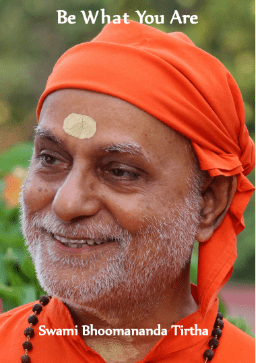
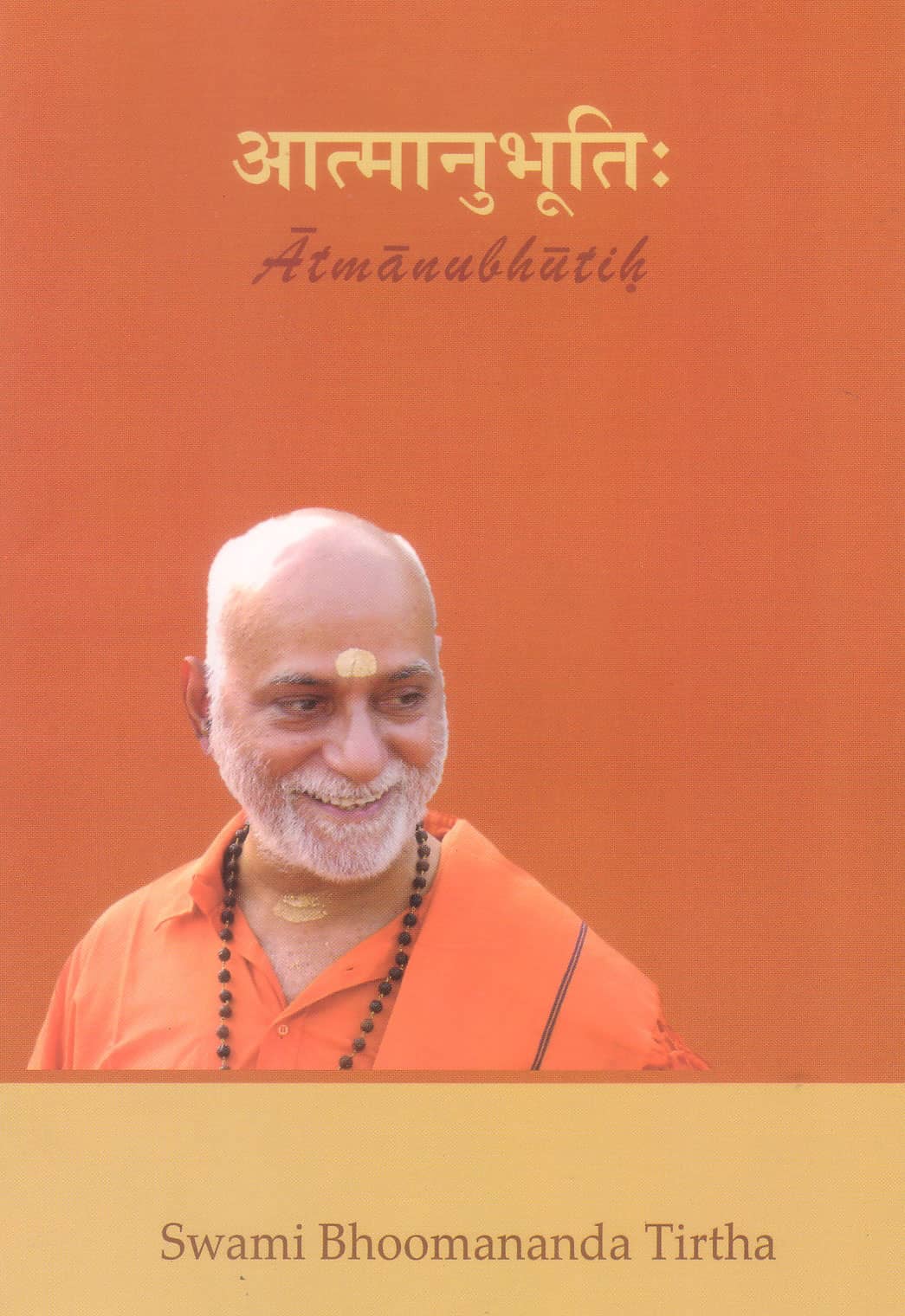
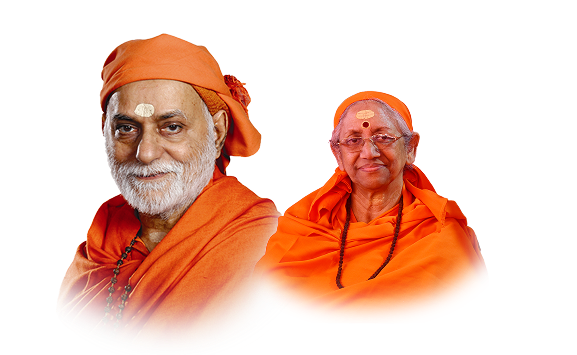
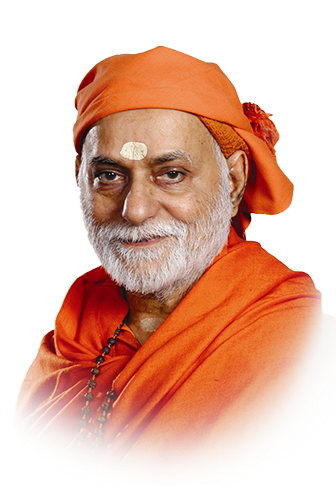
 Swami Bhoomananda Tirtha
Founder and Visionary, Narayanashrama Tapovanam/CIRDs
-
 Swami Nirviseshananda Tirtha
Narayanashrama Tapovanam/CIRDs
-
 Swamini Ma Gurupriya
Narayanashrama Tapovanam/CIRDs
ESSENTIAL READING/VIEWING
Chantings


Prabhata Rashmih
Swami Bhoomananda Tirtha 
Guru Awakens Us to Our Inner Presence – [Gurupoornima Message, 3rd July 2023]
Hari Om Tat Sat. Jai Guru. Jai Guru. Today is a very auspicious day. I always describe Gurupoornima as the most holy and benedictory day...
Read More Swami Nirviseshananda Tirtha
Intensifying Sādhanā in Daily Life – Some Fundamental Concepts
Worldly interactions with gross and fragmented objects breed grossness and fragmentation in the mind. To annul these effects and take the mind to its pristine unfragmented evenness, interact as often as possible with the concept of the taintless singular Soul.
Read More 


Swami Bhoomananda Tirtha
01 – Yogavasishtha Ramayana – Swami Bhoomananda Tirtha – Self Realization – The Supreme Treasure

Swami Nirviseshananda Tirtha
019 – by Swami Nirviseshananda Tirtha – Unfathomable Dimensions of a Guru
EVENT SCHEDULE AND HIGHLIGHTS
| Date | Time | Program | Description |
|---|---|---|---|
|
July 29, 2026 Wednesday |
08:15 AM IST | Bhajans | |
|
July 29, 2026 Wednesday |
09:00 AM IST | Welcome | |
|
July 29, 2026 Wednesday |
09:15 AM IST | Remembering Guruparampara | |
|
July 29, 2026 Wednesday |
09:30 AM IST | Guru Archana | |
|
July 29, 2026 Wednesday |
10:30 AM IST | Sannyasa Deeksha | |
|
July 29, 2026 Wednesday |
11:15 AM IST | Book Release | |
|
July 29, 2026 Wednesday |
11:30 AM IST | Poojya Swamiji’s Gurupoornima message | |
|
July 29, 2026 Wednesday |
12:45 PM IST | Bhakti Bhoj | |
Date
July 29, 2026
Wednesday
Wednesday
Time
08:15 AM IST
Program
Bhajans
Description
Date
July 29, 2026
Wednesday
Wednesday
Time
09:00 AM IST
Program
Welcome
Description
Date
July 29, 2026
Wednesday
Wednesday
Time
09:15 AM IST
Program
Remembering Guruparampara
Description
Date
July 29, 2026
Wednesday
Wednesday
Time
09:30 AM IST
Program
Guru Archana
Description
Date
July 29, 2026
Wednesday
Wednesday
Time
10:30 AM IST
Program
Sannyasa Deeksha
Description
Date
July 29, 2026
Wednesday
Wednesday
Time
11:15 AM IST
Program
Book Release
Description
Date
July 29, 2026
Wednesday
Wednesday
Time
11:30 AM IST
Program
Poojya Swamiji’s Gurupoornima message
Description
Date
July 29, 2026
Wednesday
Wednesday
Time
12:45 PM IST
Program
Bhakti Bhoj
Description