Aṣṭāvakra Saṃhitā
A Dialogue on Self-realization

Chapter 18, Verse 55
Order Now 
The yogi does not get agitated even for a second when abused by servants, sons, wives, daughter’s sons or relatives.
The wise one too, like any other person, is born in a family. He has his blood and perhaps matrimonial relations too. There may be servants also to run the household. Each of them has his nature, ways and tendencies, which shape his character and behaviour. None can outgrow his nature all of a sudden. In the intimacy that grows inevitably between the family members, each will display his or her inner make-up. And sometimes irritation and protest or even derision, ridicule and disregard may erupt. Nothing of these is an exception. Rather all come under behaviour, characteristic to each.
Thus, even when the Knower is disregarded and ill-treated, he will not feel hurt or discouraged. To be wise implies to be deeply so to understand, relate and be reconciled to the nature, behaviour and interactions of others, whatever they are. The wise will talk words of wisdom. Likewise the unwise will shower delusion and derision too. Both have their natural note. To be wise is to recognize the place for a confluence of human natures.
As Krishna says, one should understand that Nature alone by her three guṇas propels the behaviour and interactions of all, and the individual has nothing to do in it. He should also know that the Self in every one is above the guṇas, unscathed and uninvolved in guṇas and their display. Only then he becomes a Seer (Gita 14.19 ). Thus, the Seer is not hurt or thwarted. He remains harmonious and poised, everything intensifying his stability.







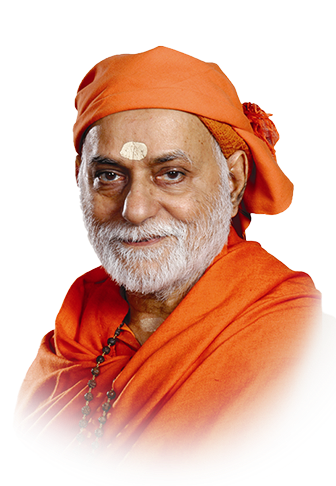

Experience a beautifully designed reading journey with authentic commentary by Poojya Swami Bhoomananda Tirtha.