Aṣṭāvakra Saṃhitā
A Dialogue on Self-realization

Chapter 20, Verse 13
Order Now 
For me, who has no adjunct, who is auspicious, where is an instruction to follow, where is scriptural injunction, where is any disciple or even Teacher, where is any object of pursuit?
Janaka reaches the zenith in his denunciation and denial. His sole purpose is to highlight the absolutely free, complete, un-adulterable nature of the Self, which fulfils the seeker’s spiritual quest in every way. Remember what the Upanishads affirm: “Only for the pure, disciplined and calm soul the spiritual science of Vedanta and the unique direct realization it bestows are possible, available, not to others.”
The path and process to it is through purity, reform and refinement, gained by full intimacy with the Teacher, who lovingly exposes the inner spiritual splendour to the seeking disciple. Without a proper exposition and exponent, the inner pedestal of the supreme, sovereign Self cannot be accessed at all, as is evident in this dialogue. In the very second verse, the Sage had exposed the full dimension of the Self. He explained “you are the witness of the earth, water, air, fire and space”, which constitute the entire creation. By being so, it becomes infinitely greater than the pañca-bhūtas and the pānca-bhautika creation.
King Janaka began his introspection from there. From then on, it was only a process of greater, deeper, loftier and fuller exposition, every word of which nourished the understanding of the disciple, who steadily grew with what he heard. So complete was the Sage’s instruction, its instant effect too. The instruction was to illumine the seeker. And it is natural that the response reveals how the seeker is getting illumined. When this becomes clear, no further evidence or revelation is necessary to mark the apt finale of the incomparable episode!
In Bhagavad Gita dialogue too, at the end Krishna asks Arjuna whether he (Arjuna) heard him well and whether his delusion had left, and he was steady and resolved about his mission in Kurukshetra. Arjuna answered in the affirmative. Further Sanjaya, the narrator, who was standing close by, puts his own words of admiration, approval and assessment about the whole episode. This is how any auspicious event must have its destined fruition.
King Janaka shone as an illustrious Knower. It was to him that Sage Vyasadeva sent his matchless son Shuka to gain the experiential maturity in Self-knowledge. Janaka’s revelation bespeaks to which extent can the instructions on Self-knowledge take one to, and what is the kind and quality of freedom, fullness and ecstasy one can gain from the right instruction, rightly given.
He expresses with openness and straightforwardness the Sage had insisted upon right at the start (Ashtavakra 2.1 ), that he was soaring very high in the spatial freedom and fullness he was experiencing unhinderedly. In that light, where can any seeking for further instruction be, he asks. Sage’s instructions are full and complete. He has absorbed them well. He had no further quest and yearning. He has attained the goal the Scriptures point and extol!
In the beginning he stood as a seeking disciple. Now he feels he is enlightened enough. His Guru’s instructions are embodied in full in him. He has no more need for hunting a Guru. There is no purushārtha, object of pursuit, like moksha, redemption, to chase. He is realizing that he already is free, was free and will be so, in spite of himself and the rest. All this shows how full the Sage’s words have made him instantly. Such a fruition is possible, provided you are an earnest seeker and you have ample Guru-bhakti filling your heart to absorb and realize Guru’s words of revelation. Shankara also sings similar words in his composition Nirvāṇa-ṣaṭkam. Shukamuni also declares alike with poetic excellence (in his Śukāshṭakam): “For one trekking the path free of the three guṇas, where is any injunction or prohibition?” For such a one has become immaculate, and he can only grace the world as a whole, not harm or disturb it in any way. In such a context, prakṛti’s guṇas keep at a distance!
Truth is non-dual. Non-dualness exterminates all differences. But its application has to be judicious. Spirituality is a mento-intellectual pursuit. In practising as well as deriving the full benefit from it, the only two factors involved are the mind and intelligence. All the realization is in the mind, experiential, hence the celebrated warning and direction:
Tattvopadeśa śloka 87, by Shankaracharya
Non-dualness is inner and is to be pursued in the mind and intelligence level alone. In the sensory plane, manifoldness rules, non-dualness will not work. It should not be applied to gross interactions. In all the three worlds non-dualness reigns. One given to non-dualness need not look to heaven, Vaikuntha, Kailasa or similar regions.
But when it comes to the interactions with the Guru, Teacher, do not the least think of non-dualness at all. As long as the Guru is alive, disciples should go to and adore him and seek blessings.
Non-dualness is to live and move with harmony in any situation and with any people, not to cause any conflict or disharmony the least. Seeker should keep this in mind, wherever he is and whatever he does. Spiritual wisdom is always meant to grace our interactional life with sweetness, elegance and harmony.


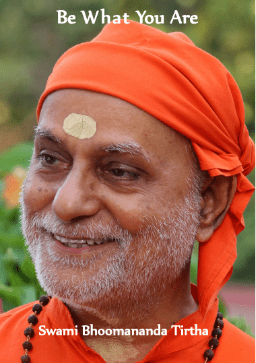
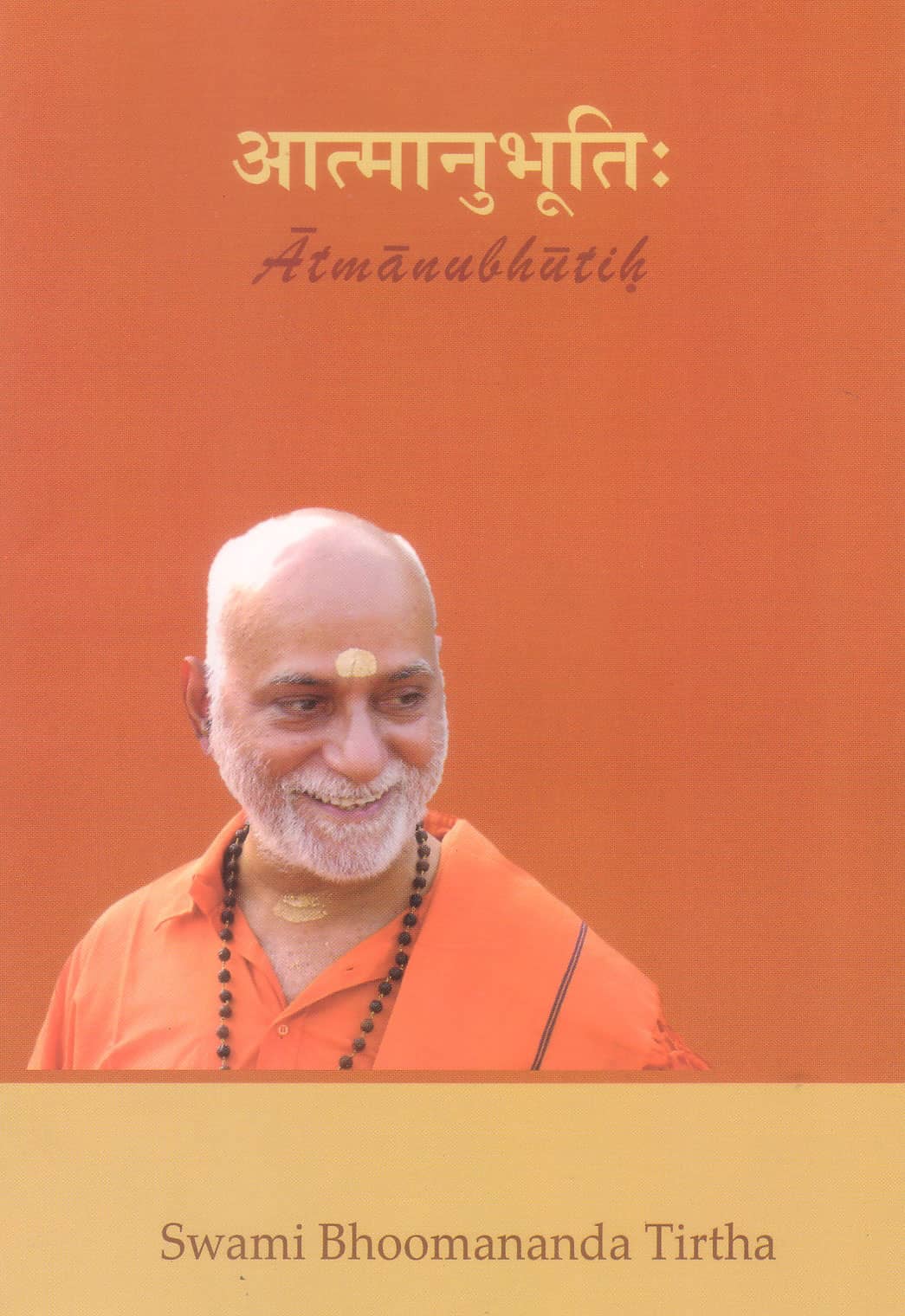


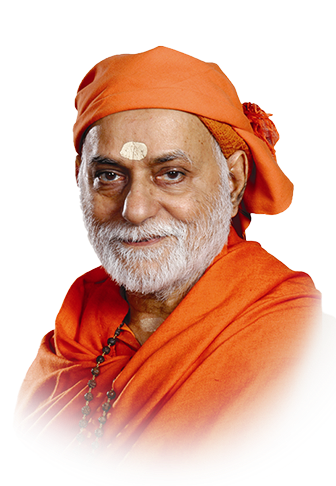

Experience a beautifully designed reading journey with authentic commentary by Poojya Swami Bhoomananda Tirtha.