Aṣṭāvakra Saṃhitā
A Dialogue on Self-realization

Chapter 20, Verse 14
Order Now 
Where is existence, where is non-existence? Where is the one, and where are the two? Of what use is too much talk, nothing arises from me.
See the stunning manner in which King Janaka, an illustrious Knower, of scriptural renown, relates his spiritual realization in front of Sage Ashtavakra, who stepped into the Darbar Hall of Mithila unannounced. In seeing the intruder laugh at the derisional laughter of the entire assembly of distinguished scholars selected to advise the king in his royal mission, Janaka was touched to the quick. Discerning instantly how great a Knower of Truth the uninvited guest was, the king submitted before him the quest of his heart and sought true enlightenment. As strange as the Sage’s bended walk was, even stranger was the style and message contained in his reply. No wonder, the dialogue that followed became the last word on the supreme truth in the cultural history of this great holy land.
Whatever the Sage spoke about spiritual wisdom, dispassion and the Knower, the King absorbed in full. What more? He began to express his own direct experience of the Self, which is totally different from the body, though identified within it. For the King, there was not the least contradiction in the matter. Instead it was a direct personal experience, realization, of the singular presence animating and activating the body, revealing every time its distinctness, majesty and magnificence.
Our body is an epitome of the world, consisting of the pañca-bhūtas. To be different from the body is thus to be distinct from the entire world, creation. Being so, the Knower has limitless freedom to negate and disown anything and everything of the world, for he needs nothing from the world at all. He also rises above any and all concepts evolved on the basis of plurality, the world represents in every front.
Thus Janaka states there is neither existence, nor non-existence at all, in the context of the Self, which transcends all. Equally so, there is neither the idea of one nor of two. Both are but ideas, notions. As notions, they have no real existence or expression. They only emerge and subside within the mind, leaving no count or mark whatever. What verily remains or is present, is the basis, the substratum, of all ideas and notions. That is the Self itself, the ‘I’, which displays all other factors, and that too notionally, like dream phenomena.
So it is imperative to stop indulging in anything whatsoever. Of what use is talking much? Talk about what? There is only the Self, to feel, express and relate to. All else is either not there or is a mere illusion.
Janaka says that nothing emerges from him. He, the Self, alone shines, in its own sovereign, un-relatable effulgence. What a wonderful note of fullness, sufficiency, overwhelming and inundating in every way!
Thus ends the Aṣṭāvakra-gītā.
Harih Om Tat Sat.


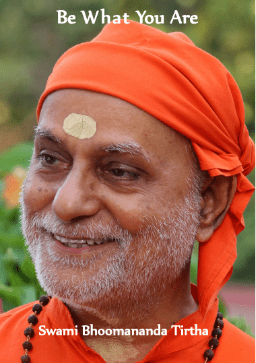
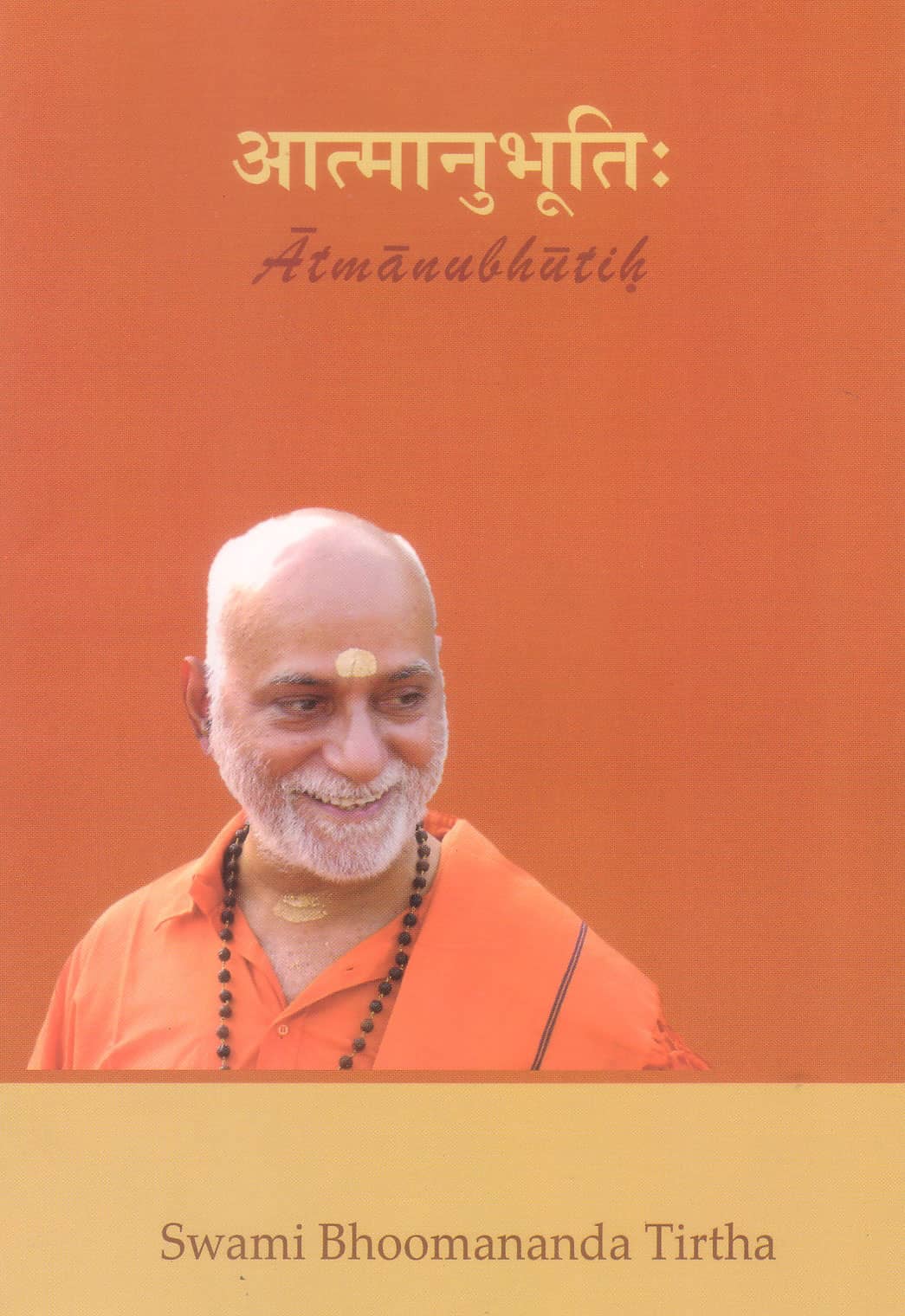



Experience a beautifully designed reading journey with authentic commentary by Poojya Swami Bhoomananda Tirtha.