Aṣṭāvakra Saṃhitā
A Dialogue on Self-realization

Chapter 17, Verse 20
Order Now 
The Knower reaches an indescribable sublime state of fullness freed from mentation, delusion, dream and inertness, a state wherein the mind itself has fallen, become extinct.
The Sage leads the seeker to think deeper and loftier, making him rise above the varietal notes of the world. Truly speaking, the variety is in the inner imprints of the mind. So, the outliving or rising above is of differentiations the mind imprints give rise to.
When you look at the objects outside, they are occupying different places. They also embody many forms and colours. Are such distances and the like true of the mental imprints transpiring within? Or, it is all the same mind-substance reflecting the manyness and differentiations? In place of seeing manifoldness in the mano-vṛttis, mental functions, the Knower grasps the single Consciousness giving rise to the seeming manyness.
Thus proper awareness, delusion, dream, inertness, etc., drop their relevance and influence altogether. This means outliving all that the mind tends to bring about, the intelligence seeks to discriminate. What shines more is the uniform Subject prevalence than the plural notes it engenders.
Look at your son standing in front. He turns around, sits, walks, runs, plays about, lies on the bench, gets up, one thing after another. All along, are you seeing the same son, or different ones? Let his pose and position be anything. Is there a change in him, his presence, content, in what strikes your vision? The perceived object is the same. It is your single son, in different poses and actions.
Because no object enters inside you to cause its vision or experience, what are you differentiating every time? Is it not in reality the uniform expression of the same inner presence, Consciousness, prevailing by itself? What difference is there when thoughts arise or not? Does the process bring about or involve many presences, entities? By thinking, does the mind-substance, namely Consciousness, undergo the least change? Are there any plural substances or entities? It is like the sea water and the countless waves that parade its surface.
Does seeing darkness or light make your eyes blind or bright? Is the brightness or darkness object-born or your own eye-born? In both are not the eyes revealing their own varietal notes?
Likewise, whether the mind presents bright thoughts or delusional ones, how does its content or nature change or suffer? The perception and realization of the same inner presence, the sovereign Consciousness, becomes steady and uniform for the Knower. He reaches a unique, ineffable state, in which all dullness, dream and delusion have no place. Nay, the very differentiating mind itself falls.
Every time everywhere, he is the ‘I’, the Self – in waking, in dream and in sleep, and equally in all that the Consciousness apparently displays within. All are Consciousness alone.
To the exclusion of the inner Consciousness, there is nothing active, vibrant or not so. And that is single, unaffected, abundant and full, by dint of its own nature, characteristic!


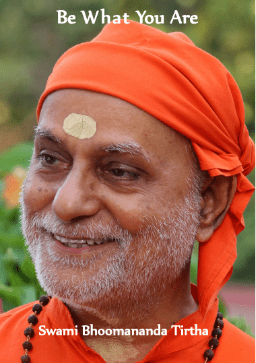
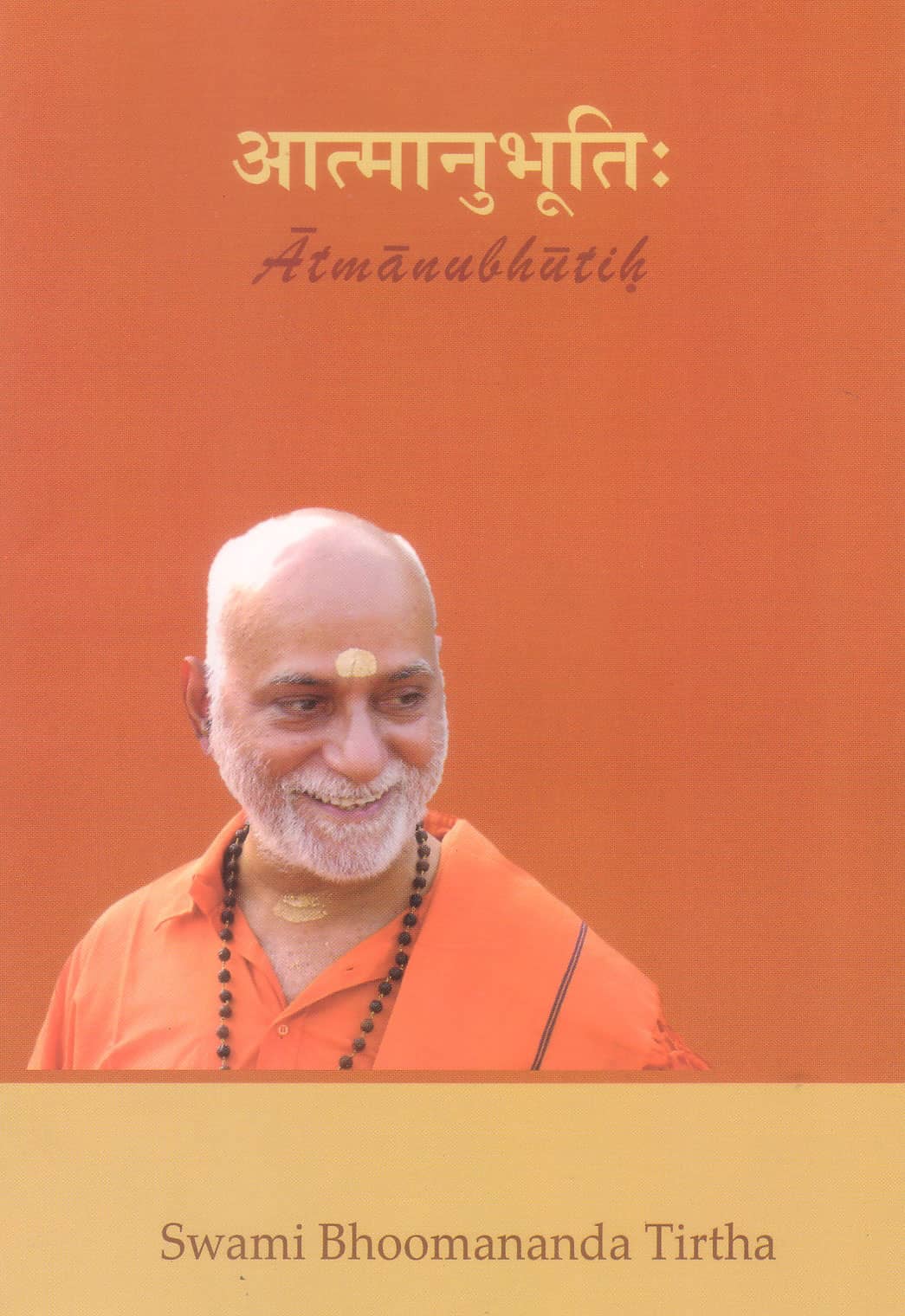



Experience a beautifully designed reading journey with authentic commentary by Poojya Swami Bhoomananda Tirtha.