Aṣṭāvakra Saṃhitā
A Dialogue on Self-realization

Chapter 14, Verse 4
Order Now 
The varied states of one with no doubt whatever inside, yet outwardly wandering care-freely, resemble those of a lunatic. They are known only to those enlightened and elevated like him.
Ashtavakra Maharshi enters a new phase of exposition on the supreme Knower and his visible behaviour and interactions. This is to illustrate the greatness and glory of the Subject Self, the singular witness of the entire creation. It is also to show how the Knower will live and move in the midst of men and women. Deep introspection will alone reveal the import of the Sage’s words.
Mind breeds all doubts and vacillations. Truly speaking, the net result of all adverse experiences, responses and reactions is the doubt and instability that grip the mind. Knowledge of the splendorous Self removes them. Hence, the Knower moves unhindered, aiming and wanting nothing, affected by nothing. Imagine the loftiness and lightness of his inner spiritual inebriation!
The sage has no qualms in saying that the Knower’s carefree, jubilant movements resemble those of a lunatic. He will be like one having lost his mind, with no purpose in whatever he does.
But enlightened persons like him will certainly discern his greatness, as Yadu, the ancient ancestor of Krishna did. Krishna was giving his last message to Uddhava from Dwaraka, when Uddhava submitted: “I am unable to keep away from you even for half a second, O Lord. Take me also where you are leaving for”.
Having completed his mission on earth, Krishna had decided to depart from the world. Krishna’s instruction was to enable Uddhava to overcome his delusional clinging and leave Dwaraka before Krishna left.
Krishna was citing an instance from the life of Emperor Yadu. While riding on his chariot, Yadu happened to meet a wandering ascetic, young and brilliant. He stopped the chariot, got down, fell at the feet of the youngster, and submitted: ‘While all are tottering under the attractions and repulsions caused by sensory objects, how is it that you, like a tusker immersed in the cold flow of the holy Ganges, are utterly unagitated by the world? What is the secret behind your indifference?”
The ascetic smiled and responded with unseen depth and loftiness: “I move freely in the world, not clinging to anything whatever. Yet I closely observe Nature. The world is an open book for learning. Many a sight has taught me. Every time, it is my own intelligence that acted as the teacher. I have learnt from the mountain, the fire, the air, the river. Trees and forests also have taught me.
I learnt a precious lesson from the behaviour of a young girl who had to receive guests who came seeking marriage alliance when her parents were away.
“I have equally learnt from the reflections of a famous song of a prostitute of Mithila City. Distressed by the pangs of her despicable profession, she sang in utter dispassion addressing the Lord of her heart.
“I learnt from the python, from the arrow maker. I also had my lessons from the ascetic’s life. All the 24 teachers I have are seated in my own intelligence. From the body I learned the lesson of dispassion and discrimination.” Krishna was citing the dialogue to instruct Uddhava (Chapters Śrīmad Bhāgavatam 11.7-9).


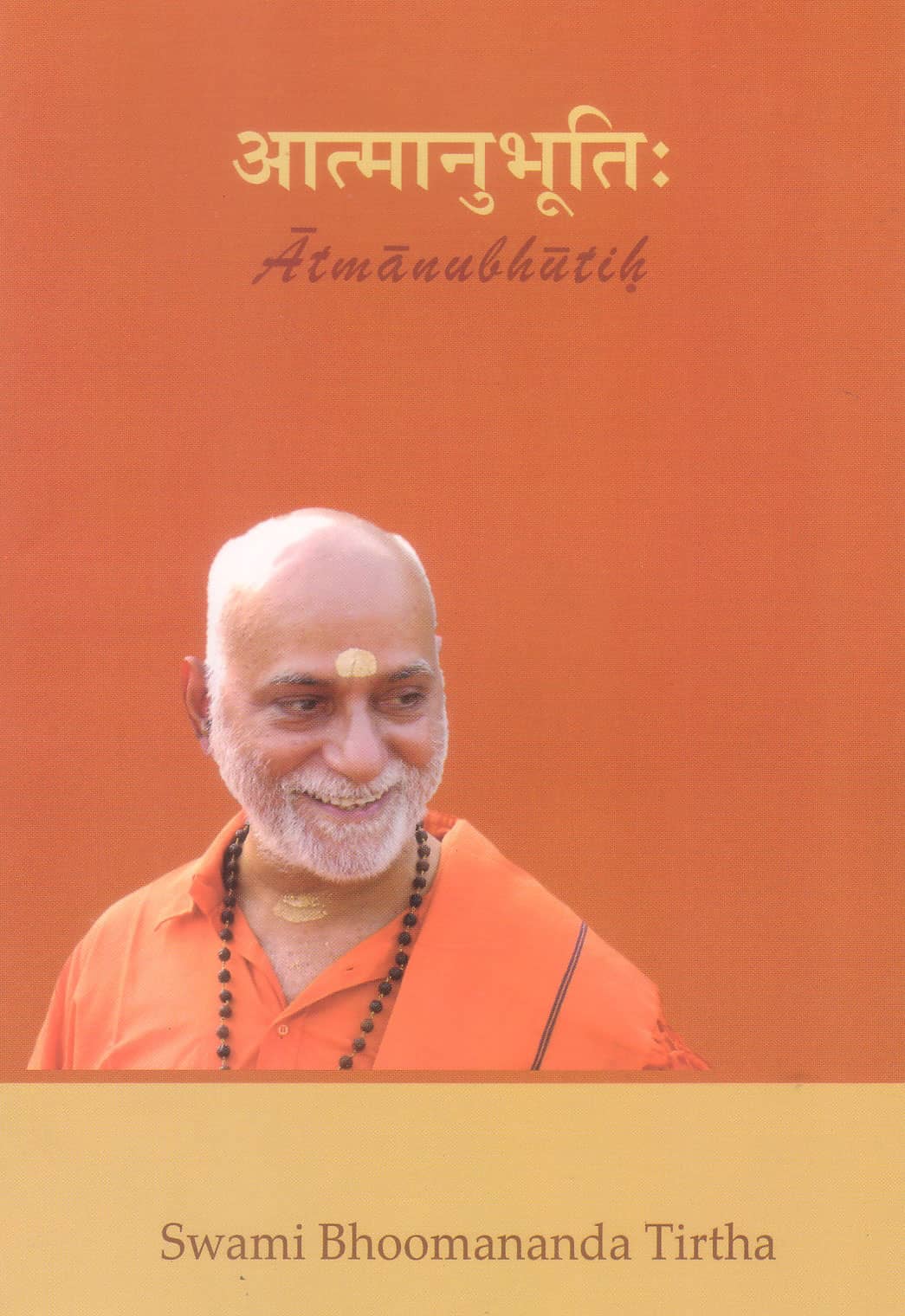


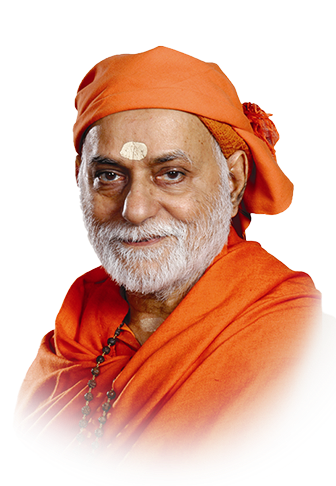

Experience a beautifully designed reading journey with authentic commentary by Poojya Swami Bhoomananda Tirtha.