



Chapter 1: Arjuna-viṣāda-yoga: – Transforming Grief into Yoga
Introduction to Bhagavad Gita Chapter 1 – Arjuna Vishada Yoga
Viṣāda means grief. We always look for joy, but confronted by the bondage created by our own mind and senses, we are repeatedly assailed by grief. It is strange that we seldom enquire deeply into the cause of this ceaseless plight and the way to lasting relief.
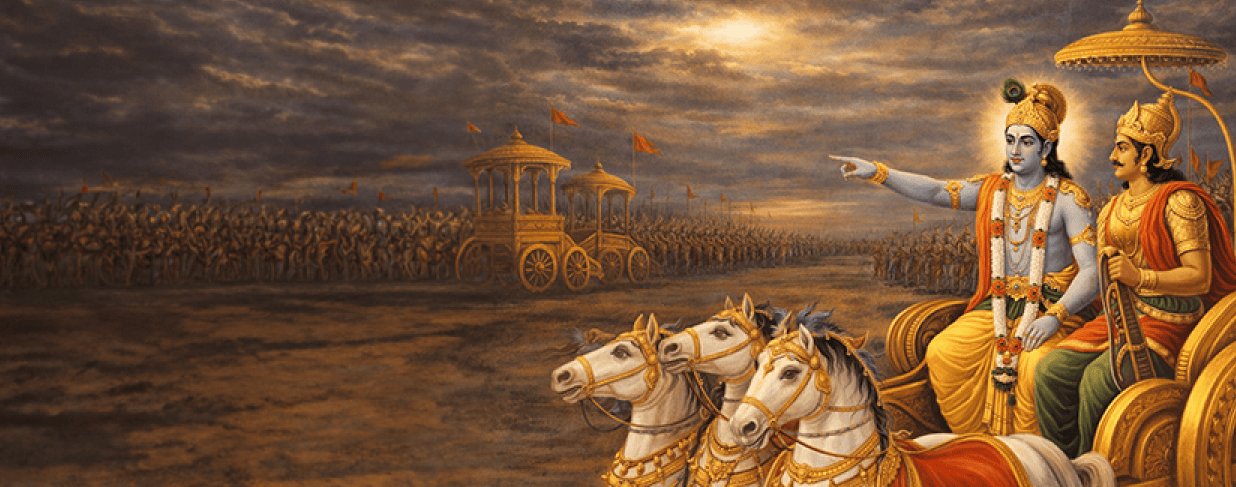
In such a background, viṣāda-yoga of Bhagavad Gita comes as a great eye-opener to the entire mankind. In the battlefield of Kurukshetra, the great heroic fighter Arjuna suddenly crumbled before the actual commencement of the war. His mind became overwhelmed with grief; his intelligence was torn by moral conflict. Arjuna’s illustrious charioteer Krishna took this crisis as an opportunity to turn this grief into an enquiry by introducing the greatness of our real Identity, the Soul.
Grief is what the disturbed mind produces. Intelligence alone can deal with it and bestow the necessary solution. Krishna made Arjuna reflect upon his grief itself in all thoroughness. By encouraging Arjuna to articulate his confusion and examine the turmoil within, Krishna guided him to the threshold of the ultimate enquiry.
This is how grief becomes a strong compulsion to delve deeply into its very source and unearth the Reality that will not merely be an answer to grief or misery but will also be a full solution to all problems of the mind, heart and intelligence. Thus, simple viṣāda becomes a Yoga, a way to unify with the Soul.
BG Chapter 1 Chanting Audio
Bhagavad Gita Chapter 1
Swami Nirviseshananda Tirtha 00:00 00:00
00:00


Complete List of Verses in Bhagavad Gita Chapter 1
Bhagavad Gita 1.1 Dhritarashtra’s Question on Kurukshetra
धृतराष्ट्र उवाच ।
धर्मक्षेत्रे कुरुक्षेत्रे समवेता युयुत्सव: ।
मामका: पाण्डवाश्चैव किमकुर्वत सञ्जय ॥
BG 1.1: English Transliteration
dhṛtarāṣṭra uvāca
dharma-kṣetre kuru-kṣetre
samavetā yuyutsava:
māmakā: pāṇḍavāś-caiva
kim-akurvata sañjaya – 1.1
BG 1.1: Translation
King Dhritarashtra said: O Sanjaya, having assembled in Kurukshetra, an abode of austerity and righteousness, what did my sons and those of Pandu, ambitious as they were to fight, do?

Bhagavad Gita 1.2 Duryodhana Addresses Dronacharya
सञ्जय उवाच
दृष्ट्वा तु पाण्डवानीकं व्यूढं दुर्योधनस्तदा ।
आचार्यमुपसङ्गम्य राजा वचनमब्रवीत् ॥
BG 1.2: English Transliteration
sañjaya uvāca
dṛṣṭvā tu pāṇḍavānīkaṃ
vyūḍhaṃ duryodhanas-tadā
ācāryam-upasaṅgamya
rājā vacanam-abravīt – 1.2
BG 1.2: Translation
Sanjaya said: Duryodhana, the crown prince, on seeing the Pandava army in full array, went to his Teacher and said:
Bhagavad Gita 1.3 Observing the Pandava Army
पश्यैतां पाण्डुपुत्राणामाचार्य महतीं चमूम् ।
व्यूढां द्रुपदपुत्रेण तव शिष्येण धीमता ॥
BG 1.3: English Transliteration
paśyaitāṃ pāṇḍu-putrāṇām-
ācārya mahatīṃ camūm
vyūḍhāṃ drupada-putreṇa
tava śiṣyeṇa dhīmatā – 1.3
BG 1.3: Translation
Look, O Teacher, at the great Pandava army, arrayed by Dhrishtadyumna, your intelligent disciple, the son of Drupada.
Bhagavad Gita 1.4 Mighty Warriors of the Pandavas
अत्र शूरा महेष्वासा भीमार्जुनसमा युधि ।
युयुधानो विराटश्च द्रुपदश्च महारथ: ॥
BG 1.4: English Transliteration
atra śūrā maheṣvāsā
bhīmārjunasamā yudhi
yuyudhāno virāṭaś-ca
drupadaś-ca mahāratha: – 1.4
Bhagavad Gita 1.5 Great Heroes in the Army
धृष्टकेतुश्चेकितान: काशिराजश्च वीर्यवान् ।
पुरुजित्कुन्तिभोजश्च शैब्यश्च नरपुङ्गव: ॥
BG 1.5: English Transliteration
dhṛṣṭaketuś-cekitāna:
kāśirājaś-ca vīryavān
purujit-kuntibhojaś-ca
śaibyaś-ca nara-puṅgava: – 1.5
Bhagavad Gita 1.6 Powerful Fighters Supporting the Pandavas
युधामन्युश्च विक्रान्त उत्तमौजाश्च वीर्यवान् ।
सौभद्रो द्रौपदेयाश्च सर्व एव महारथा: ॥
BG 1.6: English Transliteration
yudhāmanyuś-ca vikrānta
uttamaujāś-ca vīryavān
saubhadro draupadeyāś-ca
sarva eva mahārathā: – 1.6
BG 1.4-6: Translation
Here are powerful heroes, equal to Bheema and Arjuna, great fighters Yuyudhana, Virata, Drupada, valorous Dhrishtaketu, Chekitana, Kashi King, Purujit, Kuntibhoja and Shaibya, all best of archers, strong Yudhamanyu, unyielding Uttamaujas, Subhadra’s son, Draupadi’s children, all illustrious Maharathis (warriors with mastery in all combat skills).
Bhagavad Gita 1.7 Leaders of the Kaurava Army
अस्माकं तु विशिष्टा ये तान्निबोध द्विजोत्तम ।
नायका मम सैन्यस्य संज्ञार्थं तान्ब्रवीमि ते ॥
BG 1.7: English Transliteration
asmākaṃ tu viśiṣṭā ye
tān-nibodha dvijottama
nāyakā mama sainyasya
sañjñārthaṃ tān-bravīmi te – 1.7
BG 1.7: Translation
O famous among Brahmanas (Drona), know our distinguished fighters, leading my army, as I render their names for your information.
Bhagavad Gita 1.8 Great Warriors Supporting Duryodhana
भवान्भीष्मश्च कर्णश्च कृपश्च समितिञ्जय: ।
अश्वत्थामा विकर्णश्च सौमदत्तिस्तथैव च ॥
BG 1.8: English Transliteration
bhavān-bhīṣmaś-ca karṇaś-ca
kṛpaś-ca samitiñjaya:
aśvatthāmā vikarṇaś-ca
saumadattis-tathaiva ca – 1.8
BG 1.8: Translation
Yourself, Bheeshma also, then Karna, Kripa, Samitinjaya too, then Ashvatthama, Vikarna and also Somadatta’s son.
Bhagavad Gita 1.9 Strength of the Kaurava Forces
अन्ये च बहव: शूरा मदर्थे त्यक्तजीविता: ।
नानाशस्त्रप्रहरणा: सर्वे युद्धविशारदा: ॥
BG 1.9: English Transliteration
anye ca bahava: śūrā
mad-arthe tyakta-jīvitā:
nānā-śastra-praharaṇā:
sarve yuddha-viśāradā: – 1.9
BG 1.9: Translation
And many highly skilled fighters adept in using various weapons and missiles, numerous heroic fighters – all are here to sacrifice their lives for my sake.
Bhagavad Gita 1.10 Comparing the Two Armies
अपर्याप्तं तदस्माकं बलं भीष्माभिरक्षितम् ।
पर्याप्तं त्विदमेतेषां बलं भीमाभिरक्षितम् ॥
BG 1.10: English Transliteration
aparyāptaṃ tad-asmākaṃ
balaṃ bhīṣmābhirakṣitam
paryāptaṃ tvidam-eteṣāṃ
balaṃ bhīmābhirakṣitam – 1.10
BG 1.10: Translation
Our army shielded by Bheeshma is limited, insufficient. Whereas their army protected by Bheema is unlimited, sufficient.
Bhagavad Gita 1.11 Protecting Bhishma
अयनेषु च सर्वेषु यथाभागमवस्थिता: ।
भीष्ममेवाभिरक्षन्तु भवन्त: सर्व एव हि ॥
BG 1.11: English Transliteration
ayaneṣu ca sarveṣu
yathā-bhāgam-avasthitā:
bhīṣmam-evābhirakṣantu
bhavanta: sarva eva hi – 1.11
BG 1.11: Translation
Let all the army divisions, yourself and the rest, retaining their positions protect well Bheeshma alone.
Bhagavad Gita 1.12 Bhishma Blows His Conch
तस्य संजनयन्हर्षं कुरुवृद्ध: पितामह: ।
सिंहनादं विनद्योच्चै: शङ्खं दध्मौ प्रतापवान् ॥
BG 1.12: English Transliteration
tasya sañjanayan-harṣaṃ
kuru-vṛddha: pitāmaha:
siṃhanādaṃ vinadyoccai:
śaṅkhaṃ dadhmau pratāpavān – 1.12
BG 1.12: Translation
The oldest among the Kurus, the Grandfather, the invincible Bheeshma roared like a lion and blew his conch, cheering up Duryodhana’s mind.
Bhagavad Gita 1.13 War Instruments Sound
तत: शङ्खाश्च भेर्यश्च पणवानकगोमुखा: ।
सहसैवाभ्यहन्यन्त स शब्दस्तुमुलोऽभवत् ॥
BG 1.13: English Transliteration
tata: śaṅkhāś-ca bheryaś-ca
paṇavānaka-gomukhā:
sahasaivābhyahanyanta
sa śabdas-tumulo’bhavat – 1.13
BG 1.13: Translation
Immediately blared forth the conches, kettledrums, tabors, trumpets and cow-horns; it was a tumultuous sound indeed.
Bhagavad Gita 1.14 Krishna and Arjuna Blow Their Conches
तत: श्वेतैर्हयैर्युक्ते महति स्यन्दने स्थितौ ।
माधव: पाण्डवश्चैव दिव्यौ शङ्खौ प्रदध्मतु: ॥
BG 1.14: English Transliteration
tata: śvetair-hayair-yukte
mahati syandane sthitau
mādhava: pāṇḍavaś-caiva
divyau śaṅkhau pradadhmatu: – 1.14
BG 1.14: Translation
Thereupon Madhava (Krishna) and Arjuna (Pandu’s son), positioned in the great chariot yoking white horses, blew their divine conches.
Bhagavad Gita 1.15 The Blowing of the Sacred Conches
पाञ्चजन्यं हृषीकेशो देवदत्तं धनंजय: ।
पौण्ड्रं दध्मौ महाशङ्खं भीमकर्मा वृकोदर: ॥
BG 1.15: English Transliteration
pāñca-janyaṃ hṛṣīkeśo
deva-dattaṃ dhanañjaya:
pauṇḍraṃ dadhmau mahā-śaṅkhaṃ
bhīma-karmā vṛkodara: – 1.15
BG 1.15: Translation
Hrisheekesha (Krishna) blew Panchajanya; Dhananjaya (Arjuna) blew Devadatta; Vrikodara (the performer of terrific deeds, Bheema) blew his great conch Paundram.
Bhagavad Gita 1.16 Yudhishthira and Warriors’ Conches
अनन्तविजयं राजा कुन्तीपुत्रो युधिष्ठिर: ।
नकुल: सहदेवश्च सुघोषमणिपुष्पकौ ॥
BG 1.16: English Transliteration
anantavijayaṃ rājā
kuntī-putro yudhiṣṭhira:
nakula: sahadevaś-ca
sughoṣa-maṇipuṣpakau – 1.16
BG 1.16: Translation
King Yudhishthira, the son of Kunti, blew Anantavijaya; Nakula and Sahadeva blew their conches Sughosha and Manipushpaka.
Bhagavad Gita 1.17 Allied Kings Sound Their Conches
काश्यश्च परमेष्वास: शिखण्डी च महारथ: ।
धृष्टद्युम्नो विराटश्च सात्यकिश्चापराजित: ॥
BG 1.17: English Transliteration
kāśyaśca parameṣvāsa:
śikhaṇḍī ca mahāratha:
dhṛṣṭadyumno virāṭaś-ca
sātyakiś-cāparājita: – 1.17
BG 1.17: Translation
Kashi King – an adept bow wielder, Shikhandi – the distinguished chariot fighter, Dhrishtadyumna, Virata, and Satyaki – the undefeated.
Bhagavad Gita 1.18 Drupada and the Princes Sound Their Conches
द्रुपदो द्रौपदेयाश्च सर्वश: पृथिवीपते ।
सौभद्रश्च महाबाहु: शङ्खान्दध्मु: पृथक् पृथक् ॥
BG 1.18: English Transliteration
drupado draupadeyāś-ca
sarvaśa: pṛthivī-pate
saubhadraś-ca mahā-bāhu:
śaṅkhān-dadhmu: pṛthak-pṛthak – 1.18
BG 1.18: Translation
O Lord of the Earth (King Dhritarashtra)! Drupada, Draupadi’s sons, and the mighty-armed son of Subhadra, blew individually their war conches.
Bhagavad Gita 1.19 Terrifying Sound of the Conches
स घोषो धार्तराष्ट्राणां हृदयानि व्यदारयत् ।
नभश्च पृथिवीं चैव तुमुलो व्यनुनादयन् ॥
BG 1.19: English Transliteration
sa ghoṣo dhārta-rāṣṭrāṇāṃ
hṛdayāni vyadārayat
nabhaś-ca pṛthivīṃ caiva
tumulo vyanunādayan – 1.19
BG 1.19: Translation
That sound, filling and echoing in heaven and earth alike, verily rent asunder the hearts of Dhritarashtra’s army.
Bhagavad Gita 1.20 Arjuna Requests Krishna
अथ व्यवस्थितान् दृष्ट्वा धार्तराष्ट्रान् कपिध्वज: ।
प्रवृत्ते शस्त्रसंपाते धनुरुद्यम्य पाण्डव: ।
हृषीकेशं तदा वाक्यमिदमाह महीपते ॥
BG 1.20: English Transliteration
atha vyavasthitān dṛṣṭvā
dhārtarāṣṭrān kapi-dhvaja:
pravṛtte śastra-sampāte
dhanur-udyamya pāṇḍava:
hṛṣīkeśaṃ tadā vākyam-
idam-āha mahī-pate – 1.20
BG 1.20: Translation
O Lord of the Earth (King Dhritarashtra)! When the discharge of arrows was about to begin, seeing the assembled warriors, Arjuna, from his chariot flying aloft the flag with the emblem of Lord Hanumana, lifted his bow, and spoke to Hrisheekesha (Krishna, his charioteer) thus:
Bhagavad Gita 1.21 Arjuna Asks Krishna to Place the Chariot
अर्जुन उवाच ।
सेनयोरुभयोर्मध्ये रथं स्थापय मेऽच्युत ॥
BG 1.21: English Transliteration
arjuna uvāca
senayor-ubhayor-madhye
rathaṃ sthāpaya me’cyuta – 1.21
Bhagavad Gita 1.22 Arjuna Wants to Observe the Warriors
यावदेतान्निरीक्षेऽहं योद्धुकामानवस्थितान् ।
कैर्मया सह योद्धव्यमस्मिन्रणसमुद्यमे ॥
BG 1.22: English Transliteration
yāvad-etān-nirīkṣe’haṃ
yoddhu-kāmān-avasthitān
kair-mayā saha yoddhavyam-
asmin-raṇa-samudyame – 1.22
BG 1.21-22: Translation
Arjuna said: O Achyuta (Krishna)! In this eventful war, station my chariot between the two armies, who have come aspiring to fight their best, in a manner that I can see those whom I have to encounter.
Bhagavad Gita 1.23 Seeing the Opposing Army
योत्स्यमानानवेक्षेऽहं य एतेऽत्र समागता: ।
धार्तराष्ट्रस्य दुर्बुद्धेर्युद्धे प्रियचिकीर्षव: ॥
BG 1.23: English Transliteration
yotsyamānān-avekṣe’haṃ
ya ete’tra samāgatā:
dhārtarāṣṭrasya durbuddher-
yuddhe priya-cikīrṣava: – 1.23
BG 1.23: Translation
Let me see all those who have come here for this war, wishing to please the evil-minded Duryodhana.
Bhagavad Gita 1.24 Krishna Places the Chariot Between Armies
सञ्जय उवाच ।
एवमुक्तो हृषीकेशो गुडाकेशेन भारत ।
सेनयोरुभयोर्मध्ये स्थापयित्वा रथोत्तमम् ॥
BG 1.24: English Transliteration
sañjaya uvāca
evam-ukto hṛṣīkeśo
guḍākeśena bhārata
senayor-ubhayor-madhye
sthāpayitvā rathottamam – 1.24
Bhagavad Gita 1.25 Krishna Shows the Kuru Warriors
भीष्मद्रोणप्रमुखत: सर्वेषां च महीक्षिताम् ।
उवाच पार्थ पश्यैतान् समवेतान् कुरूनिति ॥
BG 1.25: English Transliteration
bhīṣma-droṇa-pramukhata:
sarveṣāṃ ca mahīkṣitām
uvāca pārtha paśyaitān
samavetān kurūn-iti – 1.25
BG 1.24-25: Translation
Sanjaya said: O Bhārata (Dhritarashtra, a king of the Bharata lineage)! Told like this by Arjuna (Gudakesha, the conqueror of sleep), Krishna (Hrisheekesha, the controller of senses), after stationing the chariot between the two armies, particularly in front of Bheeshma and Drona and all the other rulers, said: “Partha, see well the Kuru descendants assembled here.”
Bhagavad Gita 1.26 Arjuna Sees His Relatives
तत्रापश्यत्स्थितान् पार्थ: पितॄनथ पितामहान् ।
आचार्यान् मातुलान् भ्रातॄन् पुत्रान् पौत्रान् सखींस्तथा ।
श्वशुरान्सुहृदश्चैव सेनयोरुभयोरपि ॥
BG 1.26: English Transliteration
tatrāpaśyat-sthitān pārtha:
pitṝnatha pitāmahān
ācāryān mātulān bhrātṝn
putrān pautrān sakhīṃs-tathā
śvaśurān-suhṛdaś-caiva
senayor-ubhayor-api – 1.26
Bhagavad Gita 1.27 Arjuna Overwhelmed with Grief
तान्समीक्ष्य स कौन्तेय: सर्वान्बन्धूनवस्थितान् ।
कृपया परयाविष्टो विषीदन्निदमब्रवीत् ॥
BG 1.27: English Transliteration
tān-samīkṣya sa kaunteya:
sarvān-bandhūn-avasthitān
kṛpayā parayāviṣṭo
viṣīdann-idam-abravīt – 1.27
BG 1.26-27: Translation
There Partha (Arjuna) saw standing on both sides – fathers, grandfathers, teachers, uncles, brothers, sons, grandsons, likewise close associates, fathers-in-law and friends.
Seeing all the relatives stand in full array on both sides, the son of Kunti (Arjuna), overtaken by extreme sympathy and grief, spoke thus:
Bhagavad Gita 1.28 Arjuna’s Body Trembles
अर्जुन उवाच ।
दृष्ट्वेमं स्वजनं कृष्ण युयुत्सुं समुपस्थितम् ।
सीदन्ति मम गात्राणि मुखं च परिशुष्यति ॥
BG 1.28: English Transliteration
arjuna uvāca
dṛṣṭvemaṃ svajanaṃ kṛṣṇa
yuyutsuṃ samupasthitam
sīdanti mama gātrāṇi
mukhaṃ ca pariśuṣyati – 1.28
Bhagavad Gita 1.29 Gandiva Slips from Arjuna’s Hand
वेपथुश्च शरीरे मे रोमहर्षश्च जायते ।
गाण्डीवं स्रंसते हस्तात्त्वक्चैव परिदह्यते ॥
BG 1.29: English Transliteration
vepathuś-ca śarīre me
roma-harṣaś-ca jāyate
gāṇḍīvaṃ sraṃsate hastāt-
tvak-caiva paridahyate – 1.29
Bhagavad Gita 1.30 Arjuna Cannot Stand Steady
न च शक्नोम्यवस्थातुं भ्रमतीव च मे मन: ।
निमित्तानि च पश्यामि विपरीतानि केशव ॥
BG 1.30: English Transliteration
na ca śaknomy-avasthātuṃ
bhramatīva ca me mana:
nimittāni ca paśyāmi
viparītāni keśava – 1.30
BG 1.28-30: Translation
Arjuna said: Seeing my relatives standing eager to fight, O Krishna, my limbs are failing, mouth is getting dry; there is tremor and horripilation all over my body; Gandiva (Arjuna’s famous bow) is slipping from my fist; skin is scorching all over; I am unable to stand; my mind is whirling. Also, I see ill omens, O Keshava.
Bhagavad Gita 1.31 Arjuna Sees No Good in War
न च श्रेयोऽनुपश्यामि हत्वा स्वजनमाहवे ।
न काङ्क्षे विजयं कृष्ण न च राज्यं सुखानि च ॥
BG 1.31: English Transliteration
na ca śreyo’nupaśyāmi
hatvā svajanam-āhave
na kāṅkṣe vijayaṃ kṛṣṇa
na ca rājyaṃ sukhāni ca – 1.31
BG 1.31: Translation
Neither do I see any lasting good by killing my own people in this war, O Krishna, nor do I aspire for victory, the kingdom and royal pleasures.
Bhagavad Gita 1.32 Arjuna Rejects Kingdom and Pleasure
किं नो राज्येन गोविन्द किं भोगैर्जीवितेन वा ।
येषामर्थे काङ्क्षितं नो राज्यं भोगा: सुखानि च ॥
BG 1.32: English Transliteration
kiṃ no rājyena govinda
kiṃ bhogair-jīvitena vā
yeṣām-arthe kāṅkṣitaṃ no
rājyaṃ bhogā: sukhāni ca – 1.32
Bhagavad Gita 1.33 Why Fight for Kingdom?
त इमेऽवस्थिता युद्धे प्राणांस्त्यक्त्वा धनानि च ।
आचार्या: पितर: पुत्रास्तथैव च पितामहा: ॥
BG 1.33: English Transliteration
ta ime’vasthitā yuddhe
prāṇāṃs-tyaktvā dhanāni ca
ācāryā: pitara: putrās-
tathaiva ca pitāmahā: – 1.33
Bhagavad Gita 1.34 Arjuna Lists His Relatives
मातुला: श्वशुरा: पौत्रा: श्याला: सम्बन्धिनस्तथा ।
English Transliteration
mātulā: śvaśurā: pautrā:
śyālā: sambandhinas-tathā – 1.34
BG 1.32-1.34: Translation
Of what use, O Govinda, is kingdom, or even pleasures of life? Those for whose sake we desire the kingdom, pleasures and happiness, they are standing here to fight, abandoning their life and wealth – teachers, parents, sons, grandfathers, uncles, fathers-in-law, grand-children, brothers-in-law and relatives.
Bhagavad Gita 1.35 Arjuna Refuses to Kill His Kin
एतान्न हन्तुमिच्छामि घ्नतोऽपि मधुसूदन ।
अपि त्रैलोक्यराज्यस्य हेतो: किं नु महीकृते ॥
BG 1.35: English Transliteration
etān-na hantum-icchāmi
ghnato’pi madhusūdana
api trailokya-rājyasya
heto: kiṃ nu mahīkṛte – 1.35
BG 1.35: Translation
Even if I am slain, O Madhusudana (Krishna), I would not wish to kill these people; even for the sake of the three worlds; how then for the sake of a kingdom on earth!
Bhagavad Gita 1.36 Sin in Killing Family Members
निहत्य धार्तराष्ट्रान्न: का प्रीति: स्याज्जनार्दन ।
पापमेवाश्रयेदस्मान्हत्वैतानाततायिन: ॥
BG 1.36: English Transliteration
nihatya dhārtarāṣṭrān-na:
kā prīti: syāj-janārdana
pāpam-evāśrayed-asmān-
hatvaitān-ātatāyina: – 1.36
BG 1.36: Translation
What satisfaction will there be for us by killing Dhritarashtra’s sons, O Janardana (Krishna)? By slaying them, though they are criminals, sin alone will accrue to us.
Bhagavad Gita 1.37 Why Should We Kill Our Relatives?
तस्मान्नार्हा वयं हन्तुं धार्तराष्ट्रान् स्वबान्धवान् ।
स्वजनं हि कथं हत्वा सुखिन: स्याम माधव ॥
BG 1.37: English Transliteration
tasmān-nārhā vayaṃ hantuṃ
dhārtarāṣṭrān sva-bāndhavān
svajanaṃ hi kathaṃ hatvā
sukhina: syāma mādhava – 1.37
BG 1.37: Translation
Therefore, we should not kill these sons of Dhritarashtra, who are our relatives. By destroying our own people, how can we become happy, O Madhava?
Bhagavad Gita 1.38 Ignorance of the Kauravas
यद्यप्येते न पश्यन्ति लोभोपहतचेतस: ।
कुलक्षयकृतं दोषं मित्रद्रोहे च पातकम् ॥
BG 1.38: English Transliteration
yady-apy-ete na paśyanti
lobhopahata-cetasa:
kula-kṣaya-kṛtaṃ doṣaṃ
mitra-drohe ca pātakam – 1.38
Bhagavad Gita 1.39 Destruction of Family Traditions
कथं न ज्ञेयमस्माभि: पापादस्मान्निवर्तितुम् ।
कुलक्षयकृतं दोषं प्रपश्यद्भिर्जनार्दन ॥
BG 1.39: English Transliteration
kathaṃ na jñeyam-asmābhi:
pāpād-asmān-nivartitum
kula-kṣaya-kṛtaṃ doṣaṃ
prapaśyadbhir-janārdana – 1.39
BG 1.38-1.39: Translation
Although these people, overpowered by greed, fail to see the evil in destruction of lineage and the sin of hostility to friends, why not we, O Janardana, seeing the evil of causing extinction of the family, refrain from this sinful mission?
Bhagavad Gita 1.40 Collapse of Dharma
कुलक्षये प्रणश्यन्ति कुलधर्मा: सनातना: ।
धर्मे नष्टे कुलं कृत्स्नमधर्मोऽभिभवत्युत ॥
BG 1.40: English Transliteration
kula-kṣaye praṇaśyanti
kula-dharmā: sanātanā:
dharme naṣṭe kulaṃ kṛtsnam-
adharmo’bhibhavaty-uta – 1.40
BG 1.40: Translation
In the extinction of a family, the age-old rites and traditions of the family cease to be. When the traditional dharma is lost, unrighteousness and lawlessness will overtake the whole community.
Bhagavad Gita 1.41 Rise of Adharma
अधर्माभिभवात्कृष्ण प्रदुष्यन्ति कुलस्त्रिय: ।
स्त्रीषु दुष्टासु वार्ष्णेय जायते वर्णसङ्कर: ॥
BG 1.41: English Transliteration
adharmābhibhavāt-kṛṣṇa
praduṣyanti kula-striya:
strīṣu duṣṭāsu vārṣṇeya
jāyate varṇa-saṅkara: – 1.41
BG 1.41: Translation
When adharma predominates, O Krishna, the women of the family become corrupt. Women tending to be immoral, O Varshneya (Krishna, a descendant of the Vrishni-clan), admixture of varṇas (predominant qualities in a clan) follows.
Bhagavad Gita 1.42 Ancestors Fall Without Rituals
सङ्करो नरकायैव कुलघ्नानां कुलस्य च ।
पतन्ति पितरो ह्येषां लुप्तपिण्डोदकक्रिया: ॥
BG 1.42: English Transliteration
saṅkaro narakāyaiva
kula-ghnānāṃ kulasya ca
patanti pitaro hy-eṣāṃ
lupta-piṇḍodaka-kriyā: – 1.42
BG 1.42: Translation
Admixture of varṇas conduces to hell for the lineage as well as the destroyers of lineage. The ancestors will then fall from their lofty domain, due to lack of the customary ‘rice-ball offering’ and allied rituals performed for the sake of departed souls.
Bhagavad Gita 1.43 Family Traditions Destroyed
दोषैरेतै: कुलघ्नानां वर्णसङ्करकारकै: ।
उत्साद्यन्ते जातिधर्मा: कुलधर्माश्च शाश्वता: ॥
BG 1.43: English Transliteration
doṣair-etai: kula-ghnānāṃ
varṇa-saṅkara-kārakai:
utsādyante jāti-dharmā:
kula-dharmāś-ca śāśvatā: – 1.43
BG 1.43: Translation
By these misdeeds of the family-destroyers who are bent on causing admixture of varṇas, the rituals of their clan as well as the long-standing auspicious traditions of their lineages are ruined.
Bhagavad Gita 1.44 Hell Awaits Destroyers of Families
उत्सन्नकुलधर्माणां मनुष्याणां जनार्दन ।
नरकेऽनियतं वासो भवतीत्यनुशुश्रुम ॥
BG 1.44: English Transliteration
utsanna-kula-dharmāṇāṃ
manuṣyāṇāṃ janārdana
narake’niyataṃ vāso
bhavatīty-anuśuśruma – 1.44
BG 1.44: Translation
Those who corrupt their family morals and auspicious practices, O Janardana, are bound to live in hell for many years. This is what we have heard.
Bhagavad Gita 1.45 The Sin of Greed and War
अहो बत महत्पापं कर्तुं व्यवसिता वयम् ।
यद्राज्यसुखलोभेन हन्तुं स्वजनमुद्यता: ॥
BG 1.45: English Transliteration
aho bata mahat-pāpaṃ
kartuṃ vyavasitā vayam
yad-rājya-sukha-lobhena
hantuṃ svajanam-udyatā: – 1.45
BG 1.45: Translation
Alas! We are out to perpetrate a great sin by killing our kinsmen, solely because of our greed for enjoying the kingdom and the royal comforts.
Bhagavad Gita 1.46 Arjuna Chooses Not to Fight
यदि मामप्रतीकारमशस्त्रं शस्त्रपाणय: ।
धार्तराष्ट्रा रणे हन्युस्तन्मे क्षेमतरं भवेत् ॥
BG 1.46: English Transliteration
yadi mām-apratīkāram-
aśastraṃ śastra-pāṇaya:
dhārtarāṣṭrā raṇe hanyus-
tan-me kṣemataraṃ bhavet – 1.46
BG 1.46: Translation
It would be rather better for me if Dhritarashtra’s sons, armed with weapons, kill me while I stand unarmed and un-defending.
Bhagavad Gita 1.47 Arjuna Drops His Bow in Despair
सञ्जय उवाच।
एवमुक्त्वार्जुन: संख्ये रथोपस्थ उपाविशत् ।
विसृज्य सशरं चापं शोकसंविग्नमानस: ॥
BG 1.47: English Transliteration
sañjaya uvāca
evam-uktvārjuna: saṅkhye
rathopastha upāviśat
visṛjya saśaraṃ cāpaṃ
śoka-saṃvigna-mānasa: – 1.47
BG 1.47: Translation
Sanjaya said: Having said this in the battlefield, Arjuna with his mind immersed in grief, sat down on the chariot seat, laying down his bow and arrow.
ओं तत्सदिति श्रीमद्भगवद्गीतासूपनिषत्सु ब्रह्मविद्यायां योगशास्त्रे श्रीकृष्णार्जुनसंवादे अर्जुनविषादयोगो नाम प्रथमोऽध्याय: ।
English Transliteration
oṃ tat-sad-iti śrīmad-bhagavad-
gītāsūpaniṣatsu brahma-vidyāyāṃ
yoga-śāstre śrīkṛṣṇārjuna-saṃvāde arjuna-
viṣāda-yogo nāma prathamo’dhyāya:
Translation
Om – the symbol of Brahman, tat – that singular Reality (Brahman), sat – the ever abiding presence (Brahman).
Thus ends the first chapter entitled Arjuna-viṣāda Yoga during the Srikrishna-Arjuna dialogue in Śrīmad Bhagavad Gita, constituting Yoga-śāstra, which falls within Brahmavidya as presented in the Vedic Upanishads.

Select Chapter and Verse