Bhagavad Gita
Bhagavad Gita’s message even today is a full redress to the conflicted mind and confused intelligence.
Get Your Copy now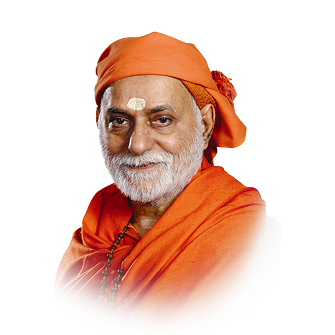


Discover the Timeless Wisdom of the Bhagavad Gita
Bhagavad Gita is an immortal and eternal exposition of the Supreme truth of human life. It is a
deep and exhaustive dialogue on practical problems of life and their ultimate solution. It covers
the entire range of human life, its needs and fulfilment. A problem of any kind, objective or
subjective, first arises in the mind. And the solution to it always lies with the intelligence, the only
agency to act upon the mind and resolve its emotional conflicts. Thus, mind and intelligence alone
have to generate the real strength to face any situation.
Bhagavad Gita, through every page and every verse, empowers seekers to accomplish this task
unfailingly, by helping to imbibe and display greater clarity, insight and resolve, to pursue life and its varied
interactions with exemplary confidence and courage Bhagavad Gita discusses and reveals the finest art
of uniting one’s action, word, and thought with the very source of these, namely the Self. It discusses
Buddhi-Yoga, by the practice of which a seeker can bring about an inner transformation, wherein
everything is dissolved into the Subject Self.
Bhagavad Gita is not a religious text. It is a dialogue between two fighters, Krishna and Arjuna, in the midst of the unprecedented Mahabharata war. War being the most terrible human activity, coming under public administration, the discussion to dispel grief, doubt and fear from Arjuna and engross him in activity, becomes relevant to all active and interactive people everywhere, at any time.
Each of the 18 chapters of Bhagavad Gita discuss how every diverse aspect of life and interactions can be transformed
into a consistent pursuit leading the human to the ultimate yogic expanse of Supreme Oneness.

Chapter-Wise Bhagavad Gita Message

Swamiji’s Approach to the Gita
Swami Bhoomananda Tirtha has been disseminating the message of Bhagavad Gita to seekers all over the world for more than 65 years. It has been a natural consequence of his intense fondness and wholesome dedication to spiritual wisdom.
Swamiji explains the Bhagavad Gita verses, revealing their intrinsic meaning, purpose, and relevance. His direct realization and experience of the Truth, add a depth and profundity to his expositions.
He repeatedly emphasizes that Gita is not a religious gospel. It is a deep and exhaustive dialogue on the practical problems of life and their resolution by the mind and intelligence. He urges seekers to take up the Sadhana of reading the Gita studiously, and imbibe the deeper message.

Bhagavad Gita Explained Chapter by Chapter
Swami Bhoomananda Tirtha
Poojya Swamiji has delivered numerous talks on the Bhagavad Gita across India and abroad, with the core aim of helping seekers integrate its timeless wisdom into their daily lives. His discourses emphasize making the Gita’s teachings practical and personally transformative.
 Watch
Watch 
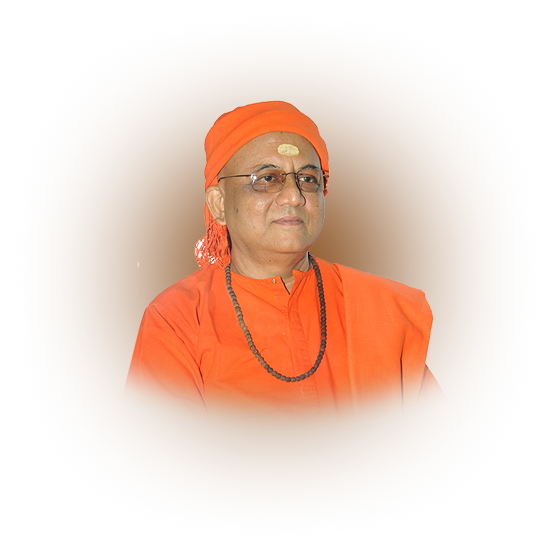
Swami Nirviseshananda Tirtha
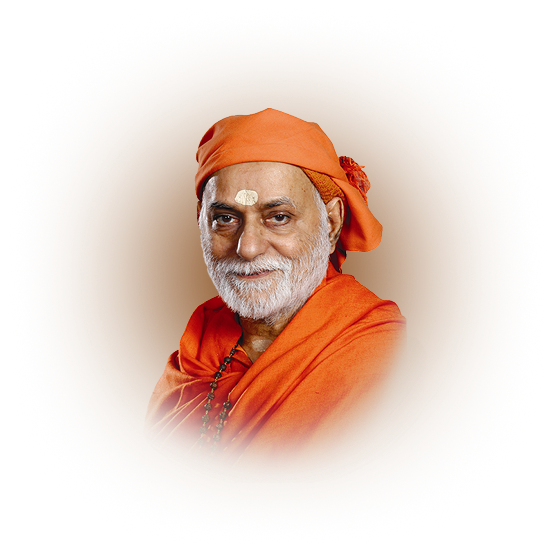
Swami Nirviseshananda Tirthaji, fondly known as Nutan Swamiji has offered deep insights into select chapters especially 3, 13, 14, 15, and 18 encouraging seekers to explore the profound layers of the text and apply its principles meaningfully. His analytical approach inspires deep contemplation and relevance in day-to-day living.
Watch Swamini ma Gurupriya
Ma’s talks present the Bhagavad Gita in a simple and relatable manner, closely tied to the spiritual practice (Sadhana) of seekers. Her emphasis is on internalizing, understanding, and living the values of the Gita in every aspect of life.
Watch 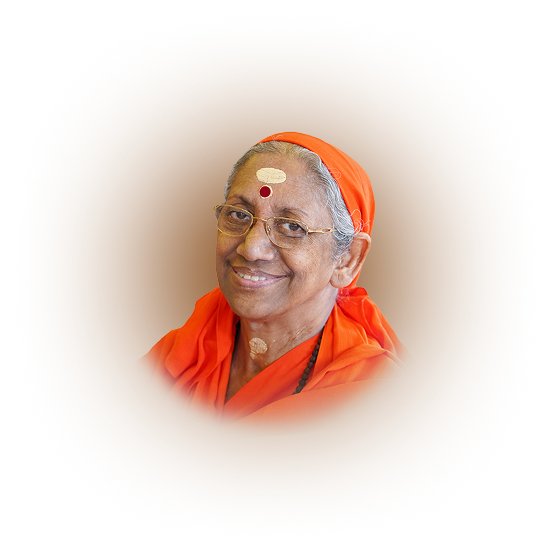
Swami Bhoomananda Tirtha
Poojya Swamiji has delivered numerous talks on the Bhagavad Gita across India and abroad, with the core aim of helping seekers integrate its timeless wisdom into their daily lives. His discourses emphasize making the Gita’s teachings practical and personally transformative.
Watch Swami Nirviseshananda Tirtha
Swami Nirviseshananda Tirthaji, fondly known as Nutan Swamiji has offered deep insights into select chapters especially 3, 13, 14, 15, and 18 encouraging seekers to explore the profound layers of the text and apply its principles meaningfully. His analytical approach inspires deep contemplation and relevance in day-to-day living.
Watch Swamini ma Gurupriya
Ma’s talks present the Bhagavad Gita in a simple and relatable manner, closely tied to the spiritual practice (Sadhana) of seekers. Her emphasis is on internalizing, understanding, and living the values of the Gita in every aspect of life.
Watch 

Bhagavad Gita Chantings & Audios
Essential Shlokas for Memorization (Bhagavad Gita)
This is a unique, priceless selection of shlokas from the Bhagavad Gita, chosen by Swami Bhoomananda Tirtha. Swamiji has selected those shlokas which have a direct impact on the sadhana of a seeker.
Each verse in this collection consists of the soulful chanting of the verse by Swami Nirviseshananda Tirtha and Ma Gurupriya. It also contains the Devanagari text with transliteration, and the translation of the Shloka.
The Sadhana of chanting the verses and deep introspection on them, helps the seeker imbibe and assimilate the message ingrained in the verses.
Bhagavad Gita Chapter 1
Swami Nirviseshananda Tirtha
Bhagavad Gita Chapter 2
Ma Gurupriya Bhagavad Gita Chapter 3
Swami Nirviseshananda Tirtha  Start your Journey
Bhagavad Gita Articles
Poojya Swamiji, Nutan Swamiji and Ma have been disseminating the message of Bhagavad Gita across the globe. They hold a firm conviction that Bhagavad Gita is the greatest gift to humanity. Gita is not a religious dialogue; it is meant to enlighten, empower and lead every man and woman to live in this world confidently surmounting all challenges and to go forward with hope, stability, and resolve.
Here is a set of articles which highlight different concepts presented in the text. By constant reading and reflection on these words of wisdom, a seeker can apply the Bhagavad Gita message in all activities and interactions.
Bhagavad Gita is closely ever relevant to every human who has his body, senses, mind, intelligence and ego as well as the world of objects surrounding these.
Read More
Bhagavad Gita is closely ever relevant to every human who has his body, senses, mind, intelligence and ego as well as the world of objects surrounding these.
Read More Bhagavad Gita is closely ever relevant to every human who has his body, senses, mind, intelligence and ego as well as the world of objects surrounding these.
Read More Learn to Chant the Bhagavad Gita – Chapter-wise
Chanting the Bhagavad Gita brings focus, peace, and spiritual growth. Listen, repeat, and understand the meaning of each verse. Practice daily or join guided sessions to master rhythm and pronunciation. Start your journey and experience the Gita’s transformative wisdom.
View all Chantings 

Frequently Asked Questions
The Bhagavad Gita is a timeless scripture that forms part of the great epic Mahābhārata, composed by Veda Vyasa. It is a dialogue between Krishna and Arjuna, which took place just prior to the unprecedented Mahābhārata war fought more than 5000 years ago. It consists of 18 chapters and 700 verses. Far from being a mere religious text, the Gita is a universal guide to life.
When Arjuna saw that he had to fight his own beloved grandfather, his respected teacher and his own kith & kin, he was suddenly overwhelmed by fear, doubt, and reluctance. He confessed his weakness to Krishna and refused to fight the gory war. In response, Krishna imparted the immortal message of the Gita, transforming Arjuna’s mind and enabling him to fulfill his duty with strength and clarity.
The message was not for Arjuna alone– it is for the entire humanity which faces numerous challenges in every sphere of life. It is a vibrant, ever-relevant message for human life and interactions exhorting us to make every moment of life divine
Far from being meant only for the ascetic seekers, the Bhagavad Gita is deeply relevant to the personal, administrative, political and social life of mankind. It exhorts us to rise above all selfish constrictions of the mind and act with clarity and resolve for the welfare of the world. It is equally a full message of clarity and vision to the intelligence of man, which gets assailed by doubts about duty, propriety, and consequences of action.
Bhagavad Gita is a part of Mahabharatam, which is the creation of Veda Vyasa. It consists of 18 chapters. Bhagavad Gita, which contains 700 verses, is not a religious text. It is a dialogue between Krishna and Arjuna, who were in the midst of the unprecedented Mahabharata war that was fought 5000 odd years ago in Kurukshetra.
When Arjuna saw that he had to fight his own beloved grandfather, his respected teacher and his own kith & kin, he was suddenly overwhelmed with fear, doubt, and reluctance. He confessed his weakness to Krishna and refused to fight the gory war. Krishna’s message had a transforming effect on him and he picked up arms to fight the war.
The message was not for Arjuna alone, it is for the entire humanity which faces numerous challenges in every sphere of life. It is a vibrant, ever-relevant message for human life, and interactions.The Bhagavad Gita is a full treatise on the war of life that every individual fights.
Far from being applicable to just one country or religion, Bhagavad Gita is an ever-relevant message for any human on earth. The dialogue is a complete treatise on human life and interactions – a discovery of where lies the ultimate happiness.
Krishna’s message was to treat Arjuna’s inner crisis. At that critical juncture, there was no scope or time for ritualistic or religious practices. It was a practical dialogue covering the entire range of human doubts and delusions. The timeless wisdom of Bhagavad Gita can benefit people irrespective of their national, racial or religious identity, guiding individuals as well as the society to go forward with clarity, strength, and harmony.
Desire-motivated activities make our mind agitated, anxious and fearful. Bhagavad Gita’s message of Yoga transforms all actions into spiritual sadhana leading our mind to freedom and fearlessness. The mind becomes strong, cheerful and poised, and the intelligence gains clarity of vision and purpose. With such mind and intelligence, the efficiency in performance will be maximum in whatever we do.
No. BG urges us not to consider activities as distractions or hindrance, but as opportunities to transcend clinging to what we like and hating what we dislike. This, as per BG, has to be accomplished by cultivating the Yoga attitude in our mind and intelligence.
BG says that any activity will cause bondage to the mind if not done as Yajña – an offering to the Universal Lord in His universal Yajña. How does any activity become a Yajña? By avoiding Saṅga (delusional clinging) and making all deeds equally benevolent and divine, every action turns into Yajña.
Bhagavad Gita presents concepts and pursuits to guide seekers in their interactions in life and help them to live a harmonious and peaceful life.
Here are some of the concepts presented in Bhagavad Gita.
- Asaṅgatva or freedom from Sanga (delusional clinging). By constantly pondering over the objects and situations, we develop a delusional clinging to them – we feel that if we get what we like, we will be permanently happy. Vichara or introspection on the real nature of the world helps us to get rid of this sanga.
- Yajna Bhaavana. All activities performed as a Yajna (an offering to the Universal Lord), without any possessiveness or clinging.
- Samatva. Equanimity or equal vision. Preserving an even attitude to fruition and non-fruition of whatever we do, and ultimately seeing the Oneness which is the substratum of the entire world’s multiplicity.
- Outliving rāga-dvesha. Rāga is clinging to what we like and Dvesha is being hateful or intolerant about what we dislike. Bhagavad Gita says that the world is troubling us because of rāga-dvesha in our mind, and when the mind becomes free of rāga -dvesha, one attains placidity.
- Transcending Gunas. Nature as well as human personality is constituted of three gunas – Sattva, rajas and tamas. All the three gunas bind us to our body-identity. Bhagavad Gita clearly explains how each guna creates bondage and how the bondage can be overcome by sadhana. Gunas will play in our personality but we will remain unaffected by their rise or decline.
In life, we constantly juggle and struggle to manage spousal, professional, social, parental obligations. There is an endless push to achieve more, please everyone, and increase one’s own wealth and possessions.
We cling to the family, hard-earned possessions, and all the perishable things of the world. Ambition and desire drive us forward, while the fear of losing what we have breeds stress, anxiety, and insecurity.
Bhagavad Gita (2.71) says that when one lives and moves in the world freed from desires, possessiveness and ego, he attains peace.
Freed from the constricting Rāga-dvesha, Saṅga, desires, ego and possessiveness, a person can live and interact in the world with equanimity — accepting and assimilating all situations with clarity and poise.
To make right decisions, one needs to be endowed with a calm and stable mind, and a sharp, incisive and clear intelligence. Bhagavad Gita’s powerful guidance in decision making comes through its wonderful analysis of human personality: “The senses are superior to the objects of the world; the mind is superior to the senses, and the intelligence is still superior. But the Soul (our real Identity) transcends even the realm of intelligence.”
By anchoring the intelligence in our eternal, imperishable Identity we can take clear decisions untainted by our desires, preference and prejudice. Decision-making becomes facile when the mind is calm and it is ready to follow the Viveka-buddhi – the intelligence anchored in Truth.
The infinite variety in human personalities is categorized by Bhagavad Gita into four Varṇas (colours) based on guṇa-constitution leading to four kinds of natural propensities (svabhāva-karma). It is different from “jāti” or caste which is determined by one’s birth.
The three guṇas – sattva, rajas and tamas – give rise to four Varnas: Brahmana, Kshatriya, Vaishya and Shudra. Brahmana pursues Knowledge and austerities, Kshatriya is committed to ethical action and administration, Vaishya is engaged in trade and agriculture, and the Shudra is dedicated to service. These four together constitute a mutually fulfilling human society, created by Nature, and are applicable to the entire humanity, not just India.
Dharma is defined in Mahabharata as the fundamental law of sustenance and harmony of life, society and Nature. If one follows Dharma, he will be protected by Dharma. Violating Dharma will lead to disharmony and destruction.
Bhagavad Gita defines “Svadharma” as “activity consonant with one’s own innate nature (svabhāva niyatam karma-18.47)”. It explains how one can attain the ultimate goal by practising his ‘svadharma’ (18.45).
According to Krishna, even if some evil is associated with one’s pursuit, it does not hinder the individual’s spiritual enrichment and elevation. Usually, killing is never considered good or auspicious. But, Arjuna being a kshatriya, killing enemies to establish righteous rule was a part of his svadharma. And Krishna was repeatedly exhorting Arjuna to fight the war in which he had to stand even against his own grandfather and teacher. Krishna promised that by fighting the war with Yoga-buddhi, Arjuna would be able to attain the Supreme.
For answer to above question please refer to the link below :
The freedom or moksha the seeker aims at is freedom from the inner bondage created by ego and various constrictions of the mind. It is a realization that the whole world including my own body-mind complex is functioning naturally by the play of the three constituent gunas, and I – my real identity – is only a witness to this phenomena. Truly, it is freedom from the doership and enjoyer-ship (kartr-bhoktr-bhaava).
https://www.bhoomananda.org/writings/the-real-meaning-of-moksha/
For answer to above question please refer to the link below :
Saṅga means ‘delusional clinging’ – clinging to what we like and hating or to be intolerant about what we dislike. It arises when the mind repeatedly reflects upon the sensory objects or situations with deluded fondness or dislike (Bhagavad Gita 2.62).
Saṅga arises when one becomes obsessed with the results of whatever is being thought of or done. The mind begins to brood over the happiness it will have when the performance succeeds, or the despondency if the performance fails to produce its expected outcome. This trouble and torment, which arises because of sheer ignorance and delusion and which hinders the proper performance of any work, is what the Bhagavad Gita calls Saṅga.
In the Vedas, Yajña (sacrifice) meant ritualistic fire offerings—rice, ghee, fruits, gold, cloth, etc.— usually with the expectation of a specific result.
In the Bhagavad Gita, Sri Krishna introduces this religious term (Yajña) with a very wide philosophical import. A human being performs many actions, but he gets afflicted and bound by his actions. The only way to avoid bondage and torment is to transform every action into Yajña.
How can it be done? One should take to all activities as a miniscule contribution or offering to the universal Yajna of the universal Lord or Nature. It implies that one must leave the ego and the sense of possessiveness. This renunciation is purely in the mind.
Every act is done aiming to achieve a certain fruition. If such fruition is had or not, the performer’s mind should feel no delusional clinging to what transpires. It is the clinging that hinders Yajña. One must do everything but without any delusional clinging (saṅga) to the inner psycho-intellectual outcome the action brings about. Whatever act is done without clinging verily becomes sacrifice, Yajña.
Krishna emphasizes that it is the Yajña attitude of the mind, the sublime note of dispossession, that matters. He says that any action will surely stain, agitate and bind the performer if it is not purified by the note of dispossession, note of Yajña. So, Krishna says that one should make one’s whole life a Yajna.
In contrast to the ritualistic sacrifice (Yajna) which is external and is done for fulfilling some desire, Bhagavad Gita introduces the spiritual Yajña, which is an attitude of the mind that frees us from all bondages created by our actions.
In Bhagavad Gita, Yoga is defined as “Samatva” or evenness of the mind (2.48). Raga-dveshas make our mind partial, unequal. To attain samatva, we have to get rid of all kinds of raga-dveshas. Finally, the ultimate samatva of vision comes from seeing the Atma everywhere (6.29 – 32).
Krishna wants everyone to understand without any ambiguity that the sole effort of human life must be to make the mind rest unshakably in ‘Samatva’ or equalness.
In the 2nd chapter, Krishna refers to Samatva towards Sukha-duhkhas as a Sadhana (pursuit). But later in the Bhagavad Gita he says that Samatva is the fruition and fulfilment of the wisdom-pursuit. When the mind is established in ‘Saamya’, it becomes stable, poised and unassailable. All agitations and torments, together with their causes, become extinct when the mind is enriched and sublimated by evenness. (ECBG)
Sānkhya Yoga is the Yoga of spiritual wisdom, the inner science of the imperishable Soul. The word Sānkhya denotes the Paramātma Vidya (supreme knowledge) of the Upanishads. The Upanishads exclusively expose the singular and supreme Self, Paramātma, the only subject to be known religiously, spiritually and philosophically. Sānkhya is a sharp, subtle, dedicated probe into that which is beyond the senses but which is the substratum of all.
Intelligence is the tool employed in this pursuit. It should consistently be employed to introspect on the Soul, the inner presence, which is impersonal, impartial, and absolute, the one unmistakable identity everyone refers to as ‘I’, throughout his life.
Upanishads present Sānkhya-vidya in the setting of a hermitage in the forest. Krishna imparted the Upanishadic knowledge to Arjuna in the battlefield of Kurukshetra. When Arjuna confessed that he was completely overpowered by grief and that he would not be able to fight the battle unless his grief was redressed, Sri Krishna introduced Sānkhya vidyā.
The second chapter of Bhagavad Gita is named ‘Sānkhya-yoga’. Through the Sānkhya instructions, Krishna explains the truth about the unborn, undying, unchanging, eternal Soul. Krishna emphasizes that the Soul concept has to be applied in real life, while coursing through the daily interactions. He makes the Sānkhya pursuit universal (From ECBG Vol 1 and IBG).
(The Sānkhya yoga of Bhagavad Gita is different from the Sānkhya philosophy of Kapila Maharshi)
The Yoga of Bhagavad Gita is often referred to as “Karma-yoga”. The essence of “Karma-yoga” is not just engaging in karma (activities) incessantly, but to incorporate the Yoga attitude in the mind and intelligence while engaging in any activity. Whether one does or does not do external activities, his buddhi (intelligence) should remain fixed in the Yoga attitude. The foundation of Bhagavad Gita is Yoga-buddhi.
One must do all activities, but with a yogic attitude and orientation. It consists in removing the delusional clinging to the fruition and non-fruition of actions. Krishna exhorts the seeker to cultivate even-mindedness to them.
Although Bhagavad Gita defines “Yoga” as “Samatva” or evenness towards success and failure, favourable and unfavourable results (2.48), it is not just a behavioural equality or poise. Its pinnacle is the realization that the whole world is but a display in the one Soul or Consciousness.
The pursuit of Yoga-buddhi must finally establish us in our real universal Identity – from the delusion of our small fragmented ego that gives rise to selfishness, greed, intolerance, enmity and all other constricted sentiments.
Karma-yoga is not a time-bound external procedure. It is a wisdom. It is application of an insight for transforming the purpose and attitude of the practitioner while doing anything he does. The requirement is to cultivate a new outlook and orientation in the mind and intelligence while doing all actions – religious or secular. This Yoga is an all-time attunement of the mind and intelligence. The yoga-buddhi, the insight and its application, will itself bring about the benefits immediately.
For answer to above question please refer to the link below :
For answer to above question please refer to the link below :
https://www.bhoomananda.org/writings/handling-difficult-interactions/
The Bhagavad Gita does not lay down any rigid rules for the seeker of Truth.
Very few are fit for exclusive Upanishadic sadhana, but the Gita assures that the same goal can be attained while remaining active and interactive in the world. The condition is that seekers should perform all activities with Buddhi Yoga—fixing the intelligence in the Self. The same activities that normally bind can become sadhana when done with Yoga Buddhi.
Bhagavad Gita emphasizes:
- Transform all karma into Karma Yoga, by anchoring the intelligence in the Self.
- Bring in the Aatmic dimensions–liberality, fearlessness, impersonality, universal love, unaffectedness, and expansion—even if one cannot constantly think of the Atma during interactions.
- Inactivity is not an option. Actions and interactions help by pointing out necessary corrections for the purification of the personality. Activities must make activities instruments for liberation.
- Cultivate Samatva—equanimity towards all dualities of the world.
- Perform all activities without Sanga—without delusional clinging.
The Bhagavad Gita is part of the historic narration, Mahabharata. The Gita consists of 18 chapters, containing 700 verses.
The numbers of pages would depend on the length of the commentary, the font size etc.
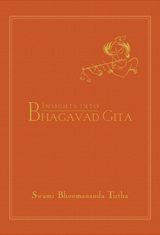
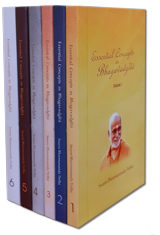
For example: Swami Bhoomananda Tirtha’s book ‘Insights into Bhagavad Gita’—which includes each verse, transliteration, translation and a concise commentary—has 806 pages.
Continue the Inner Journey
Stay connected with Poojya Swami ji's teachings through our weekly newsletters, e-magazines, and monthly Bhagavad Gita lessons. Subscribe now!

Subscribe Now!


Listen / Audio Playlist
Play / Video Playlist
Read / E-books