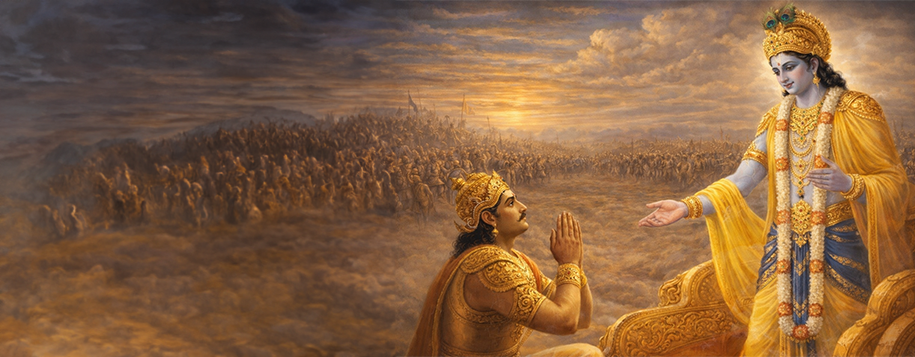



Chapter 13: Kṣetra-kṣetrajña-vibhāga-yoga: – Distinction between Object Field and its Knower
Concluding the dissertation on devotion, from the thirteenth chapter onward, Krishna takes up the third phase of spiritual sadhana—that of pure and subtle wisdom.
All the perceivables constitute the field of objects, the kṣetra. In contrast to this multitude of objects, there reigns only one Subject, the kṣetrajña. Krishna wants the seeker to look for the sovereign and the essence beyond the object world. This chapter deals with the distinction between kṣetra and kṣetrajña.
Krishna explains that Jñāna, the actualised knowledge of the Soul, brings about a unique expansion, elevation, and subtlety in one’s own mind, intelligence and vision. The pursuit of spiritual wisdom results in a wholesome change in his thoughts, outlook, and emotions and a fundamental change in the perception of the intelligence. Spiritual pursuit must result in incorporation of a variety of virtues or excellences, each of which will adorn the seeker’s mind and intelligence and will be reflected in his behaviour and character.
Krishna relates spiritual knowledge to a set of 20 virtues or excellences, emphasizing that they alone constitute true spiritual wisdom. The 20 qualities encompass personal qualities, behavioural norms and embellishments, and interactional features of a seeker.
After enumerating them, Krishna expounds the nature of the Supreme Reality, which permeates every form of animate and inanimate existence. This Supreme Reality is something to be realized by the seeker, and not to be just worshipped or propitiated. Knowledge has the power to exterminate delusion, bondage, and torment, thereby making the mind and intelligence peaceful, stable and poised.
In this chapter, Krishna emphasizes that spiritual wisdom is not a single point but a beautiful expanse consisting of qualities, refinement, and enrichment. He then discusses jñeya (the One to be known) with all its transcendental dimensions, enabling the seeker to grow in intensity and enlightenment.
Chanting Audio
Bhagavad Gita Chapter 13
Ma Gurupriya

अर्जुन उवाच ।
प्रकृतिं पुरुषं चैव क्षेत्रं क्षेत्रज्ञमेव च ।
एतद्वेदितुमिच्छामि ज्ञानं ज्ञेयं च केशव ॥
English Transliteration
arjuna uvāca
prakṛtiṃ puruṣaṃ caiva
kṣetraṃ kṣetrajñam-eva ca
etad-veditum-icchāmi
jñānaṃ jñeyaṃ ca keśava – 13.1
Translation
Arjuna said: Prakṛti (Nature) and Purusha (the Lord of Nature), kshetra (the Field) and Kshetrajña (the knower of the Field) – these I desire to know; and also knowledge and the knowable, O Keshava.

श्रीभगवानुवाच।
इदं शरीरं कौन्तेय क्षेत्रमित्यभिधीयते।
एतद्यो वेत्ति तं प्राहु: क्षेत्रज्ञ इति तद्विद: ॥
English Transliteration
śrī bhagavān-uvāca
idaṃ śarīraṃ kaunteya
kṣetram-ity-abhidhīyate
etad-yo vetti taṃ prāhu:
kṣetrajña iti tad-vida: – 13.2
Translation
Lord Krishna said: O Kaunteya (Arjuna), this body is called kshetra, the Field. Knowers of Truth say that whoever knows this, is the Kshetrajña, the knower of the Field.
क्षेत्रज्ञं चापि मां विद्धि सर्वक्षेत्रेषु भारत।
क्षेत्रक्षेत्रज्ञयोर्ज्ञानं यत्तज्ज्ञानं मतं मम ॥
English Transliteration
kṣetrajñaṃ cāpi māṃ viddhi
sarva-kṣetreṣu bhārata
kṣetra-kṣetrajñayor-jñānaṃ
yat-taj-jñānaṃ mataṃ mama – 13.3
Translation
Know Me (the supreme Reality) to be the Knower of the Field, in all fields. I consider the knowledge of both kshetra and Kshetrajña as true spiritual wisdom.
तत्क्षेत्रं यच्च यादृक्च यद्विकारि यतश्च यत्।
स च यो यत्प्रभावश्च तत्समासेन मे श्रृणु ॥
English Transliteration
tat-kṣetraṃ yacca yādṛk-ca
yad-vikāri yataś-ca yat
sa ca yo yat-prabhāvaś-ca
tat-samāsena me śṛṇu – 13.4
Translation
Hear from Me in essence: What that Field (kshetra) is, what are its characteristics and various modifications, wherefrom and how it has originated; and also what He (the Kshetrajña) is and what are His powers.
ऋषिभिर्बहुधा गीतं छन्दोभिर्विविधै: पृथक् ।
ब्रह्मसूत्रपदैश्चैव हेतुमद्भिर्विनिश्चितै: ॥
English Transliteration
ṛṣibhir-bahudhā gītaṃ
chandobhir-vividhai: pṛthak
brahma-sūtrapadaiścaiva
hetumadbhir-viniścitai: – 13.5
Translation
(All this) has been sung by the Rishis (Seers) in many ways, in distinct metres; and also has been established by the rational words and phrases of Brahma-sūtras (aphoristic statements delineating Brahman, the supreme Reality).
महाभूतान्यहङ्कारो बुद्धिरव्यक्तमेव च।
इन्द्रियाणि दशैकं च पञ्च चेन्द्रियगोचरा: ॥
English Transliteration
mahā-bhūtāny-ahaṅkāro
buddhiravyaktam-eva ca
indriyāṇi daśaikaṃ ca
pañca cendriya-gocarā: – 13.6
इच्छा द्वेष: सुखं दु:खं सङ्घातश्चेतना धृति:।
एतत्क्षेत्रं समासेन सविकारमुदाहृतम् ॥
English Transliteration
icchā dveṣa: sukhaṃ du:khaṃ
saṅghātaś-cetanā dhṛti:
etat-kṣetraṃ samāsena
savikāram-udāhṛtam – 13.7
Translation
The five subtle elements (space, air, fire, water and earth); then the ego, intelligence, the unmanifest existence (avyakta), the ten organs (of knowledge and action) and the mind; then five objects of sensory perceptions (sound, touch, colour, taste and smell); desire, dislike, pleasantness, unpleasantness, the aggregate-body, consciousness and resolve – these constitute kshetra with its multiple derivatives.
अमानित्वमदम्भित्वमहिंसा क्षान्तिरार्जवम्।
आचार्योपासनं शौचं स्थैर्यमात्मविनिग्रह: ॥
English Transliteration
amānitvam-adambhitvam-
ahiṃsā kṣāntir-ārjavam
ācāryopāsanaṃ śaucaṃ
sthairyam-ātma-vinigraha: – 13.8
Translation
Sublimation of pride, non-ostentation, non-hurting, tolerance or forgiveness, straight-forwardness, adoring and serving the Teacher, cleanliness (of body and mind), stability and steadfastness, self-control;–
इन्द्रियार्थेषु वैराग्यमनहङ्कार एव च।
जन्ममृत्युजराव्याधिदु:खदोषानुदर्शनम्॥
English Transliteration
indriyārtheṣu vairāgyam-
anahaṅkāra eva ca
janma-mṛtyu-jarā-vyādhi-
du:kha-doṣānudarśanam – 13.9
असक्तिरनभिष्वङ्ग: पुत्रदारगृहादिषु।
नित्यं च समचित्तत्वमिष्टानिष्टोपपत्तिषु ॥
English Transliteration
asaktir-anabhiṣvaṅga:
putra-dāra-gṛhādiṣu
nityaṃ ca sama-cittatvam-
iṣṭāniṣṭopapattiṣu – 13.10
Translation
Not being passionate about sensory objects, freedom from egoism, seeing clearly the trouble and torment associated with birth, death, old age, disease and affliction; safeguarding against delusional clinging to children, wife, household, etc. and the resultant suffering, always being even-minded in favourable and unfavourable turn of events.
मयि चानन्ययोगेन भक्तिरव्यभिचारिणी।
विविक्तदेशसेवित्वमरतिर्जनसंसदि ॥
English Transliteration
mayi cānanyayogena
bhaktir-avyabhicāriṇī
vivikta-deśa-sevitvam-
aratirjana-saṃsadi – 13.11
Translation
Unflinching devotion and yoga of exclusive loyalty to Me (the Teacher who exposes the supreme Truth); the habit of seeking seclusion and finding joy in it; lack of interest in and disinclination to be with crowds and the din and bustle of the world.
अध्यात्मज्ञाननित्यत्वं तत्त्वज्ञानार्थदर्शनम्।
एतज्ज्ञानमिति प्रोक्तमज्ञानं यदतोऽन्यथा ॥
English Transliteration
adhyātma-jñāna-nityatvaṃ
tattva-jñānārtha-darśanam
etaj-jñānam-iti proktam-
ajñānaṃ yad-ato’nyathā – 13.12
Translation
Being constantly given to spiritual introspection, perceiving the true object of life as determined by the tenets of spiritual wisdom – all these together (beginning from verse 13.8) constitute true wisdom. Everything else is sheer ignorance.
ज्ञेयं यत्तत्प्रवक्ष्यामि यज्ज्ञात्वामृतमश्नुते।
अनादिमत्परं ब्रह्म न सत्तन्नासदुच्यते ॥
English Transliteration
jñeyaṃ yat-tat-pravakṣyāmi
yajjñātvāmṛtam-aśnute
anādimat-paraṃ brahma
na sat-tannāsad-ucyate – 13.13
Translation
I shall now describe clearly that which should be known, knowing which one attains immortality. It is the beginningless, supreme Brahman, which is neither existence nor non-existence.
सर्वत:पाणिपादं तत्सर्वतोऽक्षिशिरोमुखम्।
सर्वत:श्रुतिमल्लोके सर्वमावृत्य तिष्ठति ॥
English Transliteration
sarvata: pāṇi-pādaṃ tat-
sarvato’kṣi-śiro-mukham
sarvata: śrutimalloke
sarvam-āvṛtya tiṣṭhati – 13.14
सर्वेन्द्रियगुणाभासं सर्वेन्द्रियविवर्जितम्।
असक्तं सर्वभृच्चैव निर्गुणं गुणभोक्तृ च ॥
English Transliteration
sarvendriya-guṇābhāsaṃ
sarvendriya-vivarjitam
asaktaṃ sarva-bhṛccaiva
nirguṇaṃ guṇa-bhoktṛ ca – 13.15
बहिरन्तश्च भूतानामचरं चरमेव च।
सूक्ष्मत्वात्तदविज्ञेयं दूरस्थं चान्तिके च तत् ॥
English Transliteration
bahirantaś-ca bhūtānām-
acaraṃ caram-eva ca
sūkṣmatvāt-tad-avijñeyaṃ
dūrasthaṃ cāntike ca tat – 13.16
Translation
With hands and feet, eyes, head, face and ears everywhere, it stands embracing all.
Revealing all sense-objects, though itself devoid of senses, it is dis-attached, yet the sustainer of all, attribute-free, the enjoyer of all qualities.
Present outside and inside the beings, mobile and immobile alike, it remains incomprehensible due to its subtlety. It is far away, yet close by too.
अविभक्तं च भूतेषु विभक्तमिव च स्थितम्।
भूतभर्तृ च तज्ज्ञेयं ग्रसिष्णु प्रभविष्णु च ॥
English Transliteration
avibhaktaṃ ca bhūteṣu
vibhaktam-iva ca sthitam
bhūta-bhartṛ ca tajjñeyaṃ
grasiṣṇu prabhaviṣṇu ca – 13.17
Translation
Though indivisible, it appears divided in beings (with their individual ego-centre). It is to be known as the originator, preserver and dissolver of all.
ज्योतिषामपि तज्ज्योतिस्तमस: परमुच्यते।
ज्ञानं ज्ञेयं ज्ञानगम्यं हृदि सर्वस्य विष्ठितम् ॥
English Transliteration
jyotiṣām-api tajjyotis-
tamasa: param-ucyate
jñānaṃ jñeyaṃ jñāna-gamyaṃ
hṛdi sarvasya viṣṭhitam – 13.18
Translation
It is the effulgence of all luminaries. It is said to be beyond darkness (ignorance). It is Knowledge, the One to be known and reached by Knowledge alone. It is established in everyone’s heart.
इति क्षेत्रं तथा ज्ञानं ज्ञेयं चोक्तं समासत:।
मद्भक्त एतद्विज्ञाय मद्भावायोपपद्यते ॥
English Transliteration
iti kṣetraṃ tathā jñānaṃ
jñeyaṃ coktaṃ samāsata:
mad-bhakta etad-vijñāya
mad-bhāvāyopapadyate – 13.19
Translation
Thus briefly have been stated what the kshetra, knowledge, and what ought to be known, are. My devotee, having known this, becomes fit to attain My state (the supreme state).
प्रकृतिं पुरुषं चैव विद्ध्यनादी उभावपि।
विकारांश्च गुणांश्चैव विद्धि प्रकृतिसंभवान् ॥
English Transliteration
prakṛtiṃ puruṣaṃ caiva
viddhy-anādī ubhāvapi
vikārāṃśca guṇāṃścaiva
viddhi prakṛti-sambhavān – 13.19
Translation
Know both Prakṛti (Nature) and Purusha (the Soul) as beginningless (transcending time). Know all modifications and qualities as born of Prakṛti alone. (Purusha remains ever the same).
कार्यकरणकर्तृत्वे हेतु: प्रकृतिरुच्यते।
पुरुष: सुखदु:खानां भोक्तृत्वे हेतुरुच्यते ॥
English Transliteration
kārya-karaṇa-kartṛtve
hetu: prakṛtirucyate
puruṣa: sukha-du:khānāṃ
bhoktṛtve heturucyate – 13.21
Translation
In producing all kinds of outcome, including our body, with instruments of action, the limbs and senses, Prakṛti (Nature) is the sole cause. In experiencing sukha and duḥkha, Purusha is the cause.
पुरुष: प्रकृतिस्थो हि भुङ्क्ते प्रकृतिजान्गुणान्।
कारणं गुणसङ्गोऽस्य सदसद्योनिजन्मसु ॥
English Transliteration
puruṣa: prakṛtistho hi
bhuṅkte prakṛtijān-guṇān
kāraṇaṃ guṇa-saṅgo’sya
sad-asad-yoni-janmasu – 13.22
Translation
Purusha, dwelling in Prakṛti (Nature), experiences the outcomes brought by its qualities (guṇas). His clinging to these qualities is the cause for births in good or bad wombs.
उपद्रष्टानुमन्ता च भर्ता भोक्ता महेश्वर:।
परमात्मेति चाप्युक्तो देहेऽस्मिन्पुरुष: पर: ॥
English Transliteration
upadraṣṭānumantā ca
bhartā bhoktā maheśvara:
paramātmeti cāpy-ukto
dehe’smin-puruṣa: para: – 13.23
Translation
Purusha, dwelling in the body, witnesses, permits, supports and experiences everything. The overlord of all, He is also said to be Paramātmā, the supreme Self.
य एवं वेत्ति पुरुषं प्रकृतिं च गुणै: सह।
सर्वथा वर्तमानोऽपि न स भूयोऽभिजायते ॥
English Transliteration
ya evaṃ vetti puruṣaṃ
prakṛtiṃ ca guṇai: saha
sarvathā vartamāno’pi
na sa bhūyo’bhijāyate – 13.24
Translation
Whoever thus knows the Purusha and Prakṛti along with its (Prakṛti’s) attributes, will not court any further birth, no matter how he lives.
ध्यानेनात्मनि पश्यन्ति केचिदात्मानमात्मना।
अन्ये सांख्येन योगेन कर्मयोगेन चापरे ॥
English Transliteration
dhyānen-ātmani paśyanti
kecid-ātmānam-ātmanā
anye sāṅkhyena yogena
karma-yogena cāpare – 13.25
Translation
Resorting to exclusive meditation, some perceive the Self in them by their self. Some others do so by assiduous introspection (Vicāra or Sāṅkhya-yoga), while others accomplish the goal by taking to Karma-yoga.
अन्ये त्वेवमजानन्त: श्रुत्वान्येभ्य उपासते।
तेऽपि चातितरन्त्येव मृत्युं श्रुतिपरायणा: ॥
English Transliteration
anye tvevam-ajānanta:
śrutvānyebhya upāsate
te’pi cātitaranty-eva
mṛtyuṃ śruti-parāyaṇā: – 13.26
Translation
There are yet others who, ignorant of these paths, take to sādhanā listening to others’ expositions. Such seekers also, given to assiduous listening and sincere pursuit, transcend mortality.
यावत्सञ्जायते किञ्चित्सत्त्वं स्थावरजङ्गमम्।
क्षेत्रक्षेत्रज्ञसंयोगात्तद्विद्धि भरतर्षभ ॥
English Transliteration
yāvat-sañjāyate kiñcit-
sattvaṃ sthāvara-jaṅgamam
kṣetra-kṣetrajña-saṃyogāt-
tad-viddhi bharatarṣabha – 13.27
Translation
Whatever being, mobile or immobile, is born, understand it to be an effect of the conjunction of kshetra and Kshetrajña (Nature and Consciousness), O the great among Bharatas (Arjuna).
समं सर्वेषु भूतेषु तिष्ठन्तं परमेश्वरम्।
विनश्यत्स्वविनश्यन्तं य: पश्यति स पश्यति ॥
English Transliteration
samaṃ sarveṣu bhūteṣu
tiṣṭhantaṃ parameśvaram
vinaśyatsv-avinaśyantaṃ
ya: paśyati sa paśyati – 13.28
समं पश्यन्हि सर्वत्र समवस्थितमीश्वरम्।
न हिनस्त्यात्मनात्मानं ततो याति परां गतिम् ॥
English Transliteration
samaṃ paśyan-hi sarvatra
samavasthitam-īśvaram
na hinasty-ātmanātmānaṃ
tato yāti parāṃ gatim – 13.29
Translation
He who perceives the supreme Lord as established in all beings equally, further as the imperishable presence in all perishable entities around, is the real Seer.
Perceiving the Lord as equally present everywhere and in all alike, such a one does not destroy the Self by the self, and hence attains the supreme spiritual state.
प्रकृत्यैव च कर्माणि क्रियमाणानि सर्वश:।
य: पश्यति तथात्मानमकर्तारं स पश्यति ॥
English Transliteration
prakṛtyaiva ca karmāṇi
kriyamāṇāni sarvaśa:
ya: paśyati tathātmānam-
akartāraṃ sa paśyati – 13.30
Translation
He who ‘sees’ all kinds of activities as instrumented by Prakṛti alone, and likewise sees the Self as ever the non-doer, is the true Seer.
यदा भूतपृथग्भावमेकस्थमनुपश्यति।
तत एव च विस्तारं ब्रह्म सम्पद्यते तदा ॥
English Transliteration
yadā bhūta-pṛthag-bhāvam-
ekastham-anupaśyati
tata eva ca vistāraṃ
brahma sampadyate tadā – 13.31
Translation
When one perceives all diverse beings as abiding in the One, and spreading forth from It, he attains Brahman.
अनादित्वान्निर्गुणत्वात्परमात्मायमव्यय:।
शरीरस्थोऽपि कौन्तेय न करोति न लिप्यते ॥
English Transliteration
anāditvān-nirguṇatvāt-
paramātmāyam-avyaya:
śarīrastho’pi kaunteya
na karoti na lipyate – 13.32
Translation
The inmost Soul, being beginningless and free of any attribute, is Imperishable. O Kunti’s son (Arjuna), though dwelling in the body, It neither does anything, nor gets tainted the least.
यथा सर्वगतं सौक्ष्म्यादाकाशं नोपलिप्यते।
सर्वत्रावस्थितो देहे तथात्मा नोपलिप्यते ॥
English Transliteration
yathā sarvagataṃ saukṣmyād-
ākāśaṃ nopalipyate
sarvatrāvasthito dehe
tathātmā nopalipyate – 13.33
यथा प्रकाशयत्येक: कृत्स्नं लोकमिमं रवि:।
क्षेत्रं क्षेत्री तथा कृत्स्नं प्रकाशयति भारत ॥
English Transliteration
yathā prakāśayaty-eka:
kṛtsnaṃ lokam-imaṃ ravi:
kṣetraṃ kṣetrī tathā kṛtsnaṃ
prakāśayati bhārata – 13.34
Translation
Just as the all-pervading space, due to its subtlety, does not court any stain, the Soul, permeating throughout the body, is not tainted by anything (happening to the body).
As the one Sun illumines this whole world, so does the one Subject Consciousness (Kshetrī) reveal the entire object-world (kshetra), O Bhārata.
क्षेत्रक्षेत्रज्ञयोरेवमन्तरं ज्ञानचक्षुषा।
भूतप्रकृतिमोक्षं च ये विदुर्यान्ति ते परम् ॥
English Transliteration
kṣetra-kṣetrajñayorevam-
antaraṃ jñāna-cakṣuṣā
bhūta-prakṛti-mokṣaṃ ca
ye vidur-yānti te param – 13.35
Translation
Those who, with the power of spiritual insight, know the difference between the Field (kshetra) and the Knower of the Field (Kshetrajña), and equally the truth about the freedom from the stronghold of Prakṛti, reach the Supreme.
ओं तत्सदिति श्रीमद्भगवद्गीतासूपनिषत्सु ब्रह्मविद्यायां योगशास्त्रे श्रीकृष्णार्जुनसंवादे क्षेत्रक्षेत्रज्ञविभागयोगो नाम त्रयोदशोऽध्याय:।
English Transliteration
oṃ tat-sad-iti śrīmad-bhagavad-
gītāsūpaniṣatsu brahma-vidyāyāṃ
yoga-śāstre śrīkṛṣṇārjuna-saṃvāde
kṣetra-kṣetrajña-vibhāga-yogo nāma trayodaśo’dhyāya:
Translation
Om – the symbol of Brahman, tat – that singular Reality (Brahman), sat – the ever abiding presence (Brahman).
Thus ends the thirteenth chapter entitled Kṣetra-kṣetrajña-vibhāga Yoga, during the Srikrishna-Arjuna dialogue in Śrīmad Bhagavad Gita, constituting Yoga-śāstra, which falls within Brahmavidya as presented in the Vedic Upanishads.