


Chapter 3: Karma-yoga: – Transforming all Activities into Yoga
Karma becomes Yoga through knowledge and understanding. The performance of an action (karma) does not make it Karma-yoga; it is the yoga attitude of the mind of the performer that transforms the activity into yoga. This yoga attitude arises from a comprehensive understanding of our life and activities as part of the universal wheel of incessant activities going on in Nature.
An action performed without ‘saṅga’ (ego and possessiveness) becomes yajña – a contribution to the universal karma-yajna of Nature. Instead of causing bondage to the performer, it becomes liberating and also contributes to lokasangraha, the welfare of the world. The word Yajña in Bhagavad Gita thus assumes a universal dimension – far different from the ritualistic Yajña performed with desire to gain something in this life or after death.
To transform all interactions into Yoga, we have to anchor our intelligence in the Truth that transcends mind and intelligence (3.42-43), and act guided by the wisdom. The seeker cultivates a new outlook and orientation in the mind and intelligence towards all actions. Krishna clarifies that while doing karma the seeker’s attention must be in preserving the right attitude and aim about all the actions he performs. One’s own duty, performed with this understanding, becomes the sure path to inner freedom.
Chanting Audio
Bhagavad Gita Chapter 3
Swami Nirviseshananda Tirtha

अर्जुन उवाच।
ज्यायसी चेत्कर्मणस्ते मता बुद्धिर्जनार्दन ।
तत्किं कर्मणि घोरे मां नियोजयसि केशव ।।
English Transliteration
arjuna uvāca
jyāyasī cet-karmaṇas-te
matā buddhir-janārdana
tat-kiṃ karmaṇi ghore māṃ
niyojayasi keśava – 3.1
व्यामिश्रेणेव वाक्येन बुद्धिं मोहयसीव मे ।
तदेकं वद निश्चित्य येन श्रेयोऽहमाप्नुयाम् ।।
English Transliteration
vyāmiśreṇeva vākyena
buddhiṃ mohayasīva me
tad-ekaṃ vada niścitya
yena śreyo’ham-āpnuyām – 3.2
Translation
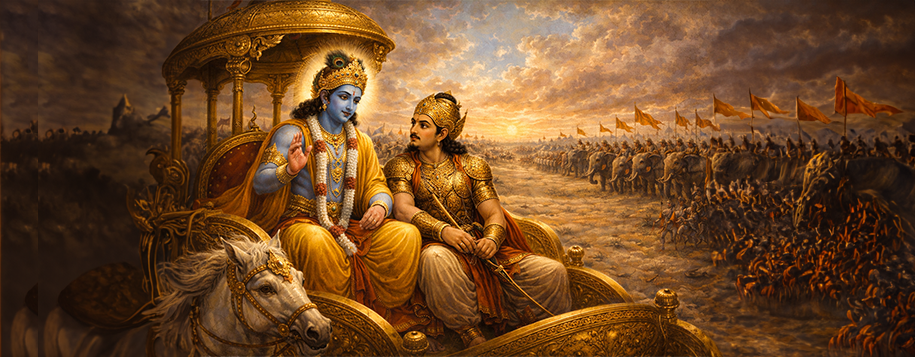
Arjuna said: If Sāṅkhya-buddhi is considered by you as superior to Karma-yoga, why do you exhort me to do this most fierce act of fighting?
You seem to be confusing my intelligence by apparently conflicting words. Tell me decisively what will bring me
everlasting good.

श्रीभगवानुवाच।
लोकेऽस्मिन् द्विविधा निष्ठा पुरा प्रोक्ता मयानघ ।
ज्ञानयोगेन साङ्ख्यानां कर्मयोगेन योगिनाम् ।।
English Transliteration
śrī bhagavān-uvāca
loke’smin dvividhā niṣṭhā
purā proktā mayānagha
jñāna-yogena sāṅkhyānāṃ
karma-yogena yoginām – 3.3
Translation
Lord Krishna said: Right in the beginning, had been enunciated by Me the two-fold discipline, niṣṭhā (for gaining supreme felicity, śreyas). For the knowledge-oriented Sāṅkhya seekers, it is Jñāna-yoga, and for the yogis it is Karma-yoga.
न कर्मणामनारम्भान्नैष्कर्म्यं पुरुषोऽश्नुते ।
न च सन्न्यसनादेव सिद्धिं समधिगच्छति ।।
English Transliteration
na karmaṇām-anārambhān-
naiṣkarmyaṃ puruṣo’śnute
na ca sannyasanād-eva
siddhiṃ samadhigacchati – 3.4
Translation
By refusing to take up activity, one does not attain actionlessness (naiṣkarmya). Nor again by external renunciation, can one think of attaining spiritual perfection (siddhi).
न हि कचित्क्षणमपि जातु तिष्ठत्यकर्मकृत् ।
कार्यते ह्यवश: कर्म सर्व: प्रकृतिजैर्गुणै: ।।
English Transliteration
na hi kaścit-kṣaṇam-api
jātu tiṣṭhaty-akarmakṛt
kāryate hy-avaśa: karma
sarva: prakṛtijair-guṇai: – 3.5
Translation
None indeed ever remains inactive even for a second. All are irresistibly compelled to be active by dint of Nature’s qualities, guṇas.
कर्मेन्द्रियाणि संयम्य य आस्ते मनसा स्मरन् ।
इन्द्रियार्थान्विमूढात्मा मिथ्याचार: स उच्यते ।।
English Transliteration
karmendriyāṇi saṃyamya
ya āste manasā smaran
indriyārthān-vimūḍhātmā
mithyācāra: sa ucyate – 3.6
Translation
Restraining the organs of action (karmendriyas) physically, whoever sits thinking about sensory objects, is deluded and said to be a hypocrite.
यस्त्विन्द्रियाणि मनसा नियम्यारभतेऽर्जुन ।
कर्मेन्द्रियै: कर्मयोगमसक्त: स विशिष्यते ।।
English Transliteration
yas-tvindriyāṇi manasā
niyamyārabhate’rjuna
karmendriyai: karma-yogam-
asakta: sa viśiṣyate – 3.7
Translation
He who, regulating the sense-organs with the mind, without any delusional clinging, begins Karma-yoga with his organs of action, verily excels, O Arjuna.
नियतं कुरु कर्म त्वं कर्म ज्यायो ह्यकर्मण: ।
शरीरयात्रापि च ते न प्रसिद्ध्येदकर्मण: ।।
English Transliteration
niyataṃ kuru karma tvaṃ
karma jyāyo hy-akarmaṇa:
śarīra-yātrāpi ca te
na prasiddhyed-akarmaṇa: – 3.8
Translation
Be doing your enjoined activity. To be active is far superior to being inactive, idle. Even the preservation of your body will not be possible without action.
यज्ञार्थात्कर्मणोऽन्यत्र लोकोऽयं कर्मबन्धन: ।
तदर्थं कर्म कौन्तेय मुक्तसङ्ग: समाचर ।।
English Transliteration
yajñārthāt-karmaṇo’nyatra
loko’yaṃ karma-bandhana:
tad-arthaṃ karma kaunteya
mukta-saṅga: samācara – 3.9
Translation
This world is firmly bound by actions done as other than Yajña. Therefore, (to make everything Yajña), O son of Kunti (Arjuna), act for the sake of the Supreme, without delusional clinging.
सहयज्ञा: प्रजा: सृष्ट्वा पुरोवाच प्रजापति: ।
अनेन प्रसविष्यध्वमेष वोऽस्त्विष्टकामधुक् ।।
English Transliteration
saha-yajñā: prajā: sṛṣṭvā
purovāca prajāpati:
anena prasaviṣyadhvam-
eṣa vo’stviṣṭa-kāma-dhuk – 3.10
Translation
Creating humanity with the scope and power of Yajña, Prajāpati, the Creator, pronounced: “By this, grow and multiply. May this Yajña awareness be the wish-yielding cow for you.”
देवान्भावयतानेन ते देवा भावयन्तु व:
परस्परं भावयन्त: श्रेय: परमवाप्स्यथ ।।
English Transliteration
devān-bhāvayatānena
te devā bhāvayantu va:
parasparaṃ bhāvayanta:
śreya: param-avāpsyatha – 3.11
Translation
By this (yajña), do you please and propitiate the higher powers, on whom the world rests. Then they will also foster you. Thus promoting and propitiating each other, attain the supreme good, felicity.
इष्टान्भोगान्हि वो देवा दास्यन्ते यज्ञभाविता: ।
तैर्दत्तानप्रदायैभ्यो यो भुङ्क्ते स्तेन एव स: ।।
English Transliteration
iṣṭān-bhogān-hi vo devā
dāsyante yajña-bhāvitā:
tair-dattān-apradāyaibhyo
yo bhuṅkte stena eva sa: – 3.12
Translation
Propitiated by Yajña, they will shower on you the desired objects of delight. Whoever enjoys whatever they have given, without giving them anything reciprocally, is indeed a thief.
यज्ञशिष्टाशिन: सन्तो मुच्यन्ते सर्वकिल्बिषै: ।
भुञ्जते ते त्वघं पापा ये पचन्त्यात्मकारणात् ।।
English Transliteration
yajña-śiṣṭāśina: santo
mucyante sarva-kilbiṣai:
bhuñjate te tvaghaṃ pāpā
ye pacanty-ātma-kāraṇāt – 3.13
Translation
The noble ones who partake of the left over from Yajña are freed of all their dross and vice. Those who cook and eat only for themselves indeed eat sin.
अन्नाद्भवन्ति भूतानि पर्जन्यादन्नसम्भव: ।
यज्ञाद्भवति पर्जन्यो यज्ञ: कर्मसमुद्भव: ।।
English Transliteration
annād-bhavanti bhūtāni
parjanyād-anna-sambhava:
yajñād-bhavati parjanyo
yajña: karma-samudbhava: – 3.14
Translation
All beings grow from anna, food. Food grains grow from rain. Rains are an outcome of yajña. And yajña results from action.
कर्म ब्रह्मोद्भवं विद्धि ब्रह्माक्षरसमुद्भवम् ।
तस्मात्सर्वगतं ब्रह्म नित्यं यज्ञे प्रतिष्ठितम् ।।
English Transliteration
karma brahmod-bhavaṃ viddhi
brahmākṣara-samudbhavam
tasmāt-sarva-gataṃ brahma
nityaṃ yajñe pratiṣṭhitam – 3.15
Translation
Know that actions including rituals inhere in the sanctifying Vedic revelations. Vedas themselves have their source in Brahman, the supreme Reality. Therefore, the all-pervading Brahman ever rests on yajña.
एवं प्रवर्तितं चक्रं नानुवर्तयतीह य: ।
अघायुरिन्द्रियारामो मोघं पार्थ स जीवति ।।
English Transliteration
evaṃ pravartitaṃ cakraṃ
nānuvartayatīha ya:
aghāyur-indriyārāmo
moghaṃ pārtha sa jīvati – 3.16
Translation
Whoever does not conform to the “Wheel of Creation” revolving thus, is a mere sensory indulger. His is a sinful life. And he lives in vain.
यस्त्वात्मरतिरेव स्यादात्मतृप्तश्च मानव: ।
आत्मन्येव च सन्तुष्टस्तस्य कार्यं न विद्यते ।।
English Transliteration
yas-tv-ātmaratir-eva syād-
ātmatṛptaś-ca mānava:
ātmany-eva ca santuṣṭas-
tasya kāryaṃ na vidyate – 3.17
Translation
But he who sports in his own Self, is content with himself, rejoices in his own Self, has nothing like a duty to perform.
नैव तस्य कृतेनार्थो नाकृतेनेह कश्चन ।
न चास्य सर्वभूतेषु कश्चिदर्थव्यपाश्रय: ।।
English Transliteration
naiva tasya kṛtenārtho
nākṛteneha kaścana
na cāsya sarva-bhūteṣu
kaścid-artha-vyapāśraya: – 3.18
Translation
There is nothing for him (the Knower) to gain by doing or not doing anything. Nor does he have any dependence on all beings in order to gain anything whatsoever.
तस्मादसक्त: सततं कार्यं कर्म समाचर ।
असक्तो ह्याचरन्कर्म परमाप्नोति पूरुष: ।।
English Transliteration
tasmād-asakta: satataṃ
kāryaṃ karma samācara
asakto hy-ācaran-karma
paramāpnoti pūruṣa: – 3.19
Translation
Therefore, keeping away from delusional clinging, do well whatever comes to be done. He who acts without delusional clinging attains the Supreme.
कर्मणैव हि संसिद्धिमास्थिता जनकादय: ।
लोकसंग्रहमेवापि संपश्यन्कर्तुमर्हसि ।।
English Transliteration
karmaṇaiva hi saṃsiddhim-
āsthitā janakādaya:
lokasaṅgraham-evāpi
sampaśyan-kartum-arhasi – 3.20
Translation
King Janaka and others (Knower kings) have attained spiritual perfection by performing activity alone. Seeing the need for lokasangraha (societal welfare) also, you deserve to be active.
यद्यदाचरति श्रेष्ठस्तत्तदेवेतरो जन: ।
स यत्प्रमाणं कुरुते लोकस्तदनुवर्तते ।।
English Transliteration
yad-yad-ācarati śreṣṭhas-
tat-tad-evetaro jana:
sa yat-pramāṇaṃ kurute
lokas-tad-anuvartate – 3.21
Translation
Whatever the great and noble one does, that alone others tend to follow. Whatever he exemplifies, holds as esteemed, the world emulates.
न मे पार्थास्ति कर्तव्यं त्रिषु लोकेषु किञ्चन ।
नानवाप्तमवाप्तव्यं वर्त एव च कर्मणि ।।
English Transliteration
na me pārthāsti kartavyaṃ
triṣu lokeṣu kiñcana
nānavāptam-avāptavyaṃ
varta eva ca karmaṇi – 3.22
Translation
O Partha, I do not have even a speck of duty or compulsion to do, in all the three worlds. So too I have nothing ungained to be gained (I am fulfilled to the core). Yet I am relentlessly active.
यदि ह्यहं न वर्तेयं जातु कर्मण्यतन्द्रित: ।
मम वर्त्मानुवर्तन्ते मनुष्या: पार्थ सर्वश: ।।
English Transliteration
yadi hy-ahaṃ na varteyaṃ
jātu karmaṇy-atandrita:
mama vartmānuvartante
manuṣyā: pārtha sarvaśa: – 3.23
Translation
If I do not remain relentlessly active, all people, O Partha, will be following my path by all means.
उत्सीदेयुरिमे लोका न कुर्यां कर्म चेदहम् ।
सङ्करस्य च कर्ता स्यामुपहन्यामिमा: प्रजा: ।।
English Transliteration
utsīdeyur-ime lokā
na kuryāṃ karma ced-aham
saṅkarasya ca kartā syām-
upahanyām-imā: prajā: – 3.24
Translation
In case I do not adhere to my activity, the result will be that these worlds would perish. I shall also be the cause of ethnic admixture leading to social disorder and ruin.
सक्ता: कर्मण्यविद्वांसो यथा कुर्वन्ति भारत ।
कुर्याद्विद्वांस्तथासक्तश्चिकीर्षुर्र्लाकसङ्ग्रहम् ।।
English Transliteration
saktā: karmaṇy-avidvāṃso
yathā kurvanti bhārata
kuryād-vidvāṃs-tathāsaktaś-
cikīrṣur-lokasaṅgraham – 3.25
Translation
The manner in which the ignorant with delusion and attachment take to their actions, should the wise one also perform his actions, but without delusional clinging, aiming at the well-being of the world.
न बुद्धिभेदं जनयेदज्ञानां कर्मसङ्गिनाम् ।
जोषयेत्सर्वकर्माणि विद्वान्युक्त: समाचरन् ।।
English Transliteration
na buddhibhedaṃ janayed-
ajñānāṃ karma-saṅginām
joṣayet-sarvakarmāṇi
vidvān-yukta: samācaran – 3.26
Translation
Do not cause confusion in the ignorant minds, given assiduously to activities, though with strong delusional clinging (saṅga). The wise one, remaining integrated, should himself be fully active, engaging all else in their respective callings.
प्रकृते: क्रियमाणानि गुणै: कर्माणि सर्वश: ।
अहङ्कारविमूढात्मा कर्ताहमिति मन्यते ।।
English Transliteration
prakṛte: kriyamāṇāni
guṇai: karmāṇi sarvaśa:
ahaṅkāra-vimūḍhātmā
kartāham-iti manyate – 3.27
Translation
All actions are done by Prakṛti (Nature) through its guṇas. One, deluded by egoism, thinks: “I am the doer”.
तत्त्ववित्तु महाबाहो गुणकर्मविभागयो: ।
गुणा गुणेषु वर्तन्त इति मत्वा न सज्जते ।।
English Transliteration
tattvavit-tu mahābāho
guṇa-karma-vibhāgayo:
guṇā guṇeṣu vartanta
iti matvā na sajjate – 3.28
Translation
One who knows the truth about guṇas (of Nature) and karma (activity), perceives that prakṛti’s guṇas (in the form of senses) are mingling with guṇas (in the form of world objects), and consequently he does not court any delusional clinging (saṅga).
प्रकृतेर्गुणसम्मूढा: सज्जन्ते गुणकर्मसु ।
तानकृत्स्नविदो मन्दान्कृत्स्नविन्न विचालयेत् ।।
English Transliteration
prakṛter-guṇa-sammūḍhā:
sajjante guṇa-karmasu
tān-akṛtsnavido mandān-
kṛtsnavin-na vicālayet – 3.29
Translation
Those deluded by Nature’s guṇas (qualities), cling to guṇas and their effects. The one who knows the wholesome truth, should not unsettle those who are unable to access such knowledge.
मयि सर्वाणि कर्माणि सन्न्यस्याध्यात्मचेतसा ।
निराशीर्निर्ममो भूत्वा युध्यस्व विगतज्वर: ।।
English Transliteration
mayi sarvāṇi karmāṇi
sannyasyādhyātma-cetasā
nirāśīr-nirmamo bhūtvā
yudhyasva vigata-jvara: – 3.30
Translation
Surrender all actions unto Me. Let the mind be imbued with spiritual attitude. Rid it of desires and possessiveness. Free of agitation and worry, fight unwaveringly with confidence.
ये मे मतमिदं नित्यमनुतिष्ठन्ति मानवा: ।
श्रद्धावन्तोऽनसूयन्तो मुच्यन्ते तेऽपि कर्मभि: ।।
English Transliteration
ye me matam-idaṃ nityam-
anutiṣṭhanti mānavā:
śraddhāvanto’nasūyanto
mucyante te’pi karmabhi: – 3.31
Translation
Those who follow without carping but with relentless attention and dedication the yogic pursuit instructed by Me, also get liberated through the actions they perform.
ये त्वेतदभ्यसूयन्तो नानुतिष्ठन्ति मे मतम् ।
सर्वज्ञानविमूढांस्तान्विद्धि नष्टानचेतस: ।।
English Transliteration
ye tvetad-abhyasūyanto
nānutiṣṭhanti me matam
sarva-jñāna-vimūḍhāṃs-tān-
viddhi naṣṭān-acetasa: – 3.32
Translation
Those who cavil at what I say and do not follow it, regard them as deluded in all ways. Know them to be verily lost, as they lack discrimination.
सदृशं चेष्टते स्वस्या: प्रकृतेर्ज्ञानवानपि ।
प्रकृतिं यान्ति भूतानि निग्रह: किं करिष्यति ।।
English Transliteration
sadṛśaṃ ceṣṭate svasyā:
prakṛter-jñānavān-api
prakṛtiṃ yānti bhūtāni
nigraha: kiṃ kariṣyati – 3.33
Translation
Even the man of knowledge acts according to his prakṛti. All beings follow their own nature. What can control do?
इन्द्रियस्येन्द्रियस्यार्थे रागद्वेषौ व्यवस्थितौ ।
तयोर्न वशमागच्छेत्तौ ह्यस्य परिपन्थिनौ ।।
English Transliteration
indriyasyendriyasyārthe
rāga-dveṣau vyavasthitau
tayor-na vaśam-āgacchet-
tau hy-asya paripanthinau – 3.34
Translation
For each sense organ, attraction and repulsion towards its objects are natural. Do not come under their sway. They are one’s stark enemies.
श्रेयान्स्वधर्मो विगुण: परधर्मात्स्वनुष्ठितात् ।
स्वधर्मे निधनं श्रेय: परधर्मो भयावह: ।।
English Transliteration
śreyān-svadharmo viguṇa:
para-dharmāt-svanuṣṭhitāt
svadharme nidhanaṃ śreya:
paradharmo bhayāvaha: – 3.35
Translation
To perform one’s natural duty, though devoid of merit, is superior to engaging in activities alien to one’s nature. Even to face death in fulfilling one’s duty is supremely good. But to perform another’s duty (alien to one’s nature) is fraught with fear.
अर्जुन उवाच।
अथ केन प्रयुक्तोऽयं पापं चरति पूरुष: ।
अनिच्छन्नपि वार्ष्णेय बलादिव नियोजित: ।।
English Transliteration
arjuna uvāca
atha kena prayukto’yaṃ
pāpaṃ carati pūruṣa:
anicchann-api vārṣṇeya
balād-iva niyojita: – 3.36
Translation
Arjuna said: Propelled by what, does man commit sin, O Varshneya (Krishna)? One does so even against his own volition, as if goaded by some alien force!
श्रीभगवानुवाच।
काम एष क्रोध एष रजोगुणसमुद्भव: ।
महाशनो महापाप्मा विद्ध्येनमिह वैरिणम् ।।
English Transliteration
śrī bhagavān-uvāca
kāma eṣa krodha eṣa
rajoguṇa-samudbhava:
mahāśano mahā-pāpmā
viddhy-enam-iha vairiṇam – 3.37
Translation
Lord Krishna said: It is desire, it is anger, born of rajo-guṇa. It is of insatiable hunger and thirst, propelling one to great sinfulness. Know it as your great enemy in the world.
धूमेनाव्रियते वह्निर्यथादर्शो मलेन च ।
यथोल्बेनावृतो गर्भस्तथा तेनेदमावृतम् ।।
English Transliteration
dhūmen-āvriyate vahnir-
yathādarśo malena ca
yatholbenāvṛto garbhas-
tathā tenedam-āvṛtam – 3.38
Translation
As fire is covered by smoke, mirror by dirt, the foetus enveloped by amnion, so is this (knowledge) shrouded by that (desire).
आवृतं ज्ञानमेतेन ज्ञानिनो नित्यवैरिणा ।
कामरूपेण कौन्तेय दुष्पूरेणानलेन च ।।
English Transliteration
āvṛtaṃ jñānam-etena
jñānino nitya-vairiṇā
kāma-rūpeṇa kaunteya
duṣpūreṇānalena ca – 3.39
Translation
Knowledge is enveloped by this (desire), which poses as the relentless enemy of the Knower. In the nature of passion, greed, O Kaunteya (Arjuna), it is insatiable like fire.
इन्द्रियाणि मनो बुद्धिरस्याधिष्ठानमुच्यते ।
एतैर्विमोहयत्येष ज्ञानमावृत्य देहिनम् ।।
English Transliteration
indriyāṇi mano buddhir-
asyādhiṣṭhānam-ucyate
etair-vimohayaty-eṣa
jñānam-āvṛtya dehinam – 3.40
Translation
The senses, mind and intelligence are the seat of desire. Through these, it deludes the embodied soul, by veiling wisdom.
तस्मात्त्वमिन्द्रियाण्यादौ नियम्य भरतर्षभ ।
पाप्मानं प्रजहि ह्येनं ज्ञानविज्ञाननाशनम् ।।
English Transliteration
tasmāt-tvam-indriyāṇy-ādau
niyamya bharatarṣabha
pāpmānaṃ prajahi hy-enaṃ
jñāna-vijñāna-nāśanam – 3.41
Translation
Therefore, O best of Bharata lineage, restraining the senses first, exterminate this sinner, which is destructive to knowledge as well as Self-realization.
इन्द्रियाणि पराण्याहुरिन्द्रियेभ्य: परं मन: ।
मनसस्तु परा बुद्धिर्यो बुद्धे: परतस्तु स: ।।
English Transliteration
indriyāṇi parāṇy-āhur-
indriyebhya: paraṃ mana:
manasas-tu parā buddhir-
yo buddhe: paratastu sa: – 3.42
Translation
Senses are superior to the objects around. Mind reigns above the senses. And intelligence is still superior. But the Soul (which the ‘I’ denotes, the real identity of man) is still loftier.
एवं बुद्धे: परं बुद्ध्वा संस्तभ्यात्मानमात्मना ।
जहि शत्रुं महाबाहो कामरूपं दुरासदम् ।।
English Transliteration
evaṃ buddhe: paraṃ buddhvā
saṃstabhyātmānam-ātmanā
jahi śatruṃ mahābāho
kāma-rūpaṃ durāsadam – 3.43
Translation
Knowing thus what reigns within the body as superior to even intelligence, confidently regulating the senses and mind by your own inner power, win over, O mighty-armed, the enemy, in the form of desire, hard to conquer.
ओं तत्सदिति श्रीमद्भगवद्गीतासूपनिषत्सु ब्रह्मविद्यायां योगशास्त्रे श्रीकृष्णार्जुनसंवादे कर्मयोगो नाम तृतीयोऽध्याय:।
English Transliteration
oṃ tat-sad-iti śrīmad-bhagavad-
gītāsūpaniṣatsu brahma-vidyāyāṃ yoga-
śāstre śrīkṛṣṇārjuna-saṃvāde karma-yogo
nāma tṛtīyo’dhyāya:
Translation
Om – the symbol of Brahman, tat – that singular Reality (Brahman), sat – the ever abiding presence (Brahman).
Thus ends the third chapter entitled Karma Yoga during the Sri Krishna-Arjuna dialogue in Śrīmad Bhagavad Gita, constituting Yoga-śāstra, which falls within Brahmavidya as presented in the Vedic Upanishads.