Resources
55 | On Bhagavad Gita | The Pinnacle of Yogic Perfection & Sarva-bhūta-hitatva
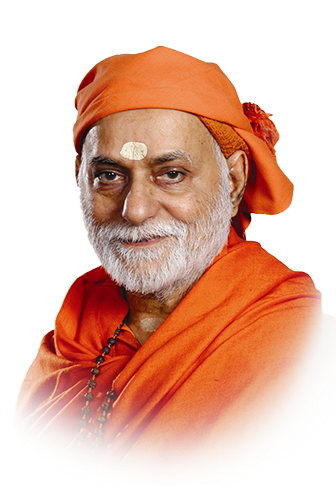
Swami Bhoomananda Tirtha
 14 views
-


 Add to Favorites
 Add to Reading List

Krishna presents the pinnacle, the zenith, of yogic perfection, explaining how the inner experience of spiritual happiness is to be enlarged to become constant, wholesome and thorough, so much so that the Knower will have no faltering or fall at all in his realization of spiritual perfection.
Dear and blessed souls:
Harih Om Tat Sat.
Expansion in Vision – from Self to Brahman
Krishna presents (5.24) the pinnacle, the zenith, of yogic perfection, explaining how the inner experience of spiritual happiness is to be enlarged to become constant, wholesome and thorough, so much so that the Knower will have no faltering or fall at all in his realization of spiritual perfection.
Redemption is Inner
The yogi finds his happiness within his body (yaḥ antaḥ sukhaḥ), not outside at all. In fact, he rejoices in his own within (antar-ārāmaḥ). Equally so, he finds his brilliance solely within himself (tathā antar-jyotiḥ eva). Such a one naturally becomes Brahman (brahma-bhūtaḥ) and thereby attains supreme redemption (brahma-nirvāṇam adhigacchati).
Initially, inwardness becomes necessary to realize the sentient Self. But the comprehension and realization do not cease there. The permeation of the Self beyond the body, extending to the entire pāñca- bhautika creation, irresistibly transpires as a matter of course. The more and more the inner Presence is felt, experienced and realized, the more will its omnipresence also be known, felt and experienced. This is an inevitable expansion, in a sense.
In fact, altogether, one supreme omnipresence alone is; all else, if at all, is its superimposition alone. Yes, the creational display is more a superimposition than anything else. Brahma-nirvāṇa thus becomes a sure corollary of the yogi, the Knower.
Ātmā and Brahman: One Presence
In fact, Ātmā and Brahman are synonyms. What is Ātmā, that itself is Brahman as well. Ātmā denotes the inner Presence in the body. Brahman is the same Presence but in the whole visible creation. Both Ātmā and Brahman refer to the same Presence, singular and wholesome, leading to sarva-bhūta- hite-ratāḥ (5.25, 12.4), being interested in the welfare of all beings.
Brahma-nirvāṇa refers to the spiritual fruition and fullness a seeker will have when his sādhanā attains the necessary fullness, depth and loftiness. Krishna first spoke about Brahman at the end of the 2nd chapter (2.72). He said that the Sthita-dhī enjoys brahma-nirvana freely by virtue of his spiritual enlightenment; it persists throughout his activities and interactions.
Mind–Intelligence Duo
Krishna emphasizes here (5.25) how purity of mind (kṣīṇa-kalmaṣatva), coupled with spiritual wisdom which refined intelligence provides, with all dual- notions subdued (chinna-dvaidhatva), is sufficient to have brahma-nirvāṇa. See, the whole pursuit, studied and evaluated earnestly with adequate depth, solely rests upon the mind-intelligence duo. Know again and again that spirituality is a mento-intellectual pursuit. And the inner personality consists mainly of mind and intelligence alone. Do not unduly worry about other matters at all.
Dispelling Doubts and Delusions
Austere stalwarts, gaining exalted vision, with their inner impurities and taints well attenuated, attain Brāhmic redemption. How? Intelligence provides the right clarity and vision, and mind steadfastly heeds these faithfully. As a result, all inner tufts like ego, desire and possessiveness dwindle and attenuate. This leads to chinna-dvaidhatva, dispelling all doubts and delusions.
One quality facilely links itself with the others. Intelligence raises and resolves doubts, and mind engenders delusions through emotional urges and imbalances. When these are modulated and restrained, resulting in the desired sublimity and integration, then brahma-nirvāṇa can surely be achieved.
Brahma-nirvāṇa does not have to be produced at all. It already inheres in one’s own within, in the very inner Presence that animates and activates the body. It is the surrounding colourations and obstacles that prevent one from experiencing Self- splendour. When the inner personality attains the necessary purity and clarity, the inmost effulgence springs effortlessly in full bloom! See the beauty and elegance of spiritual pursuit! What the seeker is in need of, is already resting within him!
From Self-Realization to Universal Welfare
Krishna does not stop there. He insists upon another important quality, namely sarva-bhūta-hite-ratāḥ. This means that Knowers must necessarily be interested in the needs of all beings, striving heartily to further their welfare, says Krishna with ample emphasis.
All these are disciplines, virtues and excellences relating to one’s personality, commencing from the senses and ranging over to intelligence and ego. Spirituality, first and last, calls for purifying, sublimating and enriching one’s own personality, so that it will be ready to engender the most benevolent thoughts, feelings, values and goals, all equally beneficial to society and the world at large.
Uniqueness of War-dialogue
Remember the place and occasion of the unprecedented war dialogue. War cries had already been raised and both armies were ready to discharge arrows at their enemies. It was then that Krishna had to address Arjuna’s discomfiture. Where was there any scope then to think of shunning action at all? So, the spiritual wisdom Krishna imparted was such as to be applied to the impending war itself. Remember this always.
Spiritual Wisdom must Express Itself in Action
Krishna’s words were aimed at making Arjuna do what he had, in fact, come to Kurukshetra for, namely, fighting the battle gallantly with full resolve and confidence. Arjuna failed to know that he was not to fight the war for personal reasons – not for his or Indraprastha’s sake. Instead, he was to contend Duryodhana in a bid to stop his wicked rule and save the society of our subcontinent.
Armies from all over the land had assembled there, revealing where their loyalties lay – with the righteous or the unrighteous side. Thus, it was not just a war between Indraprastha and Hastinapura at all.
Leading the society from unmārga to sanmārga
To dissuade people from the wrong path they are treading and restore them to righteousness, dharma, is the sole aim of loka-saṅgraha. This point demands constant reminder – it is dissuading people from wrong, unmārga and compelling them to pursue the right, sanmārga! This is what Krishna aimed at by emphasizing the need for taking interest in sarva- bhuta-hita, welfare of all beings. Arjuna should become spiritually enlightened. Neither for gaining enlightenment nor thereafter should he seek the woods or escape from the secular activities he was pursuing.
The welfare of society completely rested in fighting the war, which had become inescapable in spite of the best efforts by Yudhishthira, especially by sending Krishna as his ambassador of peace to Hastinapura. This step was historic, as Yudhishthira wanted to avoid bloodshed somehow.
Vasudhaiva Kuṭumbakam: An Expansive Vision
Vasudhaiva-kuṭumbakam is the one motto of this great holy land of Bharat for all human activities! In whatever one thinks, speaks and does, he should keep in mind the welfare of not alone himself and his family, but also the society at large, his nation and then the whole universe as well.
It is not at all hard to nurture such an expansive thought. It is the same mind that fosters the thought of Vasudhā, Mother Earth, in place of the limited oneself and family. Think how expansive the mind of such an individual will be! And what will be the effect of such an expansive mind! Imagine how beautiful and benevolent will the outcome also be!
It is important to note that whatever Krishna has stated in verse 5.25 is all experiential and practical alike. In eight words, he has incorporated the entire spirituality – its concept, goal, means, pursuit as well as its perfection!
Four Āśramas of Life
Krishna now simplifies (5.26) the whole message, making it even more facile, something seekers can pursue throughout the waking hours, no matter how intensely they are engaged in domestic, professional or societal activities. But he has added one word, namely yatīnām, in the verse. This literally means ascetics, those who have taken to sannyāsa, the fourth order of life.
The earlier three are brahmacharya, celibacy, meant for learning and education; followed by household life, gṛhastha āśrama; and the third, vānaprastha, the anchorite’s life, precursory to sannyāsa.
Brahmacharya is the inaugural, empowering course, wherein both education and austerity underscore one’s life to enrich and empower one’s personality to take up the remaining three stages of life. A celibate prepares himself well, either to become a householder or, rarely, an ascetic directly.
“Altogether, one supreme omnipresence alone is; all else, if at all, is its superimposition alone. Yes, the creational display is more a superimposition than anything else.”
“What is Ātmā, that itself is Brahman as well. Ātmā denotes the inner Presence in the body. Brahman is the same Presence but in the whole visible creation.”
“Brahma-nirvāṇa refers to the spiritual fruition and fullness a seeker will have when his sādhanā attains the necessary fullness, depth and loftiness.”
“Brahma-nirvāṇa does not have to be produced at all. It already inheres in one’s own within, in the very inner Presence that animates and activates the body.”
“To dissuade people from the wrong path they are treading and restore them to righteousness, dharma, is the sole aim of loka-sangraha.”
“In whatever one thinks, speaks and does, he should keep in mind the welfare of not alone himself and his family, but also the society at large, his nation and then the whole universe as well.”
you might be interested in


Swami Bhoomananda Tirtha
080 – Bhagavad Gita – Swami Bhoomananda Tirtha

Swami Bhoomananda Tirtha
002 – Bhagavad Gita – Swami Bhoomananda Tirtha – The Context of the Bhagavad Gita

Swami Nirviseshananda Tirtha
04 – by Swami Nirviseshananda Tirtha – Three Gunas that Binds and Liberates Us

Swami Nirviseshananda Tirtha
090 – by Swami Nirviseshananda Tirtha – The Two Birds – Part 1