

Chapter 10: Vibhūti-yoga: – Comprehending the Divine through Its GloriesVerse 35
बृहत्साम तथा साम्नां गायत्री छन्दसामहम् ।
मासानां मार्गशीर्षोऽहमृतूनां कुसुमाकर:॥
English Transliteration
bṛhat-sāma tathā sāmnāṃ
gāyatrī chandasām-aham
māsānāṃ mārgaśīrṣo’ham-
ṛtūnāṃ kusumākara: – 10.35
Translation
Of Sāma-veda hymns, I (the Supreme) feature specially in Bṛhat-sāma, among Vedic meters, in Gāyatrī; of the twelve months, in Mārgaśeersha; of seasons, in the flowering Vasanta.
Chanting Audio
Chapter 10: Vibhūti-yoga: – Comprehending the Divine through Its Glories - Verse 35
Swami Bhoomananda Tirtha

Commentary
Krishna’s enumeration grows to include factors related to the life and culture of people, given to various languages, customs, food habits, styles and faiths. Anything good and great has to comprehend all, despite their striking differences. Scriptures are a mother to all. Scriptural traditions also must be so. Bhagavad Gita upholds this.
Sāma-veda is strikingly musical and Bṛhat chant is very sublime and serene. With Gāyatrī, a boy gets initiated into Vedic life. Gāyatrī has twenty four letters in three quarters. Other meters have four quarters.
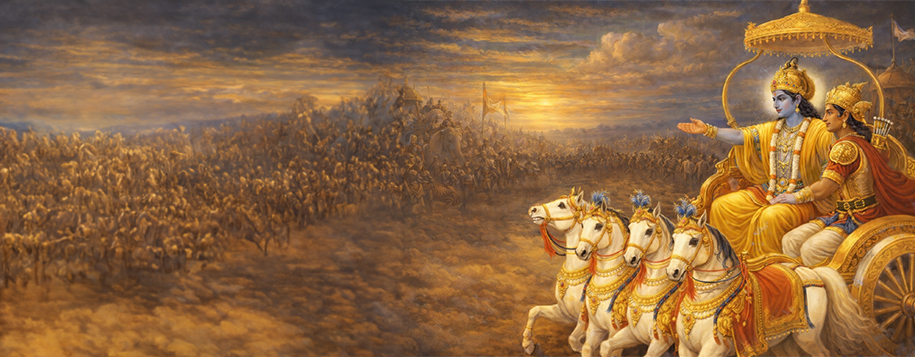
Margaśeersha falling in November-December has its unique spiritual effect. Before leaving Hastinapura after his ambassadorial mission, Krishna announcing Margaśeersha for the dharmic war was consequential. Vasanta or spring season, coming after dreary winter, brings new life and blossoming to nature.