

Chapter 14: Guṇa-traya-vibhāga-yoga: – Understanding and Transcending the Three Qualities of Nature
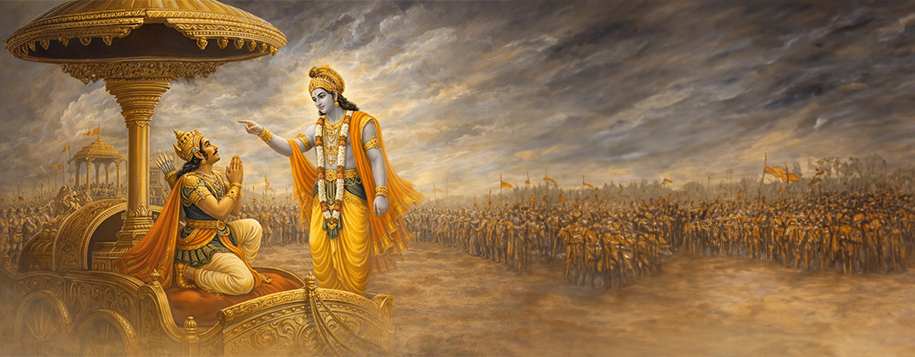
In this chapter, Krishna discusses human personality on the basis of the three guṇas constituting Nature – Sattva, Rajas, and Tamas. He makes an in-depth analysis of how each guṇa has its binding effect on the individual’s mind, intelligence, word, and deed, and clarifies how a seeker must ultimately win over these bondages. We come to understand what are the specific effects of each guṇa, and how allowing the three guṇas to operate, we can transcend their binding effect and attain wisdom and freedom.
Sattva guṇa is the cause of light and harmony, but it binds by happiness and wisdom. Rajoguṇa is of the nature of desire and passion and it binds one through clinging to ceaseless desire-motivated activity. Tamoguṇa, born of ignorance, binds one through inattention, lethargy and sleep.
Krishna says although all the three guṇas are present in everyone, their proportions are subject to moderation and selective modification. The three-guṇa analysis is meant to help the seeker strive properly to make sattva pronounced and predominant, sublimating rajas and tamas, and finally through one-pointed devotion to the Lord, overcome even the bondage created by the sattva guṇa.
Krishna then presents the characteristics of the guṇātīta – one who has transcended the binding effects of the gunas. Despite the play of the gunas in his personality, he remains unaffected, as he is established in the transcendental Self.
Chanting Audio
Bhagavad Gita Chapter 14
Ma Gurupriya

श्रीभगवानुवाच ।
परं भूय: प्रवक्ष्यामि ज्ञानानां ज्ञानमुत्तमम् ।
यज्ज्ञात्वा मुनय: सर्वे परां सिद्धिमितो गता: ॥
English Transliteration
śrī bhagavān-uvāca
paraṃ bhūya: pravakṣyāmi
jñānānāṃ jñānam-uttamam
yajjñātvā munaya: sarve
parāṃ siddhim-ito gatā: – 14.1
Translation
Lord Krishna said: I shall explain to you again the highest of all kinds of knowledge, on actualizing which, all ascetics have reached the state of supreme fulfilment.

इदं ज्ञानमुपाश्रित्य मम साधर्म्यमागता: ।
सर्गेऽपि नोपजायन्ते प्रलये न व्यथन्ति च ॥
English Transliteration
idaṃ jñānam-upāśritya
mama sādharmyam-āgatā:
sarge’pi nopajāyante
pralaye na vyathanti ca – 14.2
Translation
By taking refuge in this wisdom, many have come to My state (finding identity with Me). They do not get born at the time of creation, nor get afflicted during dissolution.
मम योनिर्महद्ब्रह्म तस्मिन्गर्भं दधाम्यहम् ।
संभव: सर्वभूतानां ततो भवति भारत ॥
English Transliteration
mama yonirmahad-brahma
tasmin-garbhaṃ dadhāmy-aham
sambhava: sarva-bhūtānāṃ
tato bhavati bhārata – 14.3
Translation
Mahat Brahma (Nature) is my great womb. There I cast my seed, and hence follows the birth of all beings.
सर्वयोनिषु कौन्तेय मूर्तय: सम्भवन्ति या: ।
तासां ब्रह्म महद्योनिरहं बीजप्रद: पिता ॥
English Transliteration
sarva-yoniṣu kaunteya
mūrtaya: sambhavanti yā:
tāsāṃ brahma mahad-yonir-
ahaṃ bīja-prada: pitā – 14.4
Translation
For whatever forms are born of individual wombs, O Kaunteya (Arjuna), the one great womb is Brahma (in Its active aspect, meaning Nature). And I am the Father who casts the seed.
सत्त्वं रजस्तम इति गुणा: प्रकृतिसंभवा: ।
निबध्नन्ति महाबाहो देहे देहिनमव्ययम् ॥
English Transliteration
sattvaṃ rajas-tama iti
guṇā: prakṛti-sambhavā:
nibadhnanti mahābāho
dehe dehinam-avyayam – 14.5
Translation
The three guṇas (qualities, strands), namely sattva, rajas and tamas, belong to Nature. They strongly bind the imperishable embodied being to the body, O mighty-armed (Arjuna).
तत्र सत्त्वं निर्मलत्वात्प्रकाशकमनामयम् ।
सुखसङ्गेन बध्नाति ज्ञानसङ्गेन चानघ ॥
English Transliteration
tatra sattvaṃ nirmalatvāt-
prakāśakam-anāmayam
sukha-saṅgena badhnāti
jñāna-saṅgena cānagha – 14.6
Translation
Of these, sattva guṇa by dint of its immaculate nature, is the cause of light (knowledge) and harmony. But, O sinless Arjuna, it binds one by causing saṅga (clinging) to happiness and knowledge.
रजो रागात्मकं विद्धि तृष्णासङ्गसमुद्भवम् ।
तन्निबध्नाति कौन्तेय कर्मसङ्गेन देहिनम् ॥
English Transliteration
rajo rāgātmakaṃ viddhi
tṛṣṇāsaṅga-samudbhavam
tan-nibadhnāti kaunteya
karma-saṅgena dehinam – 14.7
Translation
Know rajo-guṇa to be in the nature of desire and passion. It springs from greed and delusional clinging. It binds one (the embodied being), O son of Kunti, through clinging to ceaseless activity.
तमस्त्वज्ञानजं विद्धि मोहनं सर्वदेहिनाम् ।
प्रमादालस्यनिद्राभिस्तन्निबध्नाति भारत ॥
English Transliteration
tamas-tvajñānajaṃ viddhi
mohanaṃ sarva-dehinām
pramādālasya-nidrābhis-
tan-nibadhnāti bhārata – 14.8
Translation
O Bhārata, know that tamo-guṇa, deluding all alike, is born of ignorance. It binds the embodied beings through inattention, lethargy and sleep.
सत्त्वं सुखे सञ्जयति रज: कर्मणि भारत ।
ज्ञानमावृत्य तु तम: प्रमादे सञ्जयत्युत ॥
English Transliteration
sattvaṃ sukhe sañjayati
raja: karmaṇi bhārata
jñānam-āvṛtya tu tama:
pramāde sañjayaty-uta – 14.9
Translation
Sattva binds one by comfort and happiness, rajas by activity, O Bhārata. Covering knowledge, tamas binds one by carelessness or inattention.
रजस्तमश्चाभिभूय सत्त्वं भवति भारत ।
रज: सत्त्वं तमश्चैव तम: सत्त्वं रजस्तथा ॥
English Transliteration
rajas-tamaś-cābhibhūya
sattvaṃ bhavati bhārata
raja: sattvaṃ tamaścaiva
tama: sattvaṃ rajas-tathā – 14.10
Translation
O Bhārata, (sometimes) sattva prevails dominating over rajas and tamas; (sometimes) rajas rules over sattva and tamas; (and again) tamas overwhelms sattva and rajas.
सर्वद्वारेषु देहेऽस्मिन्प्रकाश उपजायते ।
ज्ञानं यदा तदा विद्याद्विवृद्धं सत्त्वमित्युत ॥
English Transliteration
sarvadvāreṣu dehe’smin-
prakāśa upajāyate
jñānaṃ yadā tadā vidyād-
vivṛddhaṃ sattvam-ity-uta – 14.11
Translation
When the brilliance of knowledge adorns all the sense organs in the body, then know it definitely to be the sublime effect of enhanced sattva-guṇa.
लोभ: प्रवृत्तिरारम्भ: कर्मणामशम: स्पृहा ।
रजस्येतानि जायन्ते विवृद्धे भरतर्षभ ॥
English Transliteration
lobha: pravṛttir-ārambha:
karmaṇām-aśama: spṛhā
rajasy-etāni jāyante
vivṛddhe bharatarṣabha – 14.12
Translation
When rajo-guṇa increases, greed, extrovert drive, enterprise, unceasing involvement in actions, unabating desire – all these arise, O best of Bharatas (Arjuna).
अप्रकाशोऽप्रवृत्तिश्च प्रमादो मोह एव च ।
तमस्येतानि जायन्ते विवृद्धे कुरुनन्दन ॥
English Transliteration
aprakāśo’pravṛttiśca
pramādo moha eva ca
tamasy-etāni jāyante
vivṛddhe kuru-nandana – 14.13
Translation
Lack of brilliance, inertia or apathy towards activity, inattention as well as delusion – these arise when tamas is enhanced, O Kurunandana (Arjuna).
यदा सत्त्वे प्रवृद्धे तु प्रलयं याति देहभृत् ।
तदोत्तमविदां लोकानमलान्प्रतिपद्यते ॥
English Transliteration
yadā sattve pravṛddhe tu
pralayaṃ yāti deha-bhṛt
tadottamavidāṃ lokānamalān-
pratipadyate – 14.14
Translation
When the embodied one happens to die with sattva in predominance, then he attains the pure regions meant for the most learned ones.
रजसि प्रलयं गत्वा कर्मसङ्गिषु जायते ।
तथा प्रलीनस्तमसि मूढयोनिषु जायते ॥
English Transliteration
rajasi pralayaṃ gatvā
karma-saṅgiṣu jāyate
tathā pralīnas-tamasi
mūḍha-yoniṣu jāyate – 14.15
Translation
By courting death when rajas is predominant, one is born among those who cling to activities. And dying while tamas dominates, one is born in deluded and ignorant wombs.
कर्मण: सुकृतस्याहु: सात्त्विकं निर्मलं फलम् ।
रजसस्तु फलं दु:खमज्ञानं तमस: फलम् ॥
English Transliteration
karmaṇa: sukṛtasyāhu:
sāttvikaṃ nirmalaṃ phalam
rajasas-tu phalaṃ du:kham-
ajñānaṃ tamasa: phalam – 14.16
Translation
The result of good or noble action is said to be sāttvika and pure. Of rājasa-action, the result is affliction, and of tāmasa-action, is ignorance (and delusion).
सत्त्वात्सञ्जायते ज्ञानं रजसो लोभ एव च ।
प्रमादमोहौ तमसो भवतोऽज्ञानमेव च ॥
English Transliteration
sattvāt-sañjāyate jñānaṃ
rajaso lobha eva ca
pramāda-mohau tamaso
bhavato’jñānam-eva ca – 14.17
Translation
From sattva-guṇa is born knowledge, wisdom. From rajas arises greed. Inattention and delusion, coupled with ignorance, result from tamas.
ऊर्ध्वं गच्छन्ति सत्त्वस्था मध्ये तिष्ठन्ति राजसा: ।
जघन्यगुणवृत्तिस्था अधो गच्छन्ति तामसा: ॥
English Transliteration
ūrdhvaṃ gacchanti sattvasthā
madhye tiṣṭhanti rājasā:
jaghanyaguṇa-vṛttisthā
adho gacchanti tāmasā: – 14.18
Translation
Sāttvika people go upwards, rājasa ones remain in the middle, while the tāmasa people, given to lowest tendencies and activities, go downwards.
नान्यं गुणेभ्य: कर्तारं यदा द्रष्टानुपश्यति ।
गुणेभ्यश्च परं वेत्ति मद्भावं सोऽधिगच्छति ॥
English Transliteration
nānyaṃ guṇebhya: kartāraṃ
yadā draṣṭānupaśyati
guṇebhyaśca paraṃ vetti
mad-bhāvaṃ so’dhigacchati – 14.19
Translation
When the seer does not see any doer besides the guṇas, and also perceives That which transcends the guṇas, then he attains My state (attains the Supreme).
गुणानेतानतीत्य त्रीन्देही देहसमुद्भवान् ।
जन्ममृत्युजरादु:खैर्विमुक्तोऽमृतमश्नुते ॥
English Transliteration
guṇān-etān-atītya trīn-
dehī deha-samudbhavān
janma-mṛtyu-jarā-du:khair-
vimukto’mṛtam-aśnute – 14.20
Translation
By transcending these three guṇas, which give rise to embodiment, one gets freed from the torments of birth, death and decrepitude, and enjoys the bliss of immortality.
अर्जुन उवाच ।
कैर्लिङ्गैस्त्रीन्गुणानेतानतीतो भवति प्रभो ।
किमाचार: कथं चैतांस्त्रीन्गुणानतिवर्तते ॥
English Transliteration
arjuna uvāca
kairliṅgais-trīn-guṇān-etān-
atīto bhavati prabho
kim-ācāra: kathaṃ caitāṃs-
trīn-guṇān-ativartate – 14.21
Translation
Arjuna said: O Lord, what are the characteristics of a person, which make him transcend these three guṇas? How does he behave, and by what pursuit does he rise above these three guṇas?
श्रीभगवानुवाच ।
प्रकाशं च प्रवृत्तिं च मोहमेव च पाण्डव ।
न द्वेष्टि सम्प्रवृत्तानि न निवृत्तानि काङ्क्षति ॥
English Transliteration
śrī bhagavān-uvāca
prakāśaṃ ca pravṛttiṃ ca
moham-eva ca pāṇḍava
na dveṣṭi sampravṛttāni
na nivṛttāni kāṅkṣati – 14.22
Translation
Lord Krishna said: O Pandava, he who does not resent the rise of either (sattva’s) brilliance, or (rajas’s) activity or (tamas’s) delusion, and also does not yearn for the subsidence of any of them;
उदासीनवदासीनो गुणैर्यो न विचाल्यते ।
गुणा वर्तन्त इत्येव योऽवतिष्ठति नेङ्गते ॥
English Transliteration
udāsīnavad-āsīno
guṇairyo na vicālyate
guṇā vartanta ity-eva
yo’vatiṣṭhati neṅgate – 14.23
Translation
He who remains seated with lofty indifference, not shaken by the interplay of guṇas; and who remains stable and unwavering understanding that guṇas alone are operating;
समदु:खसुख: स्वस्थ: समलोष्टाश्मकाञ्चन: ।
तुल्यप्रियाप्रियो धीरस्तुल्यनिन्दात्मसंस्तुति: ॥
English Transliteration
sama-du:kha-sukha: svastha:
sama-loṣṭāśma-kāñcana:
tulya-priyāpriyo dhīras-
tulya-nindātma-saṃstuti: – 14.24
Translation
(He who) remains equipoised in sorrow and happiness, rests firmly in oneself, considers a clod of earth, stone and a piece of gold with equal importance, is evenly disposed towards the desirable and detestable, poised (dhīra:), accepting praise and blame alike;
मानापमानयोस्तुल्यस्तुल्यो मित्रारिपक्षयो: ।
सर्वारम्भपरित्यागी गुणातीत: स उच्यते ॥
English Transliteration
mānāpamānayos-tulyas-
tulyo mitrāri-pakṣayo:
sarvārambha-parityāgī
guṇātīta: sa ucyate – 14.25
Translation
He who is even towards honour and dishonour, impartial towards friends and enemies, and has renounced all sense of undertaking, is said to have transcended the guṇas.
मां च योऽव्यभिचारेण भक्तियोगेन सेवते ।
स गुणान्समतीत्यैतान् ब्रह्मभूयाय कल्पते ॥
English Transliteration
māṃ ca yo’vyabhicāreṇa
bhakti-yogena sevate
sa guṇān-samatītyaitān
brahma-bhūyāya kalpate – 14.26
Translation
Also, whoever worships Me (the Supreme) with unswerving devotion, transcends these guṇas very well, and is fit to become Brahman.
ब्रह्मणो हि प्रतिष्ठाहममृतस्याव्ययस्य च ।
शाश्वतस्य च धर्मस्य सुखस्यैकान्तिकस्य च ॥
English Transliteration
brahmaṇo hi pratiṣṭhāham-
amṛtasyāvyayasya ca
śāśvatasya ca dharmasya
sukhasyaikāntikasya ca – 14.27
Translation
I am the abode of immortal and immutable Brahman; also of eternal dharma, as well as of ultimate happiness.
ओं तत्सदिति श्रीमद्भगवद्गीतासूपनिषत्सु ब्रह्मविद्यायां योगशास्त्रे श्रीकृष्णार्जुनसंवादे गुणत्रयविभागयोगो नाम चतुर्दशोऽध्याय: ।
English Transliteration
oṃ tat-sad-iti śrīmad-bhagavad-
gītāsūpaniṣatsu brahma-vidyāyāṃ
yoga-śāstre śrīkṛṣṇārjuna-saṃvāde
guṇa-traya-vibhāga-yogo nāma caturdaśo’dhyāya:
Translation
Om – the symbol of Brahman, tat – that singular Reality (Brahman), sat – the ever abiding presence (Brahman).
Thus ends the fourteenth chapter entitled Guṇa-traya-vibhāga Yoga, during the Srikrishna-Arjuna dialogue in Śrīmad Bhagavad Gita, constituting Yoga-śāstra, which falls within Brahmavidya as presented in the Vedic Upanishads.