


Chapter 16: Daivāsura-sampad-vibhāga-yoga: – Divine and Demonic Characteristics
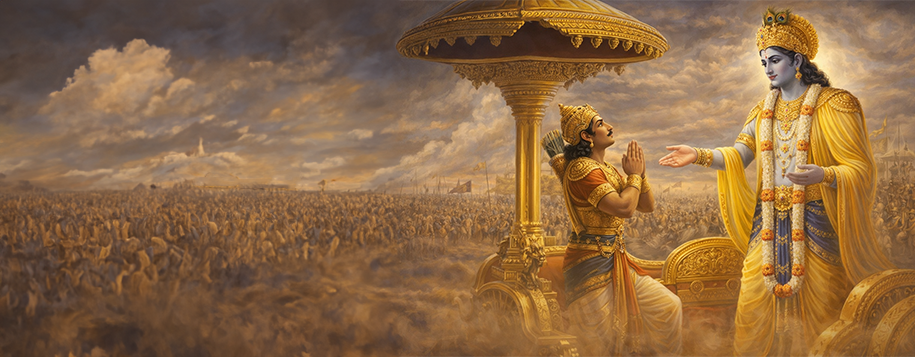
This chapter throws light on the complex qualities that constitute human personality. Krishna enumerates the qualities of the good, noble, and benevolent people as well as the bad, and ignoble. Through this discussion, Krishna inspires and persuades seekers to imbibe and strengthen good qualities and safeguard themselves against the opposite qualities, showing how these traits manifest in daily behaviour, speech, and relationships.
He enumerates 26 qualities, describing them as attributes of goodness (daivi sampat) and good people. He also mentions āsuri (evil) qualities. By this he describes the true complexity of human society, by giving a complete picture of human traits and tendencies. Krishna assures Arjuna that the divine traits alone will take one to the pedestal of supreme freedom. Cultivating divine qualities will make the mind steady and poised and ensure spiritual progress. Krishna also emphasizes that the destructive traits will have a binding effect.
Virtue and sin are earned and incurred by our life and actions on earth. We create heaven and hell here itself by our virtues and vices. Passion, hatred, and greed are the three-fold doors to hell in this world. When they emerge in the mind, instantly they open the direct door to hell. True spiritual evolution consists in gaining freedom from this three-fold hell. When the three are won over, one creates heaven here itself.
Disregarding spiritual injunctions, one who lives driven by greed and desire, does not attain happiness or the supreme goal. Krishna’s elaborate description about the asura tendencies and characteristics, is to caution everyone about the pitfalls likely to occur while living in the world. The redress lies in getting exposed to the scriptural teachings.
Chanting Audio
Bhagavad Gita Chapter 16
Ma Gurupriya

श्रीभगवानुवाच ।
अभयं सत्त्वसंशुद्धिर्ज्ञानयोगव्यवस्थिति: ।
दानं दमश्च यज्ञश्च स्वाध्यायस्तप आर्जवम् ॥
English Transliteration
śrī bhagavān-uvāca
abhayaṃ sattva-saṃśuddhir-
jñāna-yoga-vyavasthiti:
dānaṃ damaś-ca yajñaś-ca
svādhyāyas-tapa ārjavam – 16.1
Translation
Lord Krishna said: Fearlessness, wholesome purity, adequate attunement to and abidance in spiritual wisdom, charitability, sensory regulation, acting with full dedication to the supreme Reality (yajña), study of scriptures, austerity, straightforwardness;

अहिंसा सत्यमक्रोधस्त्याग: शान्तिरपैशुनम् ।
दया भूतेष्वलोलुप्त्वं मार्दवं ह्रीरचापलम् ॥
English Transliteration
ahiṃsā satyam-akrodhas-
tyāga: śāntir-apaiśunam
dayā-bhūteṣvaloluptvaṃ
mārdavaṃ hrīr-acāpalam – 16.2
Translation
Non-violence or non-injury, truthfulness, absence of anger, renunciation, peacefulness, absence of fault-finding, compassion for all creatures, absence of greed, softness of mind, modesty, avoiding fickleness and useless pursuits;
तेज: क्षमा धृति: शौचमद्रोहो नातिमानिता ।
भवन्ति सम्पदं दैवीमभिजातस्य भारत ॥
English Transliteration
teja: kṣamā dhṛti: śaucam-
adroho nātimānitā
bhavanti sampadaṃ daivīm-
abhijātasya bhārata – 16.3
Translation
Brilliance, patience-cum-tolerance, will-power, cleanliness, absence of hostility and haughtiness – these are the (twenty six) qualities that grace one born with divine nature, O descendant of Bharata.
दम्भो दर्पोऽभिमानश्च क्रोध: पारुष्यमेव च ।
अज्ञानं चाभिजातस्य पार्थ सम्पदमासुरीम् ॥
English Transliteration
dambho darpo’bhimānaś-ca
krodha: pāruṣyam-eva ca
ajñānaṃ cābhijātasya
pārtha sampadam-āsurīm – 16.4
Translation
Ostentation and hypocrisy, arrogance, pride, hatred and anger, cruelty or harshness, ignorance and delusion – these are the features, O Partha, of one born to a demonical heritage.
दैवी सम्पद्विमोक्षाय निबन्धायासुरी मता ।
मा शुच: सम्पदं दैवीमभिजातोऽसि पाण्डव ॥
English Transliteration
daivī sampad-vimokṣāya
nibandhāyāsurī matā
mā śuca: sampadaṃ
daivīm-abhijāto’si pāṇḍava – 16.5
Translation
Divine qualities conduce to liberation, and the demonic ones to bondage. Do not grieve, O Arjuna, you are born with divine qualities.
द्वौ भूतसर्गौ लोकेऽस्मिन्दैव आसुर एव च ।
दैवो विस्तरश: प्रोक्त आसुरं पार्थ मे शृणु ॥
English Transliteration
dvau bhūta-sargau loke’smin-
daiva āsura eva ca
daivo vistaraśa: prokta
āsuraṃ pārtha me śṛṇu – 16.6
Translation
In this world there are two kinds of beings created – divine (daiva) and devilish (āsura). I have spoken in detail about the divine kind. O Partha, hear now about the devilish kind.
प्रवृत्तिं च निवृत्तिं च जना न विदुरासुरा: ।
न शौचं नापि चाचारो न सत्यं तेषु विद्यते ॥
English Transliteration
pravṛttiṃ ca nivṛttiṃ ca
janā na vidur-āsurā:
na śaucaṃ nāpi cācāro
na satyaṃ teṣu vidyate – 16.7
Translation
The āsura people know not what should be done (dharma) and what should not be done (adharma). Such people have neither cleanliness (outer and inner) nor good conduct. They are not given to truthfulness.
असत्यमप्रतिष्ठं ते जगदाहुरनीश्वरम् ।
अपरस्परसम्भूतं किमन्यत्कामहैतुकम् ॥
English Transliteration
asatyam-apratiṣṭhaṃ te
jagad-āhur-anīśvaram
aparaspara-sambhūtaṃ
kim-anyat-kāma-haitukam – 16.8
Translation
They say that the world is unreal, has no order or foundation (like morality or ethics). There is no God to control. It is just born of union; what else than passion can be the cause of it?
एतां दृष्टिमवष्टभ्य नष्टात्मानोऽल्पबुद्धय: ।
प्रभवन्त्युग्रकर्माण: क्षयाय जगतोऽहिता: ॥
English Transliteration
etāṃ dṛṣṭim-avaṣṭabhya
naṣṭātmāno’lpa-buddhaya:
prabhavanty-ugra-karmāṇa:
kṣayāya jagato’hitā: – 16.9
Translation
Fostering this kind of vision, lost to their own distorted intellect, they emerge as enemies of the world, and take to fierce, violent acts meant to bring about largescale degeneration and ruin.
काममाश्रित्य दुष्पूरं दम्भमानमदान्विता: ।
मोहाद्गृहीत्वासद्ग्राहान्प्रवर्तन्तेऽशुचिव्रता: ॥
English Transliteration
kāmam-āśritya duṣpūraṃ
dambha-māna-madānvitā:
mohād-gṛhītvāsad-grāhān-
pravartante’śuci-vratā: – 16.10
Translation
Resorting to insatiable desire, coupled with ostentation, pride and arrogance, holding to wrong ideas under sheer delusion, they resort to impure activities with evil resolve.
चिन्तामपरिमेयां च प्रलयान्तामुपाश्रिता: ।
कामोपभोगपरमा एतावदिति निश्चिता: ॥
English Transliteration
cintām-aparimeyāṃ ca
pralayāntām-upāśritā:
kāmopabhoga-paramā
etāvad-iti niścitā: – 16.11
Translation
Taking to unbridled thoughts ending with only death, indulging in gratifying desires with no let or hindrance, they resolve: This is all that life is.
आशापाशशतैर्बद्धा: कामक्रोधपरायणा: ।
ईहन्ते कामभोगार्थमन्यायेनार्थसञ्चयान् ॥
English Transliteration
āśā-pāśa-śatair-baddhā:
kāma-krodha-parāyaṇā:
īhante kāma-bhogārtham-
anyāyenārtha-sañcayān – 16.12
Translation
Entangled firmly by hundreds of chains of desire and expectation, taking refuge in lust and anger, they strive unjustly to amass wealth for gratifying their sensory cravings.
इदमद्य मया लब्धमिमं प्राप्स्ये मनोरथम् ।
इदमस्तीदमपि मे भविष्यति पुनर्धनम् ॥
English Transliteration
idam-adya mayā labdham-
imaṃ prāpsye mano-ratham
idam-astīdam-api me
bhaviṣyati punar-dhanam – 16.13
Translation
Today I have gained this object of desire, and tomorrow I shall have that. This much of wealth I already have with me, and more will come to me in future.
असौ मया हत: शत्रुर्हनिष्ये चापरानपि ।
ईश्वरोऽहमहं भोगी सिद्धोऽहं बलवान्सुखी ॥
English Transliteration
asau mayā hata: śatrur-
haniṣye cāparānapi
īśvaro’ham-ahaṃ bhogī
siddho’haṃ balavān-sukhī – 16.14
Translation
This enemy has been slain by me; the rest also I shall kill. I am the Lord. I am the enjoyer. I am successful, powerful and happy.
आढ्योऽभिजनवानस्मि कोऽन्योऽस्ति सदृशो मया ।
यक्ष्ये दास्यामि मोदिष्य इत्यज्ञानविमोहिता: ॥
English Transliteration
āḍhyo’bhijanavān-asmi
ko’nyo’sti sadṛśo mayā
yakṣye dāsyāmi modiṣya
ity-ajñāna-vimohitā: – 16.15
Translation
I am abundantly rich; I am well born. Who is there equal to me? I shall do sacrifices. I will give liberally. I will rejoice and revel – thus they thrive blinded by ignorance.
अनेकचित्तविभ्रान्ता मोहजालसमावृता: ।
प्रसक्ता: कामभोगेषु पतन्ति नरकेऽशुचौ ॥
English Transliteration
aneka-citta-vibhrāntā
moha-jāla-samāvṛtā:
prasaktā: kāma-bhogeṣu
patanti narake’śucau – 16.16
Translation
Confounded by many (egoistic) thoughts, surrounded by the net of delusion, extremely glued to desires and their gratification, they fall into the most filthy hell.
आत्मसम्भाविता: स्तब्धा धनमानमदान्विता: ।
यजन्ते नामयज्ञैस्ते दम्भेनाविधिपूर्वकम् ॥
English Transliteration
ātma-sambhāvitā: stabdhā
dhana-māna-madānvitā:
yajante nāma-yajñais-te
dambhenāvidhi-pūrvakam – 16.17
Translation
With vain glory and conceit, blinded by wealth and self-proclaimed respect, they ostensibly perform sacrifices only to show off, disregarding all rules and procedures.
अहङ्कारं बलं दर्पं कामं क्रोधं च संश्रिता: ।
मामात्मपरदेहेषु प्रद्विषन्तोऽभ्यसूयका: ॥
English Transliteration
ahaṅkāraṃ balaṃ darpaṃ
kāmaṃ krodhaṃ ca saṃśritā:
mām-ātma-para-deheṣu
pradviṣanto’bhyasūyakā: – 16.18
Translation
Given to egotism, power, arrogance, lust and anger, these jealous people deride and hate Me (the Supreme), residing in their own as well as others’ bodies.
तानहं द्विषत: क्रूरान्संसारेषु नराधमान् ।
क्षिपाम्यजस्रमशुभानासुरीष्वेव योनिषु ॥
English Transliteration
tān-ahaṃ dviṣata: krūrān-
saṃsāreṣu narādhamān
kṣipāmy-ajasram-aśubhān-
āsurīṣveva yoniṣu – 16.19
Translation
I throw these hateful, cruel and inauspicious people, the vilest in the world, into the demonic wombs repeatedly.
आसुरीं योनिमापन्ना मूढा जन्मनि जन्मनि ।
मामप्राप्यैव कौन्तेय ततो यान्त्यधमां गतिम् ॥
English Transliteration
āsurīṃ yonim-āpannā
mūḍhā janmani janmani
mām-aprāpyaiva kaunteya
tato yānty-adhamāṃ gatim – 16.20
Translation
These deluded ones, getting into āsura wombs birth after birth, do not reach Me (the Supreme), and sink into still inferior states, O son of Kunti.
त्रिविधं नरकस्येदं द्वारं नाशनमात्मन: ।
काम: क्रोधस्तथा लोभस्तस्मादेतत्त्रयं त्यजेत् ॥
English Transliteration
trividhaṃ narakasyedaṃ
dvāraṃ nāśanam-ātmana:
kāma: krodhas-tathā lobhas-
tasmād-etat-trayaṃ tyajet – 16.21
Translation
Three-fold is this door to hell, which spells destruction to one. It consists of passion, anger and greed. Therefore, one should shun these three.
एतैर्विमुक्त: कौन्तेय तमोद्वारैस्त्रिभिर्नर: ।
आचरत्यात्मन: श्रेयस्ततो याति परां गतिम् ॥
English Transliteration
etair-vimukta: kaunteya
tamo-dvārais-tribhir-nara:
ācaraty-ātmana: śreyas-
tato yāti parāṃ gatim – 16.22
Translation
O Kunti’s son (Arjuna), if one becomes free of these three gateways to hell (passion, anger and greed), he can pursue the auspicious path to felicity and attain the supreme Goal.
य: शास्त्रविधिमुत्सृज्य वर्तते कामकारत: ।
न स सिद्धिमवाप्नोति न सुखं न परां गतिम् ॥
English Transliteration
ya: śāstra-vidhim-utsṛjya
vartate kāma-kārata:
na sa siddhim-avāpnoti
na sukhaṃ na parāṃ gatim – 16.23
Translation
Disregarding the scriptural injunctions, one who lives driven by desire and greed, does not attain perfection in anything. Neither does he gain happiness nor the supreme Goal.
तस्माच्छास्त्रं प्रमाणं ते कार्याकार्यव्यवस्थितौ ।
ज्ञात्वा शास्त्रविधानोक्तं कर्म कर्तुमिहार्हसि ॥
English Transliteration
tasmācchāstraṃ pramāṇaṃ te
kāryākārya-vyavasthitau
jñātvā śāstra-vidhānoktaṃ
karma kartum-ihārhasi – 16.24
Translation
Therefore, scriptures (śāstras) are the guidelines for you to determine what is to be done and what not. You must take up activities only after knowing what the śāstras explain and exhort.
ओं तत्सदिति श्रीमद्भगवद्गीतासूपनिषत्सु
ब्रह्मविद्यायां योगशास्त्रे श्रीकृष्णार्जुनसंवादे
दैवासुरसंपद्विभागयोगो नाम षोडशोऽध्याय: ।
English Transliteration
oṃ tat-sad-iti
śrīmad-bhagavad-gītāsūpaniṣatsu
brahma-vidyāyāṃ yoga-śāstre
śrīkṛṣṇārjuna-saṃvāde
daivāsura-saṃpad-vibhāga-yogo nāma ṣoḍaśo’dhyāya:
Translation
Om – the symbol of Brahman, tat – that singular Reality (Brahman), sat – the ever abiding presence (Brahman).
Thus ends the sixteenth chapter entitled Daivāsura-saṃpad-vibhāga Yoga, during the Srikrishna-Arjuna dialogue in Śrīmad Bhagavad Gita, constituting Yoga-śāstra, which falls within Brahmavidya as presented in the Vedic Upanishads.