

Chapter 3: Karma-yoga: – Transforming All Activities into YogaVerse 4
न कर्मणामनारम्भान्नैष्कर्म्यं पुरुषोऽश्नुते ।
न च सन्न्यसनादेव सिद्धिं समधिगच्छति ।।
English Transliteration
na karmaṇām-anārambhān-
naiṣkarmyaṃ puruṣo’śnute
na ca sannyasanād-eva
siddhiṃ samadhigacchati – 3.4
Translation
By refusing to take up activity, one does not attain actionlessness (naiṣkarmya). Nor again by external renunciation, can one think of attaining spiritual perfection (siddhi).
Chanting Audio
Chapter 3: Karma-yoga: – Transforming All Activities into Yoga - Verse 4
Swami Nirviseshananda Tirtha

Commentary
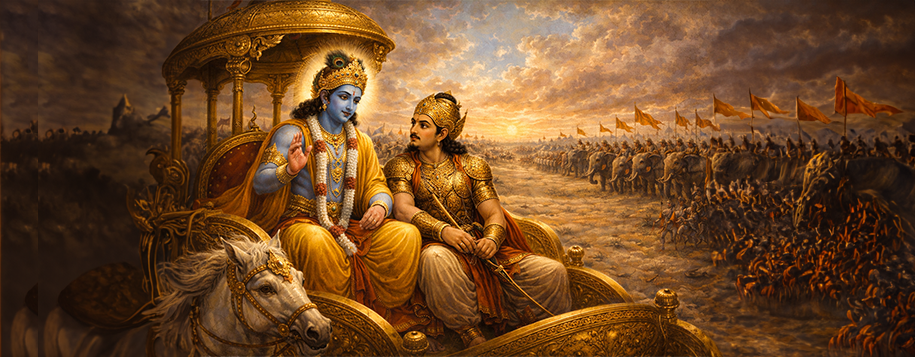
Naiṣkarmya, withdrawal and redemption from all activities, is the end objective of spirituality, showering fulfilment. But the means to it is neither shunning activity altogether, nor refusing to take up any activity at all. Equally so, it is not by renouncing whatever activity one is doing, as Arjuna proposed to. One is ‘non-beginning’ of activity, the other is ‘abruptly leaving’ whatever one is involved in.
Both, affirms Krishna, will not lead to true spiritual goal. The right way is to ‘achieve renunciation’ in the mind-intelligence level, which is the crux of Bhagavad Gita message. This renunciation is of doership ego, not of activities.
Hence, Arjuna must fulfil his needs in and through his active life itself, as Krishna has explained already. In fact, the wise have acclaimed this, even from the most ancient times. They have also been practising it successfully.