

Chapter 8: Akṣara-brahma-yoga: – Comprehending the Imperishable RealityVerse 24
अग्निर्ज्योतिरह: शुक्ल: षण्मासा उत्तरायणम् ।
तत्र प्रयाता गच्छन्ति ब्रह्म ब्रह्मविदो जना: ॥
English Transliteration
agnir-jyotir-aha: śukla:
ṣaṇ-māsā uttarāyaṇam
tatra prayātā gacchanti
brahma brahmavido janā: – 8.24
Translation
Uttarāyaṇa, associated and identified generally with six months of the year, in fact, is like fire, brilliance, day and whiteness (bespeaking the course of wisdom and ascent). Departing in that period, the Knowers attain Brahman.
Chanting Audio
Chapter 8: Akṣara-brahma-yoga: – Comprehending the Imperishable Reality - Verse 24
Ma Gurupriya

Commentary
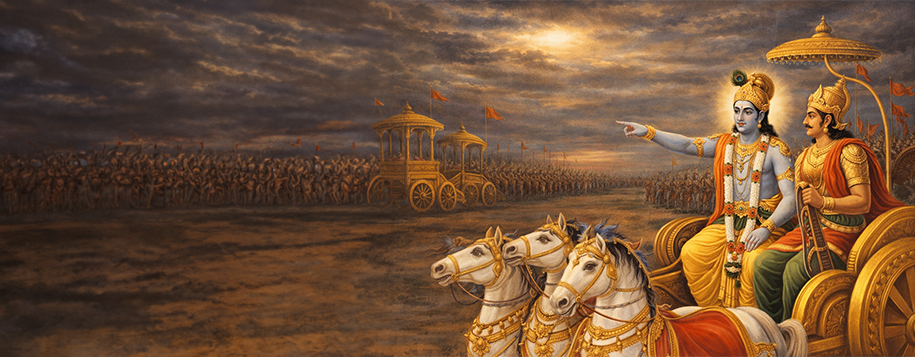
Earth’s revolution around the sun, brings the year, while sun’s apparent north-south movement brings uttara and dakshiṇa ayanas. The journey north is said to be holy, elevating, while the other not so. Holy acts are done in Uttarāyaṇa. Death in it is held as holy. Even Bheeshma chose to shed his body in Uttarāyaṇa.
Krishna poses a question: Is this true? Or, is there a greater meaning and relevance in the matter, as in so many of our practices and customs?
Fire, brilliance and day are luminous, revealing the presence of things, and white reflects light. Scriptures instil viveka, discrimination, to reveal the imperishable Soul in the body. Like light, when viveka reveals the unborn and undying Soul, one is elevated from all shackles of bondage and attains freedom. This is Uttarāyaṇa, the path that elevates, leads to enlightenment.