

Chapter 4: Jñāna-karma-sannyāsa-yoga: – Renunciation of Actions through EnlightenmentVerse 19
यस्य सर्वे समारम्भा: कामसङ्कल्पवर्जिता: ।
ज्ञानाग्निदग्धकर्माणं तमाहु: पण्डितं बुधा: ॥
English Transliteration
yasya sarve samārambhā:
kāma-saṅkalpa-varjitā:
jñānāgni-dagdha-karmāṇaṃ
tam-āhu: paṇḍitaṃ budhā: – 4.19
Translation
Knowledgeable people call him Wise or Enlightened, whose all undertakings are freed of desire and imagination. His all actions are burnt by the fire of wisdom.
Chanting Audio
Chapter 4: Jñāna-karma-sannyāsa-yoga: – Renunciation of Actions through Enlightenment - Verse 19
Ma Gurupriya

Commentary
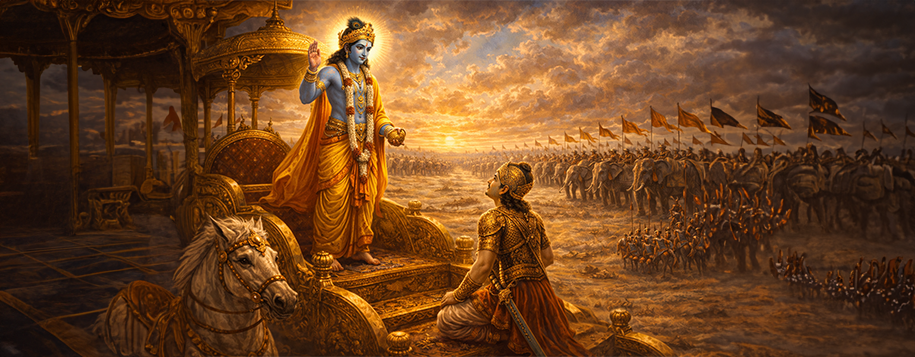
Paṇḍita means the enlightened. Krishna used this word in the very beginning of his discourse (2.11), pointing that a Paṇḍita would not grieve for the living and dead.
Here he says that a Paṇḍita is one who purifies his mind by getting rid of the wrong traits like greed, infatuation, etc. Likewise he will have eliminated all undue imaginations and expectations, whenever he takes up an undertaking. Instead of focussing well on the task in front, the mind may breed undue expectations, which only act adversely on the performer. This inner whirlwind must be set at rest. And the mind must be able to apply itself fully to the given task.
What is the process of inner purification, sublimation? Krishna says, spiritual introspection must be intense like blazing fire, which burns off all firewood. Likewise the fire of knowledge also devours all mento-intellectual firewood. This is how jñāna-niṣṭhā becomes a sustained pursuit.