

Chapter 2: Sāṅkhya-yoga: – Yoga of Contemplation on SelfConclusion
ओं तत्सदिति श्रीमद्भगवद्गीतासूपनिषत्सु ब्रह्मविद्यायां योगशास्त्रे श्रीकृष्णार्जुनसंवादे सांख्ययोगो नाम द्वितीयोऽध्याय: ।
English Transliteration
oṃ tat-sad-iti śrīmad-bhagavad-
gītāsūpaniṣatsu brahma-vidyāyāṃ
yoga-śāstre śrīkṛṣṇārjuna-saṃvāde
sāṅkhya-yogo nāma dvitīyo’dhyāya:
Translation
Om – the symbol of Brahman, tat – that singular Reality (Brahman), sat – the ever abiding presence (Brahman).
Thus ends the second chapter entitled Sānkhya Yoga, during the Srikrishna-Arjuna dialogue in Śrīmad Bhagavad Gita, constituting Yoga-śāstra, which falls within Brahmavidya as presented in the Vedic Upanishads.
Chanting Audio
Chapter 2: Sāṅkhya-yoga: – Yoga of Contemplation on Self - Conclusion
Ma Gurupriya

Commentary
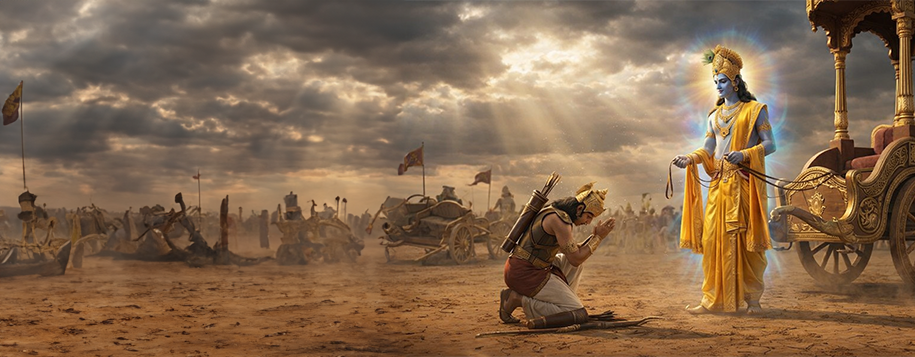
The first chapter describes the scene and setting of the dialogue between Arjuna and Krishna. It narrates Arjuna’s total reluctance and inability to proceed with the war. He wanted to retreat from the whole mission.
Krishna admonished Arjuna severely. That initiated Arjuna’s timely introspection, which he had not done ever before. He wanted to know how he could ethically fight the loving, graceful grandfather and teacher. Krishna took up the question, making Arjuna introspect over life and death. The living presence in the body, every one refers to as ‘I’, was ever, as it is, and would be so, pointed Krishna. Death is but a transition, the last in the body. It involves the body alone. Anything existing cannot become non-existent, a perception human intelligence should unearth by introspection.
Arjuna’s introspection grows. Death and consequent grief are gone for him. Life alone remains to be dealt with. Krishna shows life as an interaction between the individual and objects of the world. It is bound to bring the transitory alternates of sukha-du:khas. Forbear them, with the strength of knowledge that they are inevitable and fleeting. The insight grows, making one fit for Self-knowledge and liberation. This is Sāṅkhya.
Krishna then introduces Karma-yoga, which consists in growing yogabuddhi. Objective results of all actions alike will evoke happiness and misery in the mind. Take to them with evenness and equipoise. Sukha leads to du:kha and du:kha brings sukha. Do not yearn for one or resent another then. Let the mind turn towards their middle presence, the Self. Even-mindedness stabilizes one in the imperishable, blissful Self.
This point is expatiated in the whole chapter, bringing Sthita-prajña and Sthita-dhee. Towards the end the whole discussion is on these two. One should develop the sea-dimensional mind, receiving and assimilating all interactional impacts well. From Ātma-sthiti, he will then grow into Brahma-sthiti, the expansive note of the Self. Every one can reach this, even at the end of his life time. Thus the chapter is complete on the subject it deals with. The message of Gita and the real sādhanā Gita prescribes, are fully covered in this!