

Chapter 18: Mokṣa-sannyāsa-yoga: – Liberation, Renunciation and the Supreme SecretVerse 11
न हि देहभृता शक्यं त्यक्तुं कर्माण्यशेषत: ।
यस्तु कर्मफलत्यागी स त्यागीत्यभिधीयते ॥
English Transliteration
na hi deha-bhṛtā śakyaṃ
tyaktuṃ karmāṇy-aśeṣata:
yas-tu karma-phala-tyāgī
sa tyāgīty-abhidhīyate – 18.11
Translation
For the embodied one, it is not possible to relinquish activities in full. He who relinquishes the fruits of actions is considered a tyāgī.
Chanting Audio
Chapter 18: Mokṣa-sannyāsa-yoga: – Liberation, Renunciation and the Supreme Secret - Verse 11
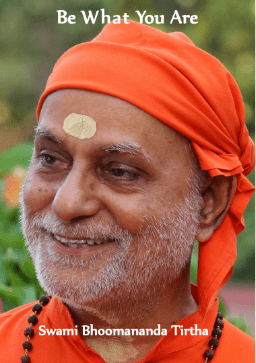
Swami Bhoomananda Tirtha

Commentary
Krishna restates here what he mentioned earlier (3.5): To eschew actions is impossible for anyone who has a body. The world is vibrant and active everywhere, every time. Nothing remains inactive or still. Even the huge planets and celestial bodies are spinning in their trajectories. So, do not think in terms of inactivity or abandoning active life at all.
If this be so, what is the factor which we can relinquish? Krishna’s answer is quite clear. The results which actions aim at in varying degrees, should not cause any kind of possessiveness or affectation. This is certainly possible, and sufficient too.
Krishna thus summarily states that what has to be relinquished, in any circumstance, is not action, but the “subjective result” – the impact on the mind brought about by the objective result. By acting alone one preserves his well-being. Every part of the body needs its specific movement. To deny it is absolutely wrong, dangerous too.