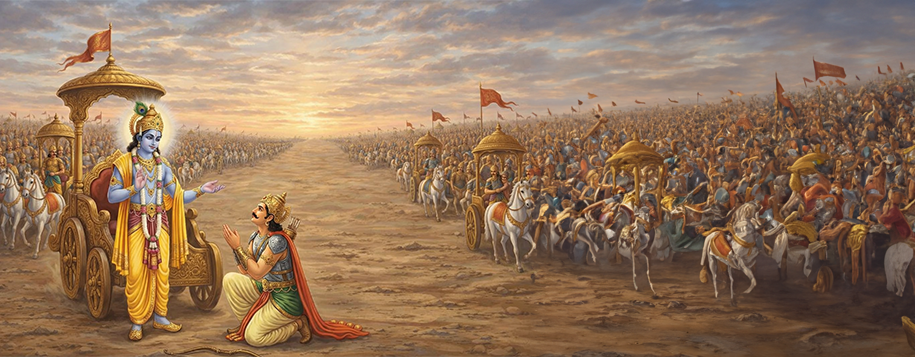


Chapter 17: Śraddhā-traya-vibhāga-yoga: – Character and Values Governed by Three GunasVerse 28
अश्रद्धया हुतं दत्तं तपस्तप्तं कृतं च यत् ।
असदित्युच्यते पार्थ न च तत्प्रेत्य नो इह ॥
English Transliteration
aśraddhayā hutaṃ dattaṃ
tapas-taptaṃ kṛtaṃ ca yat
asad-ity-ucyate pārtha
na ca tat-pretya no iha – 17.28
Translation
Whatever is offered to fire (sacrificed) or gifted to another, whatever is performed as an austerity or as a simple action – if done without proper honour and attention, is called ‘asat’ (futile, vain, not based on truth). It is of no purpose either here or elsewhere.
Chanting Audio
Chapter 17: Śraddhā-traya-vibhāga-yoga: – Character and Values Governed by Three Gunas - Verse 28
Swami Bhoomananda Tirtha

Commentary
Krishna defined and described Sat in detail. Then what is ‘asat’, the opposite of ‘Sat’? How do we understand it and its bearing for our purposes? Krishna explains that too.
Whatever is done with śraddhā, with proper esteem and assiduous application of mind, becomes ‘Sat’. So, whatever is done with neglect, inattention and insufficient application of mind, becomes ‘asat’ (futile, inauspicious). In such asat, Krishna includes all kinds of action, secular and non-secular alike.
Even holy sacrifices made into fire, dāna offered to others, or severe austerities undertaken, if devoid of honour and attention, degenerate to be ‘asat’. This applies to all actions in general. By none of them can the actor gain anything here or elsewhere. It is not physical action performed with the body that counts, but the mental association, concern and resolve with which it is done!