


Chapter 12: Bhakti-yoga: – Practice and Attainment of Devotion
Devotional pursuit is a wholesome pursuit. The mind and intelligence of the seeker should be dissolved in the thought of and reliance on the Supreme. As devotion grows wholesome, the Sādhana undergoes a drastic transformation and the focus shifts from ‘God’ to ‘devotion’.
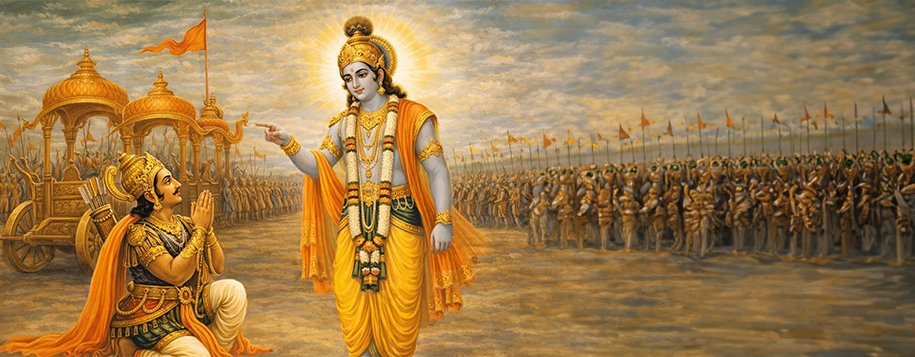
But such wholesome inner devotional pursuit is not feasible for many. Recognizing this, Krishna presents a sequence of steps, which can be taken up and pursued. For those who are unable to take to devotional wholesomeness, he recommends earnest bodily or sensory practices. If even these prove difficult, Krishna advises making all activities a full-fold offering to the Supreme. Should this also be beyond one’s reach, one must take to restraint and discipline and grow in the spirit of inner renunciation. Each of these practices are ultimately aimed at attaining yogic enrichment. Devotional sādhana may appear to revolve around the Supreme, but in reality it revolves round the devotee’s inner being itself.
In this chapter, Sri Krishna explains the Bhakta-lakṣaṇas (the characteristics of a devotee). The eight concluding verses describe who is the right, best and pleasing devotee. Krishna also presents the whole devotional science, practice, goal and its realization. Devotion and devotional practice should aim at making one a model human. Krishna says that a devotee who is endowed with these characteral excellences is, indeed, most dear to him.
This chapter on ‘who is a true and dear devotee’ is unique and profound and is to be reflected upon deeply. It is a touch-stone for all spiritual seekers and devotees any time, anywhere. Its special note is that the whole description relates directly to the devotee’s mind and intelligence, showing clearly what should be their character and behaviour in actual life, making devotion an adorable and effective way of life.
Chanting Audio
Bhagavad Gita Chapter 12
Ma Gurupriya

अर्जुन उवाच ।
एवं सततयुक्ता ये भक्तास्त्वां पर्युपासते ।
ये चाप्यक्षरमव्यक्तं तेषां के योगवित्तमा: ॥
English Transliteration
arjuna uvāca
evaṃ satata-yuktā ye
bhaktās-tvāṃ paryupāsate
ye cāpy-akṣaram-avyaktaṃ
teṣāṃ ke yoga-vittamā: – 12.1
Translation
Arjuna said: Which of these are best yogis – those who worship You (the Supreme) thus with constant mental attunement, or those others who contemplate exclusively on the unmanifest Imperishable?

श्रीभगवानुवाच ।
मय्यावेश्य मनो ये मां नित्ययुक्ता उपासते ।
श्रद्धया परयोपेतास्ते मे युक्ततमा मता:॥
English Transliteration
śrī bhagavān-uvāca
mayyāveśya mano ye māṃ
nitya-yuktā upāsate
śraddhayā parayopetās-
te me yukta-tamā matā: – 12.2
Translation
Lord Krishna said: Those who, infusing Me (the Supreme) in their mind, worship Me through a note of constant identity, impelled by the highest attitude and aim, I hold them to be the most united.
ये त्वक्षरमनिर्देश्यमव्यक्तं पर्युपासते ।
सर्वत्रगमचिन्त्यं च कूटस्थमचलं ध्रुवम् ॥
English Transliteration
ye tvakṣaram-anirdeśyam-
avyaktaṃ paryupāsate
sarvatragam-acintyaṃ ca
kūṭastham-acalaṃ dhruvam – 12.3
सन्नियम्येन्द्रियग्रामं सर्वत्र समबुद्धय: ।
ते प्राप्नुवन्ति मामेव सर्वभूतहिते रता:॥
English Transliteration
sanniyamyendriya-grāmaṃ
sarvatra sama-buddhaya:
te prāpnuvanti mām-eva
sarva-bhūta-hite ratā: – 12.4
Translation
Those, on the other hand, given to all-fold contemplation of the Imperishable, Indefinable, Indistinct, All-permeating, Unthinkable, Unchangeable, Immobile, Eternal, also reach Me (the Supreme) alone, provided they are imbued with ample sense-restraint and equal-vision, and are equally interested in the welfare of all creatures.
क्लेशोऽधिकतरस्तेषामव्यक्तासक्तचेतसाम् ।
अव्यक्ता हि गतिर्दु:खं देहवद्भिरवाप्यते ॥
English Transliteration
kleśo’dhikataras-teṣām-
avyaktāsakta-cetasām
avyaktā hi gatir-du:khaṃ
dehavadbhir-avāpyate – 12.5
Translation
Hardship is more for those given to the path of contemplation on the Imperishable. For the embodied ones, to get attuned to the Imperishable is difficult.
ये तु सर्वाणि कर्माणि मयि सन्न्यस्य मत्परा: ।
अनन्येनैव योगेन मां ध्यायन्त उपासते ॥
English Transliteration
ye tu sarvāṇi karmāṇi
mayi sannyasya mat-parā:
ananyenaiva yogena
māṃ dhyāyanta upāsate – 12.6
तेषामहं समुद्धर्ता मृत्युसंसारसागरात् ।
भवामि नचिरात्पार्थ मय्यावेशितचेतसाम् ॥
English Transliteration
teṣām-ahaṃ samuddhartā
mṛtyu-saṃsāra-sāgarāt
bhavāmi nacirāt-pārtha
mayy-āveśita-cetasām – 12.7
Translation
For those who renounce all their actions as dedication to Me (the Supreme), and worship the Supreme with unwavering meditation, I very soon become the deliverer from the death-ridden worldly life. For, O Partha (Arjuna), the mind of such devotees is attuned to Me (the Supreme) wholesomely.
मय्येव मन आधत्स्व मयि बुद्धिं निवेशय ।
निवसिष्यसि मय्येव अत ऊर्ध्वं न संशय: ॥
English Transliteration
mayyeva mana ādhatsva
mayi buddhiṃ niveśaya
nivasiṣyasi mayyeva
ata ūrdhvaṃ na saṃśaya: – 12.8
Translation
Repose your mind on Me (the Supreme) alone, and then establish the intelligence too in Me. From then on, you will certainly abide in Me (the Supreme), no doubt.
अथ चित्तं समाधातुं न शक्नोषि मयि स्थिरम् ।
अभ्यासयोगेन ततो मामिच्छाप्तुं धनञ्जय ॥
English Transliteration
atha cittaṃ samādhātuṃ
na śaknoṣi mayi sthiram
abhyāsa-yogena tato
mām-icchāptuṃ dhanañjaya – 12.9
Translation
O Dhananjaya (Arjuna), if you are unable to fix your mind steadily in Me (the Supreme), then by means of yoga-practice, aspire to attain Me.
अभ्यासेऽप्यसमर्थोऽसि मत्कर्मपरमो भव ।
मदर्थमपि कर्माणि कुर्वन्सिद्धिमवाप्स्यसि ॥
English Transliteration
abhyāse’py-asamartho’si
mat-karma-paramo bhava
mad-artham-api karmāṇi
kurvan-siddhim-avāpsyasi – 12.10
Translation
If you are unable even to take to any practice, consider your supreme aim is to do My work. Doing all actions for the sake of Me (the Supreme), you will attain fulfilment.
अथैतदप्यशक्तोऽसि कर्तुं मद्योगमाश्रित: ।
सर्वकर्मफलत्यागं तत: कुरु यतात्मवान् ॥
English Transliteration
athaitadapy-aśakto’si
kartuṃ mad-yogam-āśrita:
sarva-karma-phala-tyāgaṃ
tata: kuru yatātmavān – 12.11
Translation
If you are unable to do even this, have full refuge in My Yoga, and then with self-control, renounce (inwardly) all kinds of (subjective) results accruing from actions.
श्रेयो हि ज्ञानमभ्यासाज्ज्ञानाद्ध्यानं विशिष्यते ।
ध्यानात्कर्मफलत्यागस्त्यागाच्छान्तिरनन्तरम् ॥
English Transliteration
śreyo hi jñānam-abhyāsāj-
jñānād-dhyānaṃ viśiṣyate
dhyānāt-karma-phala-tyāgas-
tyāgācchāntir-anantaram – 12.12
Translation
Knowledge is surely better than practice, and meditative introspection excels mere knowledge. From such reflective meditation, dawns renunciation of the (internal) results of action, and from such relinquishment follows peace.
अद्वेष्टा सर्वभूतानां मैत्र: करुण एव च ।
निर्ममो निरहङ्कार: समदु:खसुख: क्षमी ॥
English Transliteration
adveṣṭā sarva-bhūtānāṃ
maitra: karuṇa eva ca
nirmamo nirahaṅkāra:
sama-du:kha-sukha: kṣamī – 12.13
सन्तुष्ट: सततं योगी यतात्मा दृढनिश्चय: ।
मय्यर्पितमनोबुद्धिर्यो मद्भक्त: स मे प्रिय: ॥
English Transliteration
santuṣṭa: satataṃ yogī
yatātmā dṛḍha-niścaya:
mayy-arpita-mano-buddhir-
yo mad-bhakta: sa me priya: – 12.14
Translation
He who is free of hatred towards all beings, friendly and kind to all, free of possessiveness and egoism, equal in unhappiness and happiness, forbearing, ever contented, inwardly integrated, with senses and mind well-disciplined, of firm conviction, with mind and intelligence fully resting on Me (the Supreme), is dear to Me.
यस्मान्नोद्विजते लोको लोकान्नोद्विजते च य: ।
हर्षामर्षभयोद्वेगैर्मुक्तो य: स च मे प्रिय: ॥
English Transliteration
yasmān-nodvijate loko
lokān-nodvijate ca ya:
harṣāmarṣa-bhayodvegair-
mukto ya: sa ca me priya: – 12.15
Translation
One by whom the world is not troubled and who does not feel troubled by the world, who is freed from the clutches of delight and anger, fear and anxiety, is dear to Me (the Supreme).
अनपेक्ष: शुचिर्दक्ष उदासीनो गतव्यथ: ।
सर्वारम्भपरित्यागी यो मद्भक्त: स मे प्रिय: ॥
English Transliteration
anapekṣa: śucir-dakṣa
udāsīno gatavyatha:
sarvārambha-parityāgī
yo mad-bhakta: sa me priya: – 12.16
Translation
The devotee who is free from expectations, pure outwardly and inwardly, efficient, indifferent and impartial, free of any strong afflictions, who keeps away all sense of doership in all that he does or proposes to do, is dear to Me (the Supreme).
यो न हृष्यति न द्वेष्टि न शोचति न काङ्क्षति ।
शुभाशुभपरित्यागी भक्तिमान्य: स मे प्रिय: ॥
English Transliteration
yo na hṛṣyati na dveṣṭi
na śocati na kāṅkṣati
śubhāśubha-parityāgī
bhaktimān-ya: sa me priya: – 12.17
Translation
He who does not get elated (by the pleasant) or resent (the unpleasant), neither grieves nor desires, who relinquishes the sense of auspicious and inauspicious, is dear to Me (the Supreme).
सम: शत्रौ च मित्रे च तथा मानापमानयो: ।
शीतोष्णसुखदु:खेषु सम: सङ्गविवर्जित: ॥
English Transliteration
sama: śatrau ca mitre ca
tathā mānāpamānayo:
śītoṣṇa-sukha-du:kheṣu
sama: saṅga-vivarjita: – 12.18
तुल्यनिन्दास्तुतिर्मौनी सन्तुष्टो येन केनचित् ।
अनिकेत: स्थिरमतिर्भक्तिमान्मे प्रियो नर: ॥
English Transliteration
tulya-nindāstutir-maunī
santuṣṭo yena kenacit
aniketa: sthira-matir-
bhaktimān-me priyo nara: – 12.19
Translation
A devotee who has evenness towards enemy and friend, honour and dishonour, happiness and unhappiness which are like cold and heat, who remains free of wrong identification (clinging), and is even-minded towards blame and praise, who is given to spiritual silence and indifference, contented with whatever comes or goes, has no special possessiveness about any place, and of stable mind, is dear to Me (the Supreme).
ये तु धर्म्यामृतमिदं यथोक्तं पर्युपासते ।
श्रद्दधाना मत्परमा भक्तास्तेऽतीव मे प्रिया: ॥
English Transliteration
ye tu dharmyāmṛtam-idaṃ
yathoktaṃ paryupāsate
śraddadhānā mat-paramā
bhaktās-te’tīva me priyā: – 12.20
Translation
Those devotees who strive to follow this nectarine, righteous path as detailed by Me here, with sufficient attention, holding Me, the Supreme, as the most desirable in life, are extremely dear to Me.
ओं तत्सदिति श्रीमद्भगवद्गीतासूपनिषत्सु ब्रह्मविद्यायां योगशास्त्रे श्रीकृष्णार्जुनसंवादे भक्तियोगो नाम द्वादशोऽध्याय: ।
English Transliteration
oṃ tat-sad-iti śrīmad-bhagavad-
gītāsūpaniṣatsu brahma-vidyāyāṃ yoga-
śāstre śrīkṛṣṇārjuna-saṃvāde
bhakti-yogo nāma dvādaśo’dhyāya:
Translation
Om – the symbol of Brahman, tat – that singular Reality (Brahman), sat – the ever-abiding presence (Brahman).
Thus ends the twelfth chapter entitled Bhakti Yoga, during the Srikrishna-Arjuna dialogue in Śrīmad Bhagavad Gita, constituting Yoga-śāstra, which falls within Brahmavidya as presented in the Vedic Upanishads.