

Chapter 11: Viśvarūpa-darśana-yoga: – Revealing the Universal FormVerse 14
तत: स विस्मयाविष्टो हृष्टरोमा धनञ्जय: ।
प्रणम्य शिरसा देवं कृताञ्जलिरभाषत ॥
English Transliteration
tata: sa vismayāviṣṭo
hṛṣṭa-romā dhanañjaya:
praṇamya śirasā devaṃ
kṛtāñjalir-abhāṣata – 11.14
Translation
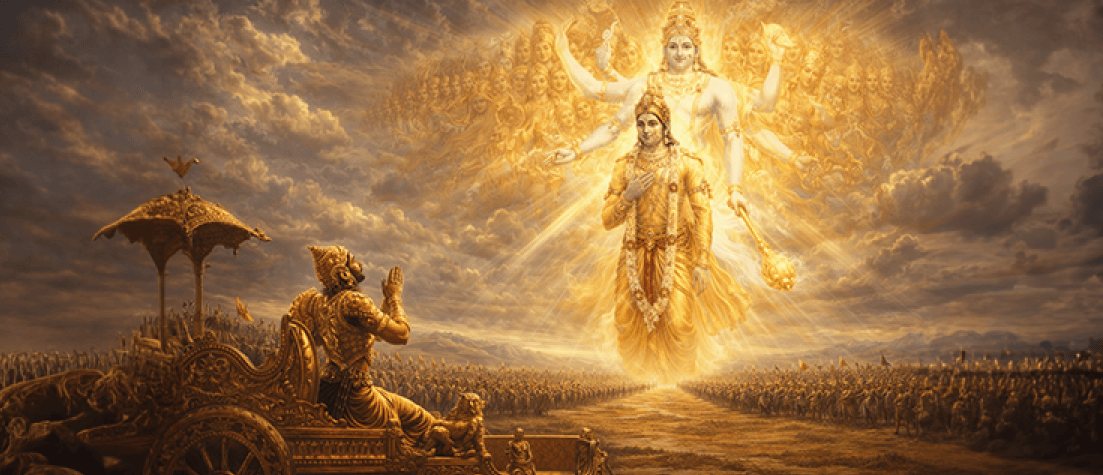
Thereupon Dhananjaya (Arjuna), overwhelmed with wonder, hairs of the body bristling in excitement, prostrated before the Lord (Krishna), and spoke with folded hands.
Chanting Audio
Chapter 11: Viśvarūpa-darśana-yoga: – Revealing the Universal Form - Verse 14
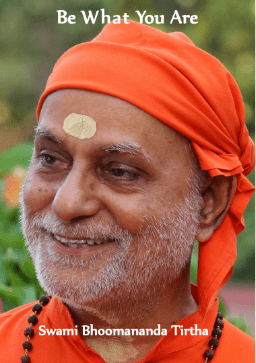
Swami Bhoomananda Tirtha

Commentary
Earlier, on hearing Arjuna wanting to leave the warfront in distress, Krishna had admonished him (2.2,3). Arjuna outlived his emotional turbulence, raising pertinent dharmic questions. Due to narrow-mindedness, he confessed, he was unable to think of propriety, dharma (2.7). So, he surrendered before Krishna, seeking instruction on the path of lasting virtue, śreyas. He said he was a seeking disciple, and Krishna his Guru, initiating the illustrious knowledge-dialogue.
Arjuna now prostrates before his Guru, pouring forth his heart, with folded hands. What a touching scene! A significant transition from the quest of intelligence to emotional trust and gratitude, yearning for a life-long anchor in the Guru – a great lesson for seekers!
Gita is not just an instant dialogue with Arjuna. It is a full spiritual composition on interactional life, revealing dharma (righteousness) and spiritual enlightenment.