

Chapter 12: Bhakti-yoga: – Practice and Attainment of DevotionVerse 17
यो न हृष्यति न द्वेष्टि न शोचति न काङ्क्षति ।
शुभाशुभपरित्यागी भक्तिमान्य: स मे प्रिय: ॥
English Transliteration
yo na hṛṣyati na dveṣṭi
na śocati na kāṅkṣati
śubhāśubha-parityāgī
bhaktimān-ya: sa me priya: – 12.17
Translation
He who does not get elated (by the pleasant) or resent (the unpleasant), neither grieves nor desires, who relinquishes the sense of auspicious and inauspicious, is dear to Me (the Supreme).
Chanting Audio
Chapter 12: Bhakti-yoga: – Practice and Attainment of Devotion - Verse 17
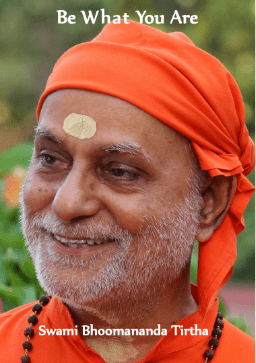
Swami Bhoomananda Tirtha

Commentary
Krishna comes back to his pet formula of nir-dvandvatā, transcending the pairs of opposites, the goal of yoga. This great samatva, the spiritual magic, he disclosed and explained variously throughout the dialogue.
Outlive the usual mental notes of dual responses the mind gives rise to throughout your interactions with the world. Neither cling to the desirable nor abhor the undesirable. Neither get elated nor depressed. Neither desire nor grieve.
Krishna emphasizes that by the strength of devotion, one should also renounce the ideas of auspicious and inauspicious by constant spiritual attunement, thereby making life uniformly sublime and harmonious – the secret of yogic enrichment. Such a devotee alone is dear to the Supreme, he says.