

Chapter 15: Puruṣottama-yoga: – The Supreme IndwellerVerse 7-8
ममैवांशो जीवलोके जीवभूत: सनातन: ।
मन:षष्ठानीन्द्रियाणि प्रकृतिस्थानि कर्षति ॥
English Transliteration
mamaivāṃśo jīva-loke
jīva-bhūta: sanātana:
mana:-ṣaṣṭhānīndriyāṇi
prakṛtisthāni karṣati – 15.7
शरीरं यदवाप्नोति यच्चाप्युत्क्रामतीश्वर: ।
गृहीत्वैतानि संयाति वायुर्गन्धानिवाशयात् ॥
English Transliteration
śarīraṃ yad-avāpnoti
yaccāpy-utkrāmatīśvara:
gṛhītvaitāni saṃyāti
vāyur-gandhān-ivāśayāt – 15.8
Translation
An eternal part of Me (the Supreme) becomes the jīva (individual soul, manifesting the power called life) in the world of living beings. By drawing upon the elemental nature it forms the five senses and the mind.
While taking up this body and while exiting it, the Lord (Ìśvara) brings in and takes away these sensory powers, like wind carrying fragrances from their seats (sources).
Chanting Audio
Chapter 15: Puruṣottama-yoga: – The Supreme Indweller - Verse 7
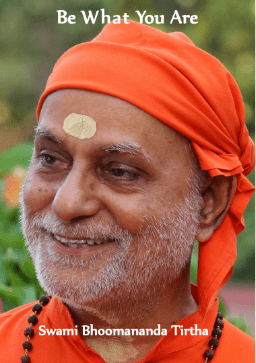
Swami Bhoomananda Tirtha

Commentary
First, Krishna pointed out that the supreme Brilliance reigns within the body as the source of all outer brilliances. Now he explains its function, enabling seekers to grasp it further.
The spiritual brilliance called the soul residing in the body is a part of the supreme Reality itself. Called jiva, to begin with, it is the one that draws from Nature all the powers to the senses, which are but parts of the material body.
Inner splendour alone instils into the senses the power to cognize.
Likewise, the same inner sentience takes away the cognitive powers of the senses while leaving the body (making the body non-functional), just as the wind draws away fragrance from flowers.
The soul or jiva in the body alone holds the powers of cognition. See, the cornea from a dead body when grafted to a living body, begins to see. It is true of other organs also, proving that the ultimate cognition of sensory functions depends on the inner spirit.
This soul or jiva is really not different from the divine Purusha, existing within us as the immortal Soul. But its real unchanging identity remains hidden from us by the variegated changeful appearance projected by Nature.
Birth marks the commencement of the sensory functions and death denotes the dysfunction of the same senses. Birth and death are not to the Soul, but only to the body and senses. This is what Krishna said in the 2nd chapter also. Death is no extinction but only a transition (2.13).