

Chapter 1: Arjuna-viṣāda-yoga: – Transforming Grief into YogaVerse 28-30
अर्जुन उवाच ।
दृष्ट्वेमं स्वजनं कृष्ण युयुत्सुं समुपस्थितम् ।
सीदन्ति मम गात्राणि मुखं च परिशुष्यति ॥
English Transliteration
arjuna uvāca
dṛṣṭvemaṃ svajanaṃ kṛṣṇa
yuyutsuṃ samupasthitam
sīdanti mama gātrāṇi
mukhaṃ ca pariśuṣyati – 1.28
वेपथुश्च शरीरे मे रोमहर्षश्च जायते ।
गाण्डीवं स्रंसते हस्तात्त्वक्चैव परिदह्यते ॥
English Transliteration
vepathuś-ca śarīre me
roma-harṣaś-ca jāyate
gāṇḍīvaṃ sraṃsate hastāt-
tvak-caiva paridahyate – 1.29
न च शक्नोम्यवस्थातुं भ्रमतीव च मे मन: ।
निमित्तानि च पश्यामि विपरीतानि केशव ॥
English Transliteration
na ca śaknomy-avasthātuṃ
bhramatīva ca me mana:
nimittāni ca paśyāmi
viparītāni keśava – 1.30
Translation
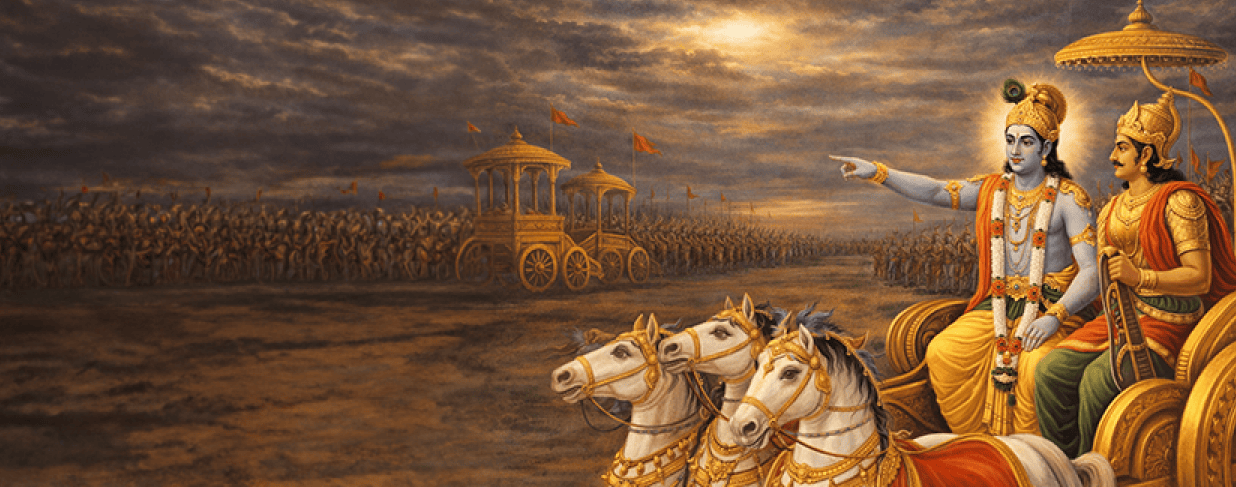
Arjuna said: Seeing my relatives standing eager to fight, O Krishna, my limbs are failing, mouth is getting dry; there is tremor and horripilation all over my body; Gandiva (Arjuna’s famous bow) is slipping from my fist; skin is scorching all over; I am unable to stand; my mind is whirling. Also, I see ill omens, O Keshava.
Chanting Audio
Chapter 1: Arjuna-viṣāda-yoga: – Transforming Grief into Yoga - Verse 28
Swami Nirviseshananda Tirtha

Commentary
Arjuna represents one with all the attainable resources in human life. He is well born, has a royal heredity; a powerful archer with unparalleled fame as a fighter.
He has acquired all the external material resources one aspires to gain. His famous bow Gandiva signifies all these.
He had enormous bodily strength and agility. He was so strong as to administer a severe blow on the chest of Lord Shiva, who came masked as a wild archer (Kirāta), when he confronted Arjuna chasing a boar.
Next in the list is the power of articulation. Arjuna has this also. Thereupon comes mental strength, will, wish, etc. These apparently Arjuna has abundantly. Intellectual prowess is the last in the list, which too he has in ample measure, as evidenced from the long speech he gave to Krishna justifying his unwillingness to fight and the need to retreat from the war.
But in Kurukshetra when he examined the armies, he finds all these are of no avail. Everything one after another deserted him pitiably. Gandiva slipping from his hand, body trembling, mouth parching, mind whirling, intelligence belligerent — Arjuna had a total crumbling of his personality.
This leads one to the great question: Is there anything besides all these external, bodily, mental and other resources, to come to the rescue of man?
Is this not what the Upanishads answer, by exhorting all to recognize and realize the Imperishable Self?