

Chapter 18: Mokṣa-sannyāsa-yoga: – Liberation, Renunciation and the Supreme SecretVerse 1
अर्जुन उवाच ।
संन्यासस्य महाबाहो तत्त्वमिच्छामि वेदितुम्।
त्यागस्य च हृषीकेश पृथक्केशिनिषूदन ॥
English Transliteration
arjuna uvāca
sannyāsasya mahābāho
tattvam-icchāmi veditum
tyāgasya ca hṛṣīkeśa
pṛthak-keśi-niṣūdana – 18.1
Translation
Arjuna said: O mighty-armed (Krishna), the controller of senses, slayer of Keśī, I aspire to know the essence of sannyāsa (renunciation); equally so, of tyāga (relinquishment, abandonment) separately.
Chanting Audio
Chapter 18: Mokṣa-sannyāsa-yoga: – Liberation, Renunciation and the Supreme Secret - Verse 1
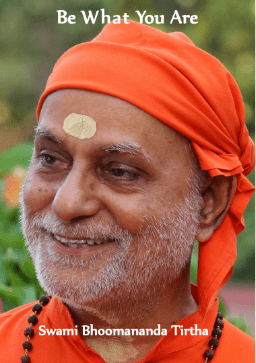
Swami Bhoomananda Tirtha

Commentary
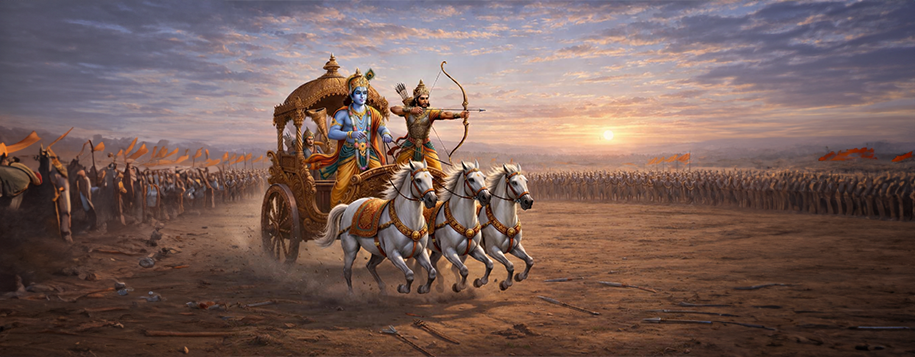
Krishna is entering the end part of his presentation, the last phase of Kurukshetra dialogue. Arjuna is quite in tune with Krishna’s masterly exposition, raising pertinent questions all along. His enquiry now marks the beginning of the last chapter, alluding that sannyasa is the ultimate
message of their dialogue. Accordingly, the seeker too has to focus on what it means in essence.
Arjuna wants Krishna to clarify the concepts of sannyasa and tyaga. In fact, Krishna has been exposing only these. Still Arjuna needs a confirmation on the subject, before Krishna concludes his exposition. Krishna’s interpretations of the concepts of yajna (3.9, 4.33), sannyasa (5.3), actionlessness (3.4, 4.20), etc. are novel, emphasizing inner evolution rather than external development. Arjuna wants to be free of any doubt or ambiguity.
In fact, most of our scriptures take to the way of exposition through question and answer, to bring clarity in the seeker’s understanding.