Resources


Swami Nirviseshananda Tirtha
235 – Following Krishna’s Guidance 02 I Swami Nirviseshananda Tirtha
677 Views | 9 months ago

 Add to Favorites
 Add to Playlist
Date: 15 October 2022
Venue: Stonegate Elementary School, 100 Honors, Irvine CA92620
In this Satsang, Swamiji elaborates on Sri Krishna’s instructions to Arjuna in Bhagavad Gita and Uddhava in Srimad Bhagavatam. In the case of Arjuna, the advice was to practice Buddhi Yoga and fight the war. Uddhava was asked to meditate on the Lord, in seclusion. Sri Krishna prescribed the Spiritual Sadhana, depending on the circumstances, the age, maturity, and the fitness of the seeker.
A seeker will attain the goal and become fulfilled if he follows the path he is fit for. Arjuna raised the question that if the path of knowledge (Jnana) is superior to Karma Yoga, then why was he being asked to fight the gory war. Krishna clarified that the goal of both Jnana Yoga and Karma Yoga were the same. But Arjuna’s fitness was for Karma Nishtha, where he had to make activity an instrument for liberation.
Arjuna was advised to take recourse to Buddhi Yoga (where the intelligence is connected to the Self). His fitness, as a warrior, was to fight the war and establish a righteous kingdom. By not clinging to the resulting gain, by not being motivated by the preferred result, and also not clinging to inactivity, Arjuna had to fight.
Bhagavad Gita says that a seeker must perform all activities being established in Yoga (where the intelligence is connected to the Atma), leaving all delusional clinging (Sanga) and having an even attitude to success and failure. This evenness or Samatva is Yoga. This attitude will free the mind of all anxiety, fear, desires and expectations and one will perform all actions excellently, with full attention.
The greatest hurdle in the path of the seeker is Sanga (delusional clinging). By repeatedly reflecting on the sensory objects, the mind develops a clinging for them. From the clinging, desire is born. Instead of spending mind-hours on worldly things, a seeker must spend mind-hours on the Self (Atma). Constantly thinking about the Atma, which is unaffected, expansive, unborn, undying, eternal, a seeker is sure to acquire the qualities of the Atma.
Shlokas Chanted in the Satsang:
33:14 - कर्मण्येवाधिकारस्ते मा फलेषु कदाचन…Bhagavad Gita 2.47
34:08 - ज्यायसी चेत्कर्मणस्ते मता बुद्धिर्जनार्दन…Bhagavad Gita 3.1
35:00 - लोकेऽस्मिन्द्विविधा निष्ठा पुरा…Bhagavad Gita 3.3
40:51 - योगस्थ: कुरु कर्माणि सङ्गं त्यक्त्वा …Bhagavad Gita 2.48
45:23 - दूरेण ह्यवरं कर्म बुद्धियोगाद्धनञ्जय...Bhagavad Gita 2.49
47:15 - ध्यायतो विषयान्पुंस: सङ्गस्तेषूपजायते...Bhagavad Gita 2.62
Website: www.bhoomananda.org/
Email: services@bhoomananda.org
Facebook: www.facebook.com/narayanashrama.tapovanam/
Pinterest: in.pinterest.com/bhoomanandafoundation/
Instagram: www.instagram.com/bhoomanandafoundation/
Tumblr: www.tumblr.com/swamibhoomanandatirtha
Linkedin: www.linkedin.com/in/bhoomananda-foundation/
Publications: vedanticwisdom.com/shop/ (Email: bookstore@vedanticwisdom.com)
Whatsapp: +91 8547960362
Subscribe to our newsletter: www.bhoomananda.org/#freeeservices-form
About us:
Narayanashrama Tapovanam, an Ashram located in Thrissur, Kerala, embodies the unique tradition of Guru-shishya Parampara, disseminating Brahmavidya (Science of Self-knowledge) through regular classes, satsangs, and above all, through learning in the association of a realized spiritual master.

Swami Nirviseshananda Tirtha
02 – by Swami Nirviseshananda Tirtha – Living the Bhagavad Gita way

Swami Nirviseshananda Tirtha
01 – by Swami Nirviseshananda Tirtha – Living the Bhagavad Gita way

Swami Nirviseshananda Tirtha
237 – Remaining Stable Through Life’s Challenges I Swami Nirviseshananda Tirtha
Swami Nirviseshananda Tirtha
Interactive Satsang | October 14, 2022 | Swami Nirviseshananda Tirtha

Swami Nirviseshananda Tirtha
Interactive Satsang | October 7, 2022 | Swami Nirviseshananda Tirtha

Swami Nirviseshananda Tirtha
Interactive Satsang | 30 Sep 2022 | Swami Nirviseshananda Tirtha

Swami Nirviseshananda Tirtha
236 – Following Krishna’s Guidance 03 I Swami Nirviseshananda Tirtha

Swami Nirviseshananda Tirtha
235 – Following Krishna’s Guidance 02 I Swami Nirviseshananda Tirtha
most popular

Swami Bhoomananda Tirtha
സുഖമരണം സാധിയ്ക്കുന്നതെങ്ങനെ? | Swami Bhoomananda Tirtha
- 50382 Views
- 5 months ago

Swami Bhoomananda Tirtha
148 – അയോധ്യയിലെ രാമക്ഷേത്രത്തിൽ നടന്ന പ്രാണപ്രതിഷ്ഠ | By Swami Bhoomananda Tirtha
- 45997 Views
- 2 years ago

Swami Bhoomananda Tirtha
01 – Vishnusahasranama – Swami Bhoomananda Tirtha – Genesis and Significance of Vishnusahasranama
- 42648 Views
- 12 years ago
from the ashram diary
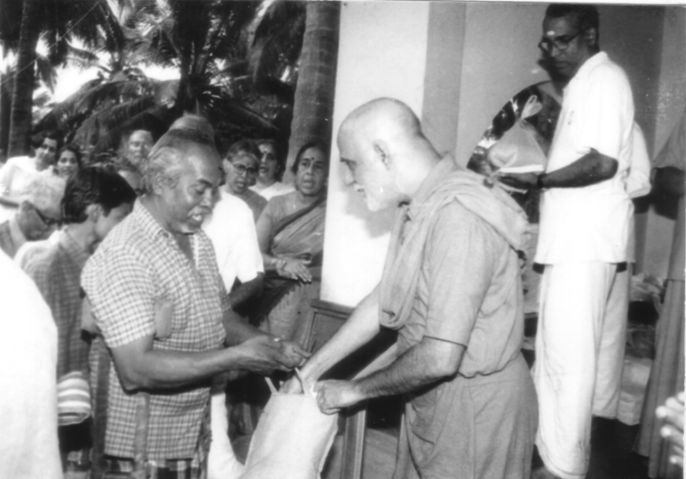
Anna-Daana for mice
Those days, there were many rats staying in various pockets of the tiled roof. My room had a very low ceiling and I could even touch the roof tiles. At night, I would see big, big rats running around just near me.
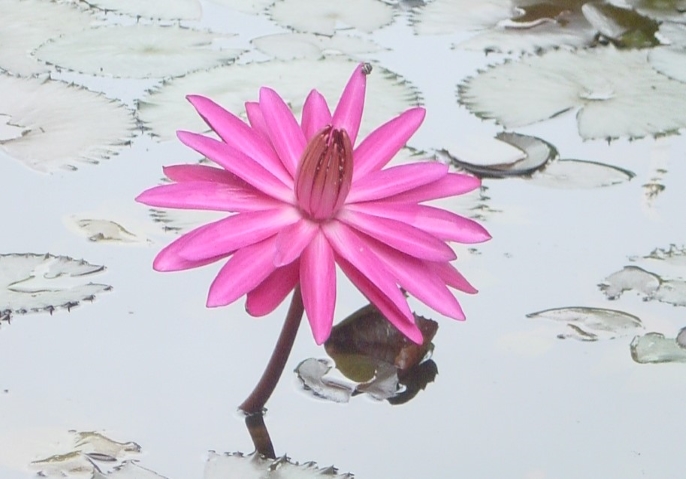
Eternal Moments
I got back to my daily chores, but the scene remained in my mind – the old man’s wrinkled face, his gleaming eyes, the contentment he enjoyed, his refusal to accept more than ‘his minimum needs’! How many of us can take such a stand?
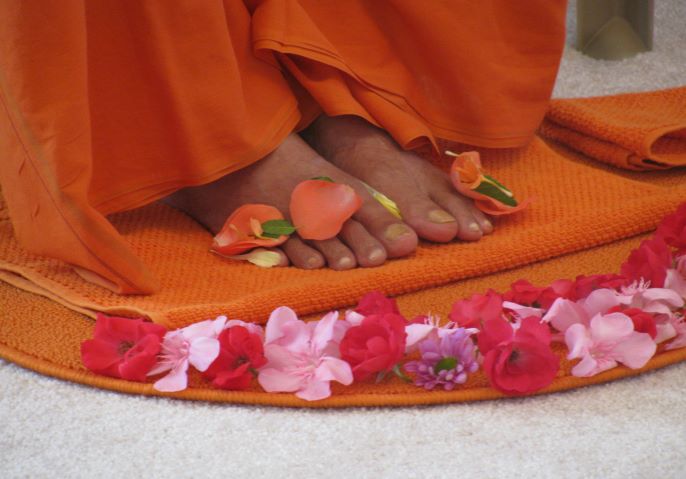
Eternal Moments--A simple offering
Bhakti is not so much in the worship with flowers, garlands, lamps or incense sticks. Neither it is in chanting His names and praises. It is verily in living and acting according to the wish of the Lord, pleasing Him, imbibing qualities and attitudes that He wants us to imbibe.
Audios
Competence is for Karma Nishta
Swami Bhoomananda Tirtha


Every Exhortation in Bhagavad Gita relates to the Mind and Intelligence
Swami Bhoomananda Tirtha
Perform All activities as Yajna
Swami Bhoomananda Tirtha
Remove Differential Notion
Swami Bhoomananda Tirtha
Renunciation is freedom from delusional clinging
Swami Bhoomananda Tirtha
Interactional Sadhana
Swami Bhoomananda Tirtha